
London is one of the easiest cities in the world to move through without owning a car. The Underground reaches almost every corner of Zones 1 and 2, buses run late into the night, and the Overground and Elizabeth line have closed most of the old gaps in coverage. For a huge share of daily journeys, that network does the job better than a car ever could.
But there’s a category of trips the Tube map was never built for. A supplier visit on an industrial estate off the North Circular. A family arriving at Heathrow with three suitcases and a toddler who has had enough of queues. A weekend that starts in London and ends somewhere the trains don’t reach without two changes and a taxi. These are the situations where a car stops being a luxury and becomes the simplest option on the table.
Why business travel keeps a car in the mix
Meetings in London rarely stay in one postcode. Someone based near Canary Wharf might have a client visit scheduled in Reading the same afternoon, or a contractor might need to move equipment between sites in a single day. Public transport handles person to person movement well; it’s far less suited to carrying tools, samples or paperwork across the city on a schedule set by someone else.
Arriving at the airport with luggage
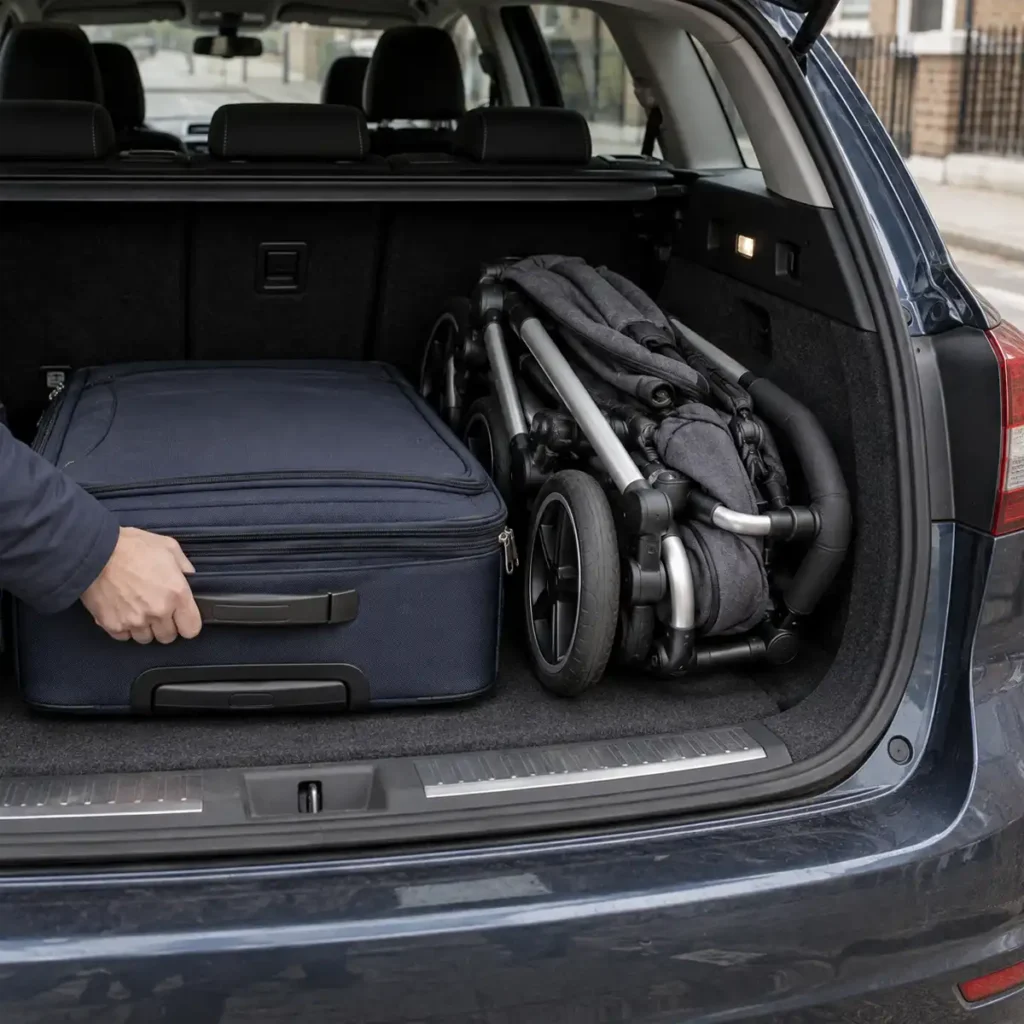
Visitors flying in face a related problem. Heathrow, Gatwick, Stansted and London City all sit some distance from the centre, and dragging luggage through two train changes is nobody’s idea of a good start to a trip. This is usually where people decide to hire a car in London, picking up a vehicle close to the terminal or a nearby station and driving straight to wherever they’re staying, without the transfer.

A fleet that’s shifting toward electric
The car itself has changed a fair amount in the last few years, largely because London has forced the issue. The Ultra Low Emission Zone now covers the whole of Greater London, and any vehicle that doesn’t meet the emissions standard gets charged for driving inside it. Rental fleets have responded by shifting toward hybrid and fully electric models, partly because compliant cars are simply easier to offer, and partly because more customers are asking for them outright. A short-term electric rental has become a realistic way to try the technology without committing to buying one, which is how a lot of drivers currently get their first real experience of an EV.
Beyond London’s edges
A car opens up a version of England that the rail network reaches only awkwardly. Oxford and Bath are manageable by train, but places like the Cotswolds, the Chiltern Hills or the Kent coast are far easier to string together in a single day when you’re not working around a timetable. Even something as simple as a Sunday trip to Windsor becomes less of an event and more of a decision made that morning.
None of this makes the car a replacement for London’s public transport, which stays the more sensible choice for most trips within the centre. It’s better understood as a tool for the journeys that fall outside what the network was built to solve: getting from an airport with luggage, covering ground for work, or reaching a part of the country the trains don’t serve well. Anyone weighing up a specific route can check current ULEZ and congestion charge rules on Transport for London’s site before setting off, since both affect where and when driving in the city makes sense.