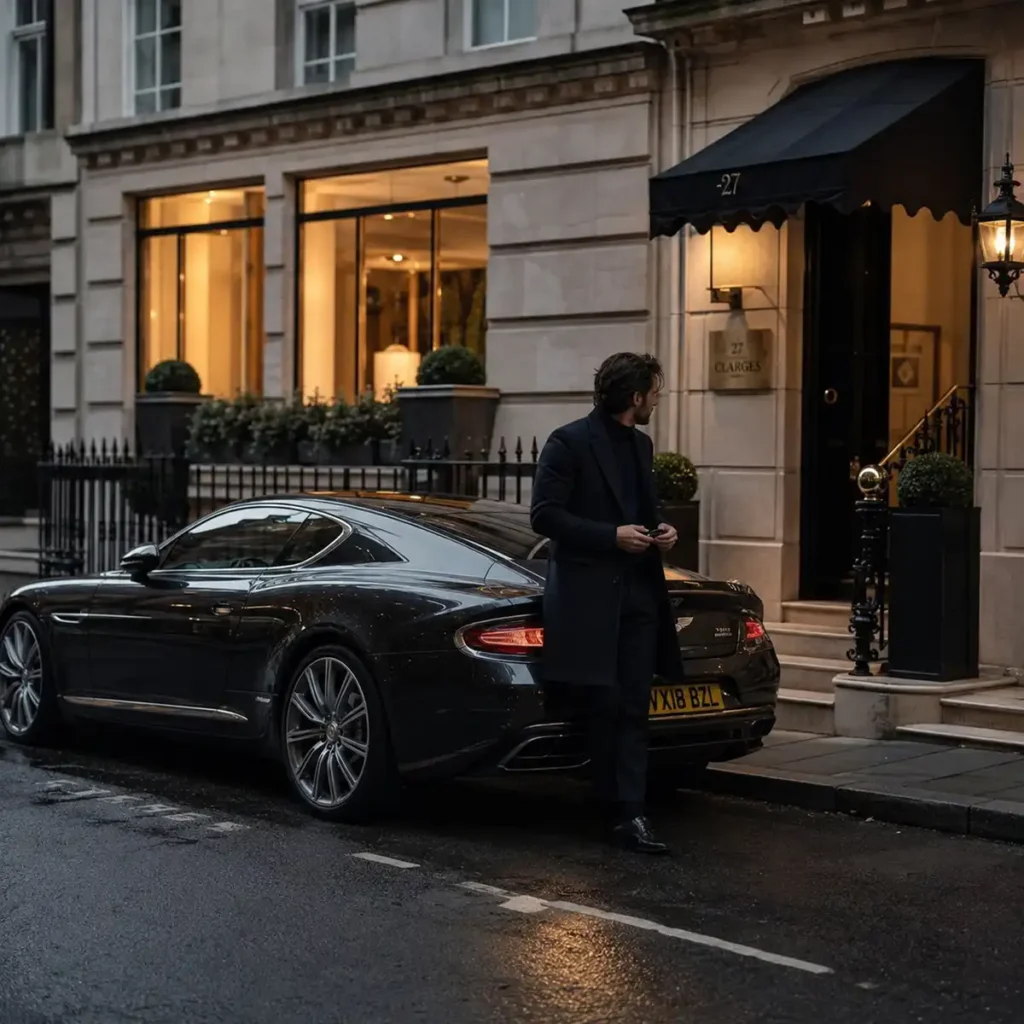
Every summer the same thing happens. The weather turns, the transporters arrive, and the supercars in Mayfair reappear on Park Lane, around Berkeley Square and along the run of streets between the two. Residents brace. Photographers gather. The same arguments start again.
The supercars in Mayfair have been arriving for long enough now to be a fixture of the Mayfair calendar rather than an event. What has changed is the scale, the audience and the degree to which it has stopped being spontaneous.
Where they gather and why
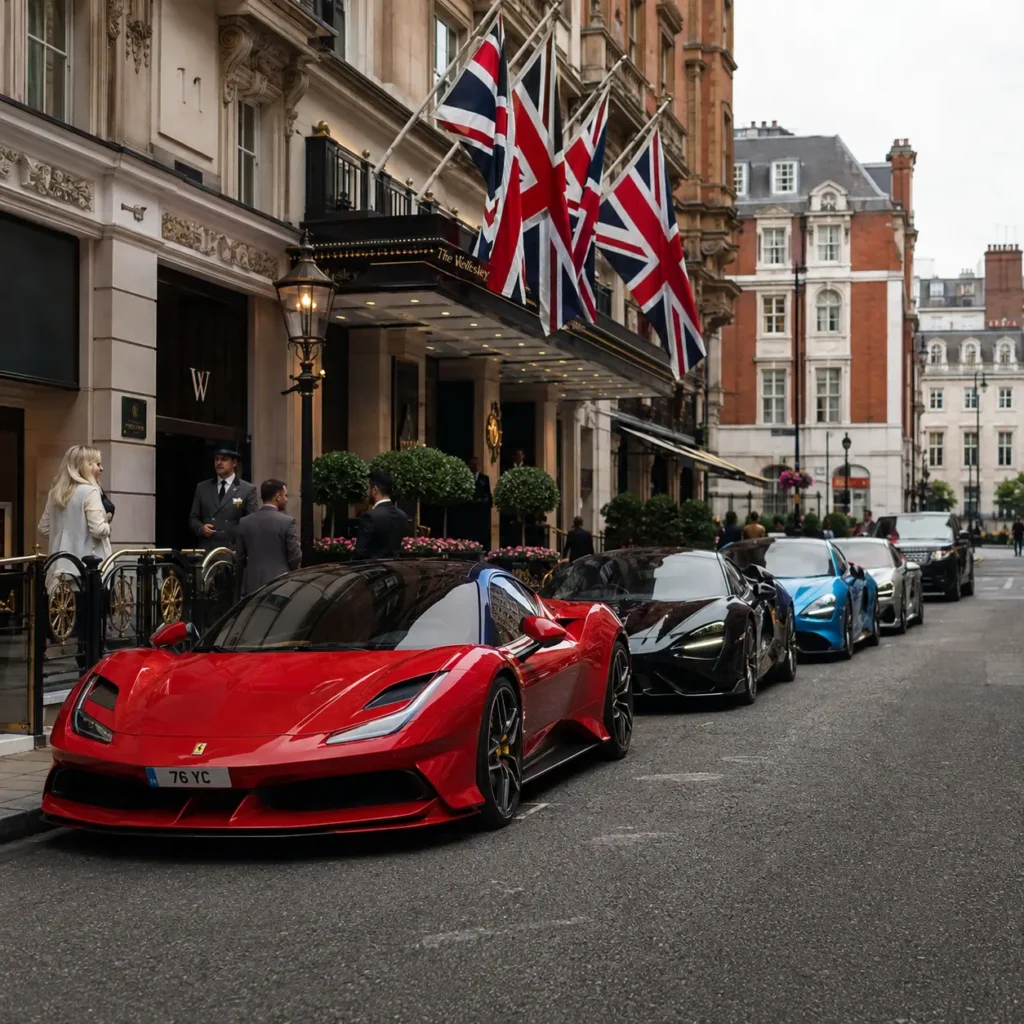
The geography of the supercars in Mayfair is consistent. Park Lane offers the width and the hotel frontage. Berkeley Square gives a circuit with an audience. The mews and side streets running off New Bond Street provide somewhere to park a car that costs more than a house, within sight of a concierge who will keep an eye on it.
Almost none of it is about driving. A supercar on Park Lane at eleven at night is not going anywhere. The cars are stationary far more than they are moving, which is worth understanding because it explains why the noise complaints cluster where they do. It is the arriving and the leaving, repeated.
The season runs roughly from late spring to early autumn, with the peak in July and August. Many of the cars are shipped in and shipped out again, which is why the same registration plates recur year after year.

The complaints are not really about cars
Mayfair is a residential district. That gets forgotten, because the ground floors are shops and restaurants, but the floors above them are homes, and a lot of them are homes with single-glazed sash windows in listed buildings that cannot legally be replaced.
Engine noise at street level in a narrow Georgian street does not dissipate. It bounces between two facades and arrives in a bedroom largely intact. When that happens repeatedly between midnight and three in the morning across several months, the objection is not snobbery about wealth. It is the same objection anyone would make anywhere.
Enforcement has tightened over the years, and the pattern has responded by shifting rather than stopping. Attention moves the gatherings a few streets, and after a season or two they drift back.
What it does for the businesses
The trade is more ambivalent about the supercars in Mayfair than either side of the argument assumes. Restaurants and hotels on the affected streets benefit directly, because the people arriving in the cars are spending in the venues they park outside.
The retail effect is more mixed. Boutiques on New Bond Street are shut by the time the noise starts, and the daytime version of the same crowd is a genuine and very high-spending customer base. The luxury trade in Mayfair through the summer months is substantially driven by exactly these visitors.
What the shops object to is the same thing the residents object to, at a different hour. A pavement full of people filming cars is not a pavement anyone shops on.
Who the cars actually belong to
A persistent assumption about the supercars in Mayfair is that they all belong to visiting Gulf owners who ship them in for the summer. A good number do. Plenty do not.
The population divides roughly three ways. There are genuinely imported cars, brought in for a few months alongside their owners. There are London-registered cars belonging to residents who keep them garaged locally and use them exactly as anyone uses a car they enjoy. And there is a rental and experience trade that has grown enormously, putting the same cars in front of a rotating cast of drivers by the day or the hour.
That third category is the one that has changed the character of the whole thing. A car being driven by someone who has it for two hours and wants footage behaves very differently from a car being driven home by its owner. Most of the behaviour people object to comes from a small fraction of drivers, and a disproportionate share of that fraction is not driving its own car.
It matters because the usual framing gets the target wrong. Blaming visiting owners is easy and mostly inaccurate. The pressure point is a commercial rental market operating in a residential conservation area, which is a much more tractable problem.
If the cars are what brings you to Mayfair, there are better ways to see them than joining a crowd on Park Lane at midnight.
Daytime is genuinely better. The cars are parked, stationary and unhurried, and you can actually look at them rather than photograph a blur. Berkeley Square, Mount Street and the streets around the Park Lane hotels reward a slow walk on a Saturday afternoon far more than the same walk at eleven at night.
The hotel forecourts are the reliable spots, and the concierge teams are used to people looking. Standing on a public pavement and taking a photograph of a parked car is entirely normal and nobody minds. Blocking a doorway or leaning on the paintwork is where goodwill ends, and it ends quickly.
The other thing worth saying is that the cars are the least interesting thing on those streets. Within two hundred metres of any of them sits some of the best retail, dining and gallery space in Europe, most of which is open when the cars are parked and shut when they are loud.
The related trade nobody notices
There is a supply chain behind the season that operates quietly all year. Specialist shipping, storage, detailing, security, insurance and chauffeur services all serve this market from within a mile or two, and most of it is invisible from the street.
Some of it sits in plain sight. Car audio is a good example. Bang and Olufsen supplies sound systems to several of the marques parked outside its own front door, so the same engineering the shop sells for a living room is factory-fitted into cars idling on the same street. It is one of the odder overlaps in Mayfair retail.
Menswear picks up the same trade. Leonard Jay and the other outfitters on the street do steady business through the season with visitors who arrive with a car and without a wardrobe, and who want something in the next hour rather than in six weeks.
Where this ends up
The supercars in Mayfair are not going away. The cars come because Mayfair is where the hotels, the restaurants and the audience are, and none of those is moving. Enforcement changes the streets it happens on, not whether it happens.
What has changed is the tone. What was once a handful of cars and a handful of onlookers is now a documented, filmed, scheduled thing with an audience that turns up for the content rather than the cars. That has made it louder, more crowded and considerably less charming than it was.
For anyone visiting Mayfair in high summer and wondering whether to seek it out, the honest answer is that the supercars in Mayfair are best encountered accidentally, in daylight, parked. The night-time version is mostly a crowd of people holding phones, and the district has a great deal more to offer than that.