For London drivers, a used luxury car makes financial sense. Models like the Mercedes S-Class, BMW 7 Series, or Audi A8 depreciate fast in the first three years. That means you can buy a £100,000 car for the price of a family saloon—perfect for Mayfair or Kensington.
However, London is a unique battlefield for vehicles. The combination of congestion charges, ULEZ restrictions, speed bumps, and constant stop-start traffic can destroy a poorly maintained luxury car. Before you hand over your bank draft or digital payment, you need to be forensic.
To steer clear of trouble, always check the vehicle’s history using a specialist vehicle history check platform like Car Owl. Beyond the documents, here is your mechanical and legal checklist for driving in the capital.
1. The ULEZ and Congestion Charge Status
Don’t get distracted by the car’s looks until you’ve sorted out ULEZ compliance. With the Ultra Low Emission Zone now covering all of London, running a non-compliant luxury vehicle can quickly turn into a costly mistake.
A lot of pre-2015 diesel luxury cars and even some older petrol models from before 2005 don’t meet the required Euro 6 standards. So if someone offers you a “great deal” on a 2014 Range Rover Sport, take a moment to verify its status.
What you should check:
- Official ULEZ compliance on the TfL database;
- Exact year and engine type against Euro 6 rules;
- Potential daily charges for your typical routes.
Non-compliant cars attract a £12.50 daily fee inside the North/South Circular. For daily use, that’s over £4,500 annually — before adding the £15 Congestion Charge for central London trips.
2. Suspension and Wheel Inspection (The Speed Bump Test)
London has approximately 25,000 speed bumps. A luxury car’s air suspension (common on Range Rovers, Mercedes, and Lexus) is incredible for comfort, but it is the most common point of failure on used examples.
What to do: On the test drive, go over a speed bump at 5mph and 15mph. Listen for hissing (air leak) or clunking (worn bushes/struts). On level ground, if one corner sits lower after 10 minutes idle, the air bag is leaking. Full air suspension replacement on a Bentley or Porsche can cost £5,000+.
Also, inspect the alloy wheels. Low-profile tyres on 20-inch rims do not mix with potholes in Camden or Westminster. Check for buckle marks or cracks on the inside rim. If the car pulls to the left or vibrates at 50mph, you are looking at a geometry correction and new tyres.
3. The Service History vs. Low Mileage
London driving harms cars more than mileage suggests. A three-year-old, 15,000-mile car used for short trips causes:
- Bore scoring (Porsche 911, Audi V8S);
- Clogged DPFs.
What to check:
- Annual oil changes (not just mileage);
- Brake discs: heavy lipping or rust = car sat idle → flat tyres, seized callipers.
4. Theft and Security Features
In London, luxury cars unfortunately attract a lot of attention from thieves using keyless methods. Range Rovers, Mercedes-AMGs, and Lexus RX models are among the most commonly targeted.
When viewing a car, make sure to ask the seller some direct questions. Have the latest security updates been applied? Has keyless entry been turned off? Is the vehicle on the manufacturer’s stolen car tracking list? Also, find out if it has a ghost immobiliser or a proper steering lock.
Important things to verify:
- Latest manufacturer security updates installed.
- Keyless entry disabled (if possible);
- Registration on stolen vehicle tracking
- Extra security, like a ghost immobiliser or a physical lock.
Don’t stop there. Always do a thorough vehicle history check through HPI or a trusted provider. Carefully match the VIN numbers on the dashboard, door sill, and logbook. Any mismatch is a major red flag — cloned cars look clean but can be taken away without warning.
5. Interior Wear vs. Odometer Reading
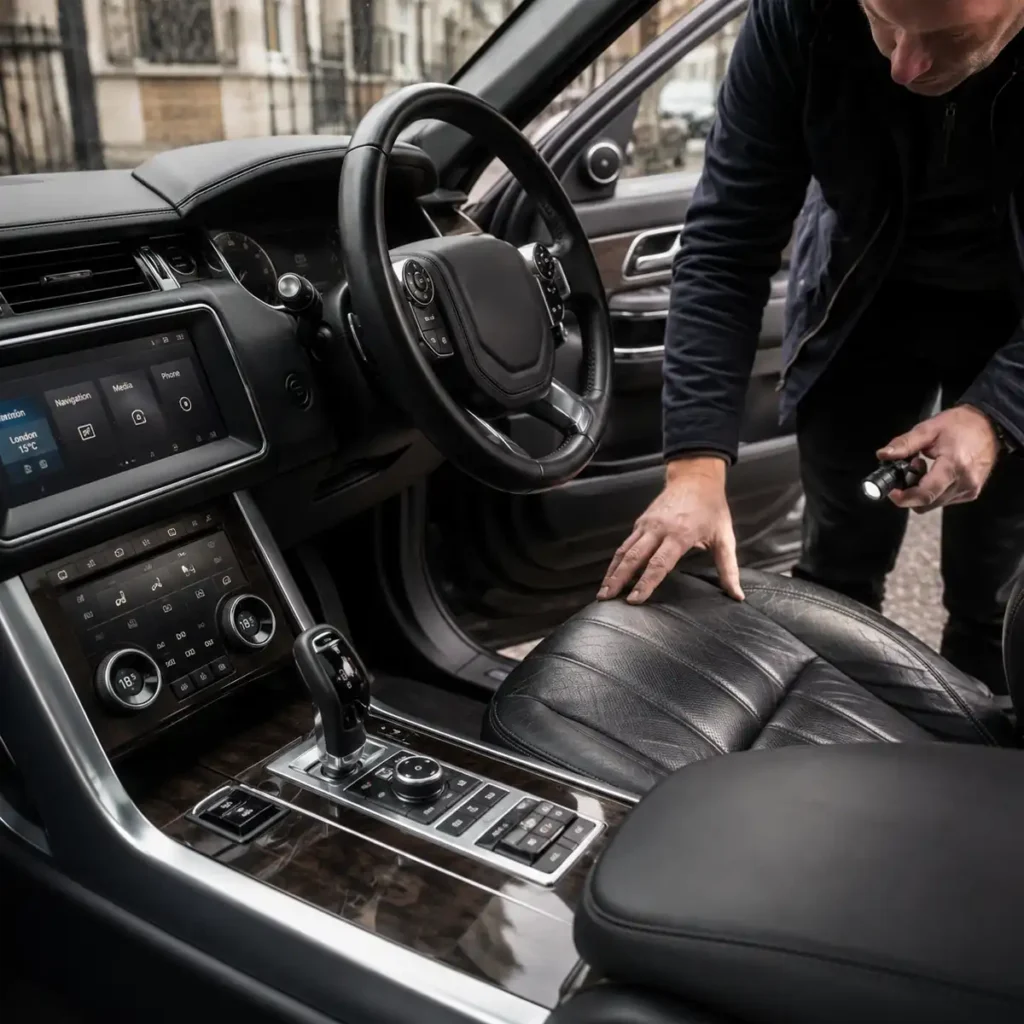
High-end leather (Nappa, Windsor, Diamond stitch) shows unique wear from London commuting. Inspect the driver’s seat bolster (left on RHD cars). Cracked leather or collapsed foam at 30k miles suggests mileage rollback.
Sticky steering wheel buttons or a shiny gear selector? A 2021 luxury car with “low miles” should have neither. Also, test the air conditioning—multi-zone systems cost a fortune to repair after a condenser failure in London traffic jams.
6. The Battery and Start/Stop System
London driving is tough on cars. The engine stops and starts constantly—sometimes hundreds of times a week.
On top of that, luxury cars are packed with power-hungry electronics. Think night vision, soft-close doors, and air ionisers. They drain the battery even when the vehicle’s parked.
So what should you watch for?
- The car hesitates at red lights during start/stop;
- The infotainment system randomly reboots.
Either could mean your auxiliary or main AGM battery is dying.
And here’s the reality check: a new main battery for a BMW 7 Series, including proper coding, will set you back over £600.
7. Panel Gaps and Paint Depth
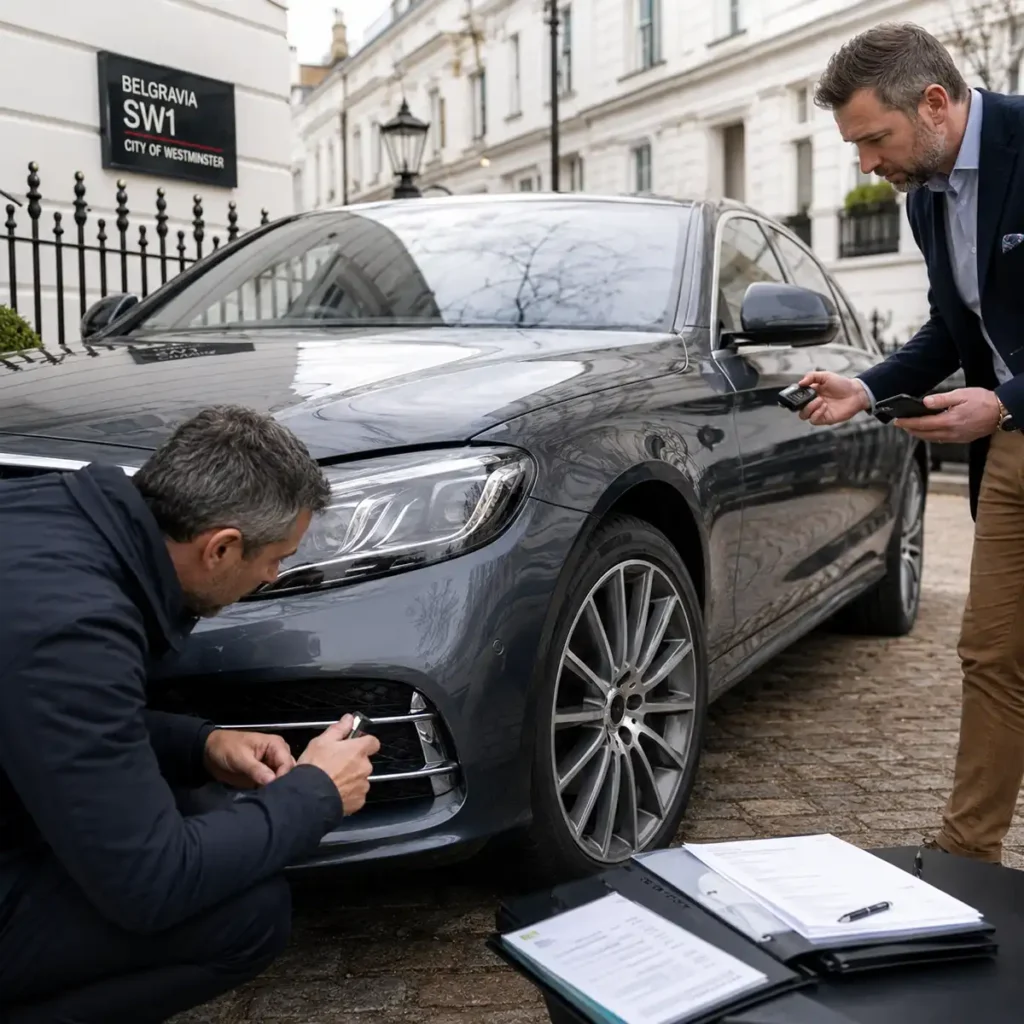
Finally, use a paint depth gauge (or ask a mechanic to bring one). London driving leads to “bump and scrape” parking. Look for uneven panel gaps around the headlights and boot lid. If the car has been resprayed, ask why. A professional repair on a luxury car is fine; a dodgy “smart repair” that hides accident damage is not.
Open the bonnet. Check the front crash bar for respray or uneven bolts. A front-end collision can bend the chassis, affecting expensive radar sensors for adaptive cruise control.
The Verdict
Buying a used luxury car in London isn’t about finding the lowest price; it’s about finding the car that survived the city. Prioritise ULEZ compliance, inspect the air suspension physically, and never ignore the battery health.
Before you transfer a single penny, run a full HPI check, verify the VIN against the logbook, and obtain a finance disclosure report. In a city where luxury is common but honesty is rare, the data is your only real protection. Drive smart, check harder.