
Covent Garden can feel like several London neighbourhoods in one small area. A historic market sits beside busy theatre streets, and both shape how people eat out. Visitors often arrive for the atmosphere, then stay for the choice.
On any day, the tables fill with a mix of tourists, office workers, and local regulars. That mix creates a dining scene that moves fast, especially at peak times. Knowing what to expect makes it easier to enjoy the buzz without feeling rushed.
What makes Covent Garden dining unique
Covent Garden stands out because the setting is part of the meal. Many places sit near the market and piazza, so the energy carries right to the table. As a result, choosing where to eat is often about timing and mood, not just the menu.
The mix of places to eat
The area offers everything from quick café stops to refined, slower meals. Many venues suit a pre-theatre bite, while others work better for a long catch up. This variety helps the district serve both planned dinners and last minute decisions.
With so many options, it can help to narrow things down first. The easiest approach is to start with a short list, then match it to the moment. For a quick scan of options, many visitors use a curated list of Covent Garden restaurants before comparing menus and prices. That small step can save time when the streets feel busy.
Covent Garden rewards diners who enjoy atmosphere as much as food. The market setting, performers, and theatre crowds create a sense of occasion. That is why tourists and locals keep crossing paths here.
Why the streets feel like a show
Covent Garden’s dining mood comes from what surrounds it. The market buildings and open piazza create space for street performers, and crowds often pause to watch. That stop and start rhythm spills into cafés and restaurant queues. Even with a plan, it helps to stay flexible and adjust on the spot.
Tourists often look for a memorable setting and a sense of London theatre. Locals often want good value, steady quality, and a table that keeps to time. Early evenings suit theatre goers who need fast service and clear booking times. Mid afternoons feel calmer, and cafés can be a good place to reset. Weekends bring bigger crowds, so short waits can become long quickly.
When the timing works, the area feels lively rather than hectic. It helps to arrive a little early and take in the performers. That small buffer makes queues easier to handle.
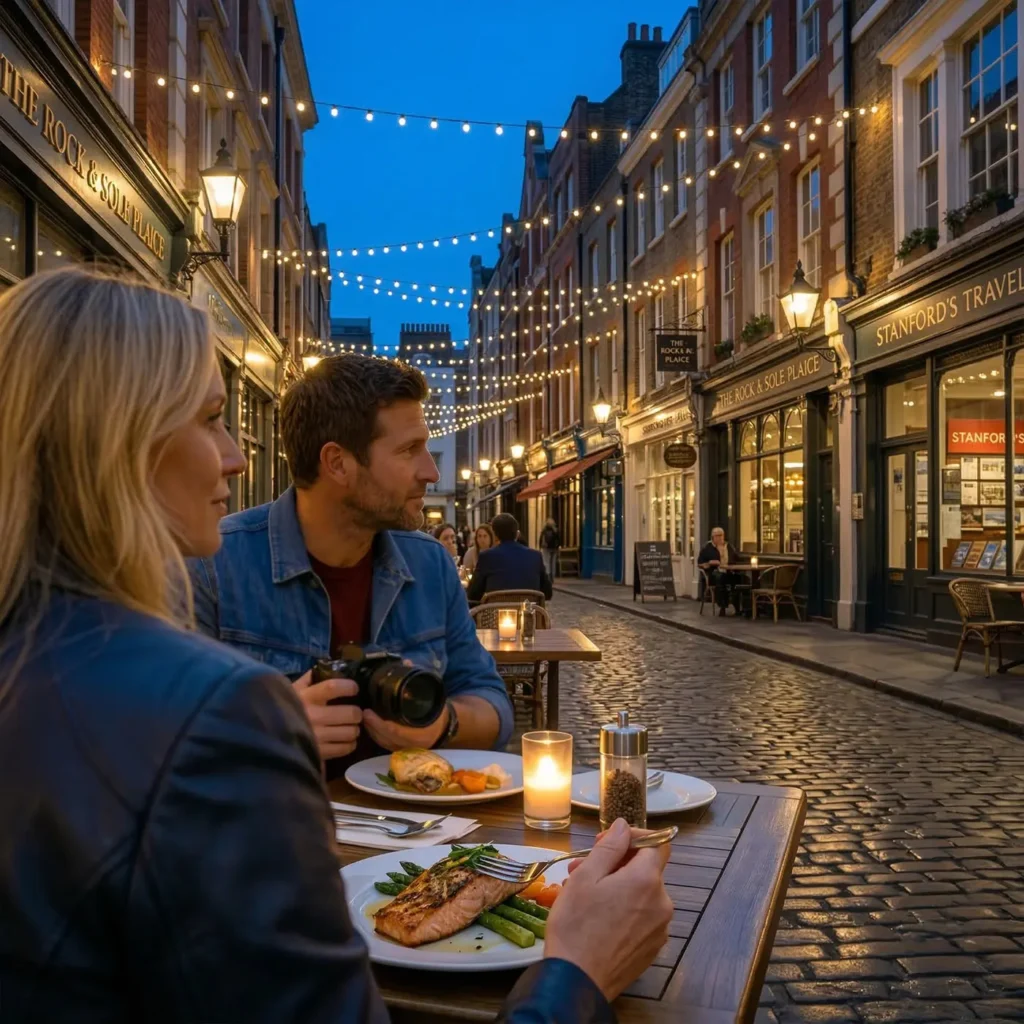

How to pick a spot without stress
A good meal in Covent Garden often starts with a practical choice. Decide first how much time the plan allows, then match that to the type of place. A long dinner and a show on the same night can work, but only with a booking. This approach keeps the evening on track without feeling strict.
Transport also affects the evening, especially after theatre closing times. Checking the Transport for London Journey Planner before heading out can help avoid a rushed finish. Book ahead for popular time slots, especially before evening shows. Aim for side streets when the piazza feels packed. Choose a lighter meal if the plan includes walking and shopping.
With a little planning, the area feels welcoming rather than overwhelming. Leaving a few minutes between courses and curtain-up time helps. The best choice is usually the one that matches the pace of the day.
A Covent Garden meal to remember
The most satisfying visits balance the buzz with a few smart choices. Pick a time that suits the mood, and allow extra minutes for the streets. Keep expectations realistic, and the energy becomes part of the fun. Covent Garden works best when the meal fits the moment, and the moment is allowed to be lively.
Tourists and locals often end up sharing the same tables and queues. That overlap keeps the area varied, but it can also make timing more important than in quieter districts. A flexible plan usually makes the whole experience smoother.
Another reason people return to Covent Garden is the sense of discovery between meals. A short walk can reveal bakeries, wine bars, or smaller cafés tucked along side streets just beyond the busiest corners. These quieter spots offer a contrast to the energy of the piazza while still keeping the theatre district close by.
For many visitors, the best approach is to treat the area as somewhere to explore rather than rush through. A relaxed walk before or after dinner often reveals places worth returning to on another trip. That balance between planning and spontaneity is part of what keeps Covent Garden one of London’s most memorable places to eat.


