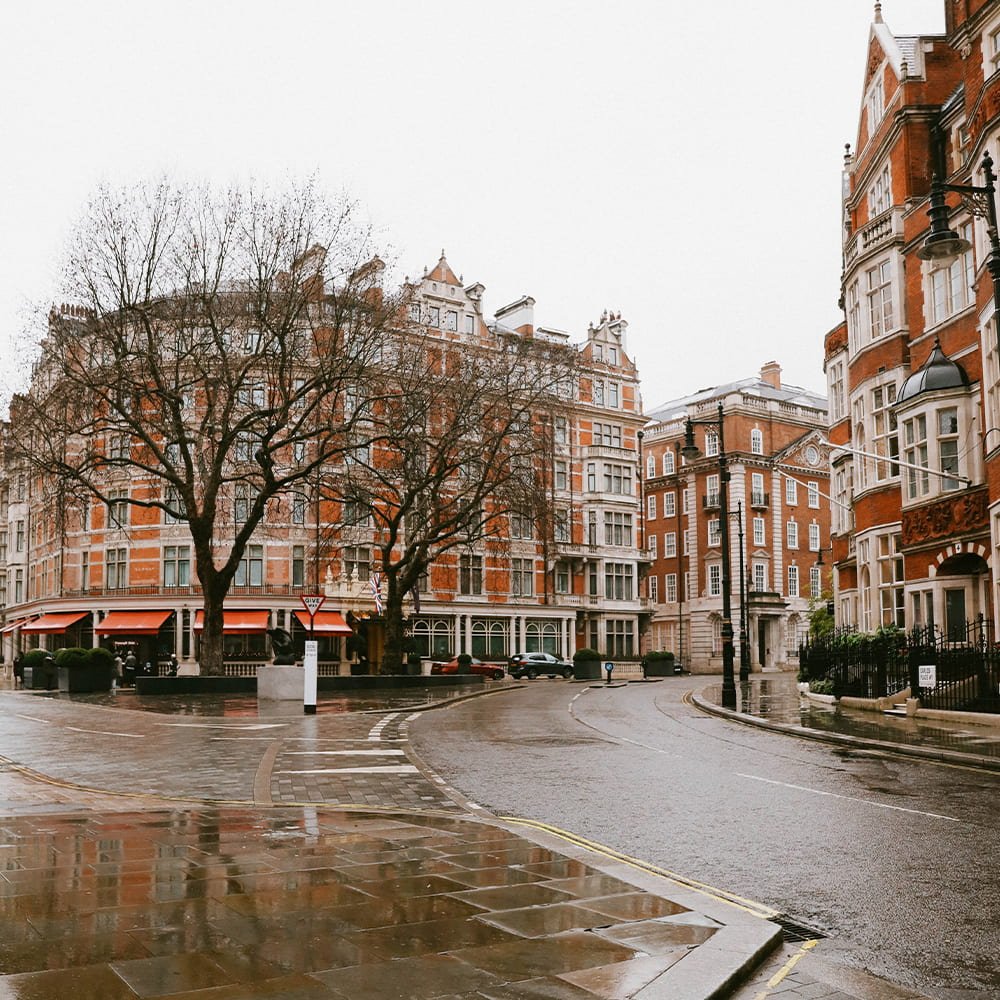
There is no other street in Britain where you can compare this many serious watchmakers on foot in an afternoon. The Bond Street watch boutiques now run almost the full length of the street, and the concentration has thickened rather than thinned over the last decade, at a time when plenty of other retail categories were leaving.
That concentration is not accidental, and understanding why it happened makes the street considerably easier to shop.
Why watchmakers cluster
Most retailers want distance from their competitors, yet the Bond Street watch boutiques sit shoulder to shoulder. Watchmakers want the opposite, for a reason that has held since the trade first organised itself into quarters.
A watch at this level is bought after comparison, and comparison at this level means wearing them. Nobody commits to a five-figure purchase from a photograph. A buyer who can try four houses in ninety minutes is far more likely to buy one of them than a buyer who has to spend a day crossing London, and every house on the street benefits from that.
The second reason is servicing. A mechanical watch is a long relationship, not a transaction, and the after-sales operation matters as much as the sale. Being on New Bond Street means the owner who bought in Geneva or Dubai has somewhere in London to bring it, which is worth a great deal to a manufacture with an international client list.
How the street divides up
There is a rough geography to the Bond Street watch boutiques, and it helps to know it before setting off.
The northern end towards Oxford Street carries a mixture of watch and fashion houses at a broad range of prices. The middle stretch is the densest concentration of standalone manufacture boutiques. Old Bond Street, at the Piccadilly end, holds the highest average price per square foot and the smallest shops.
Multi-brand retailers sit alongside the single-house boutiques throughout, and they serve a different purpose. If you genuinely do not know what you want yet, starting at a multi-brand retailer is more efficient, because you can handle six houses in one room before deciding which boutiques are worth a proper visit.

Two houses that show the range
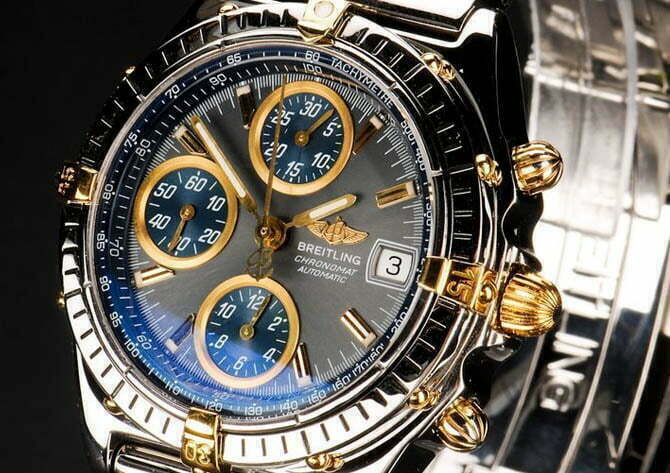
Jaeger-LeCoultre makes the case for movement engineering better than most. The house has produced an unusually large number of its own calibres across its history, supplies movements to other manufactures, and is known among collectors for complications rather than for marketing. Its Old Bond Street boutique reflects that, weighted towards the technical end of the range.
IWC Schaffhausen comes at it from a different direction. Its reputation was built on pilot watches and on legibility, robustness and case engineering rather than on complication for its own sake. The Portugieser and Ingenieur lines sit at opposite ends of that thinking, and trying both in the same visit is genuinely instructive.
Between those two you have most of the axis the whole street operates on. Technical depth at one end, engineered simplicity at the other, with everything else arranged somewhere along it.
New, pre-owned and the grey market
One thing the street will not tell you directly is that the Bond Street watch boutiques are only part of the trade happening around them.
A manufacture boutique sells its own watches at list price, with the full warranty and the house’s own service network behind it. That is the straightforward route and for most buyers it is the right one. What it cannot do is sell you a discontinued reference, or get you a waiting-list piece any faster.
Pre-owned specialists fill that gap, and Mayfair has a serious concentration of them, largely on the side streets rather than the main run. A good pre-owned dealer will show you the papers, the service history and the case for any watch, and will explain honestly whether a case has been polished. Those three things are most of what determines value.
The part to be careful about is the grey market. Watches sold new but outside the authorised network are genuine and are often cheaper, but they usually carry a dealer warranty rather than the manufacture’s, and some houses will not extend goodwill on a piece that never passed through their own network. It is not a scam, but it is a different purchase, and it should be priced as one.
If a deal on a current-production reference looks substantially below list, that is the explanation nine times out of ten.
A handful of questions separate an informed purchase from an expensive guess, and none of them is awkward to ask in a boutique.
Ask what movement is inside and whether the house makes it. In-house does not automatically mean better, and several excellent watches use bought-in calibres refined by the manufacture, but the answer tells you where the money went.
Ask about the water resistance rating and what it actually permits. The figures on a dial are laboratory numbers under static pressure and mean considerably less in real use than most buyers assume.
Ask what the warranty covers and for how long, and whether it requires registration. Terms have lengthened across the industry in recent years and now vary from two years to eight depending on the house, which is a material difference at these prices.
Ask to see the piece in daylight. Boutique lighting is designed to flatter dials, and a colour that reads beautifully under a display spot can look entirely different by the window. Every one of the Bond Street watch boutiques has a window, and nobody will object.
How to visit without wasting the trip
Make an appointment at the Bond Street watch boutiques for anything specific. The boutiques will see walk-ins and will be perfectly welcoming about it, but the piece you want to try may be in a safe, at another location, or not in the country. Ten minutes on the phone beforehand saves the entire journey.
Wear a shirt with a cuff you can push back. This sounds trivial and is not. Trying watches over a tight sleeve tells you nothing about how one sits, and case diameter is the single thing people most often get wrong when buying without wearing.
Try the ones you think are too big and too small. Almost everyone arrives with a number in their head that turns out to be wrong once a watch is actually on the wrist. Lug-to-lug distance matters far more than the diameter quoted in the catalogue.
Ask about service intervals and cost before you buy, not after. A mechanical watch needs periodic servicing, the price is not trivial, and it varies substantially between houses. It is a normal question and any boutique will answer it directly.
What the cluster means for the street
The watch trade has been one of the steadier tenants through a period when Bond Street lost its department stores. Watchmakers took space while other categories gave it up, and several of the newest boutiques on the street run to three and four floors.
A house like IWC Schaffhausen taking and holding a full boutique through that period says more about the street than any rental figure does. It fits the pattern the street has settled into. A business with something specific, difficult and non-replicable to sell can carry the rent. The Bond Street watch boutiques qualify on all three counts, which is why there are more of them now than there were ten years ago rather than fewer.
The same appetite for discretion sustains Mayfair’s cigar rooms, where a humidor key and a quiet back room count for far more than a shopfront.
For anyone shopping seriously, that concentration is the whole point. Nowhere else in the country lets you compare this much of the trade in a single walk, and it is a considerably better way to spend an afternoon than any amount of research online.