Mayfair is not built on spectacle. Its influence is quieter, measured in Georgian proportions, whispered through wrought-iron balconies, and anchored in spaces that have shaped London’s cultural and political life for centuries. This is a district where power dresses modestly and heritage is preserved not as nostalgia but as a foundation. In Mayfair, every square and side street tells a story of craft, diplomacy, ritual, and reinvention.
This article is not a tourist list. It is an editorial walk through ten landmarks that reveal the soul of Mayfair — from reimagined churches to musical townhouses, from storied hotels to squares older than the United States. These places endure not because they resist change but because they embody it with grace. Together, they explain why Mayfair matters — not just to London but to how a great city remembers, adapts, and continues to set the tone for the world.
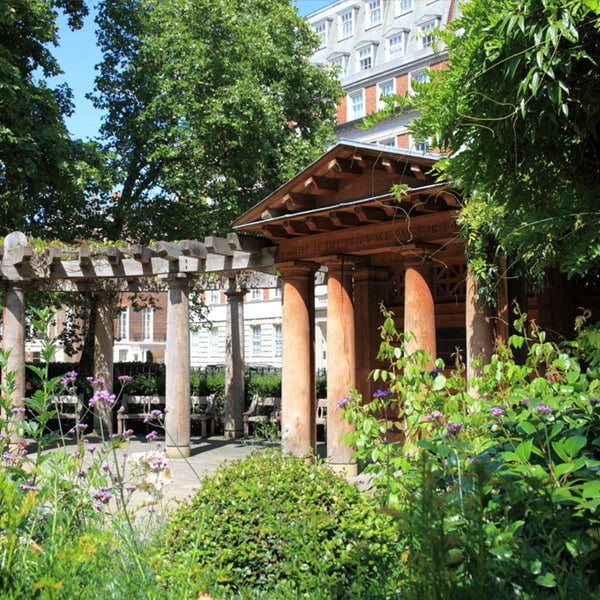
Grosvenor Square
At the heart of Mayfair stands Grosvenor Square, one of London’s most distinguished public spaces. Spanning six acres, it is the second-largest garden square in the capital and has played a central role in the story of Mayfair since the early 18th century. Originally laid out in the 1720s by Sir Richard Grosvenor, the square was designed to exude grandeur and proportion, a vision still felt today.
Georgian townhouses, embassies, and statues honouring figures such as Franklin D. Roosevelt and Dwight Eisenhower line the square’s perimeter — remnants of its wartime moniker, “Little America.” Its deep connection with diplomacy continues, even as its role has evolved from international epicentre to a place of reflection and renewal.
Work is now underway to restore Grosvenor Square to its original Georgian oval layout, with plans to introduce biodiverse gardens and water features. This transformation, set for completion in the coming years, reflects the delicate balance of heritage preservation and sustainable urban planning. Accessible year-round, the square remains a cultural anchor in Mayfair, where history is honoured, and the future is thoughtfully designed.
Fun Fact: During WWII, General Eisenhower coordinated Allied operations from Grosvenor Square, reinforcing its title as “Little America.”
Royal Academy of Arts
No exploration of Mayfair’s cultural institutions would be complete without the Royal Academy of Arts, housed in the stately Burlington House on Piccadilly. Founded in 1768 under the patronage of King George III, the Academy has long stood as a bastion of artistic freedom and excellence. Unlike most national museums, it operates without government funding — a fiercely independent institution led by artists and architects.
Burlington House itself is a masterpiece. Built in the 17th century and reimagined in the 19th, the Grade II* listed building pairs neo-Palladian architecture with the subtle power of an institution dedicated to both creation and critique. Inside its halls, the annual Summer Exhibition remains one of the capital’s most anticipated events — an unbroken tradition since the 1700s.
A major renovation in 2018 extended the Academy’s presence into Burlington Gardens, opening new spaces for exhibitions and education. The result is a rare fusion of historical gravity and contemporary relevance. Here, visitors encounter not only celebrated artworks but also glimpses into the creative process at the RA Schools, Britain’s oldest art school. The Royal Academy defines Mayfair not just by what it displays, but by what it nurtures — artistic ingenuity, public engagement, and cultural debate.
Claridge’s
There are hotels, and then there is Claridge’s. Stepping through its iconic Art Deco doors is to enter a world where London’s history, elegance, and hospitality converge. Founded in 1856 and remodelled in the 1890s, Claridge’s swiftly became the unofficial residence for royalty, aristocracy, and Hollywood elite.
Its interiors are a tribute to craftsmanship and taste: marble columns, mirrored ballrooms, wrought-iron lifts, and delicate mouldings pay homage to the Victorian and Jazz Age eras. Queen Victoria was among the early guests, and during the Second World War, exiled monarchs made the hotel their sanctuary.
But Claridge’s is no relic. Recent years have seen a monumental expansion beneath its structure — a subterranean project that added a five-storey basement, complete with a spa, wine cellar, and swimming pool, all completed without closing its doors. This remarkable feat of engineering underlines the hotel’s commitment to innovation without disturbing its soul.
Claridge’s continues to be a pillar of Mayfair — a setting for discreet negotiations, family celebrations, and moments of indulgence. It reflects the neighbourhood’s rare ability to marry tradition with transformation, ensuring that luxury never loses its meaning.
Mercato Mayfair
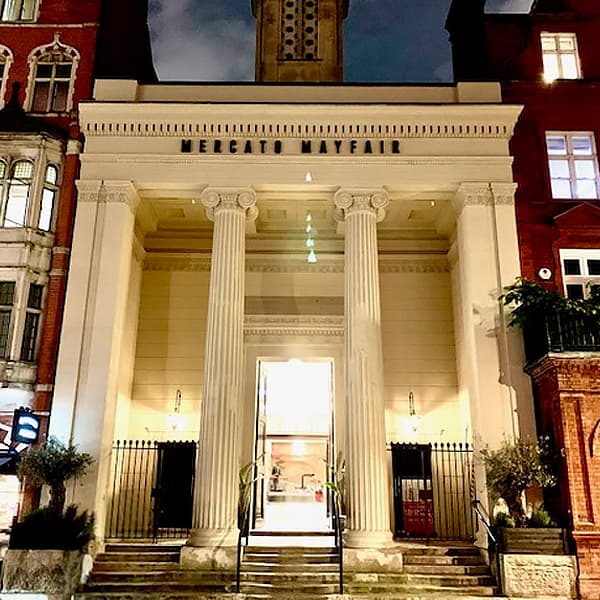
Mayfair is often associated with fine dining and sophisticated tastes, but Mercato Mayfair offers something more unexpected. Housed within the former St Mark’s Church on North Audley Street, this food hall occupies a restored Grade I-listed Anglican church dating back to the 1820s.
Designed in Greek Revival style with a commanding columned portico, the church once served the local parish but was eventually deconsecrated and left to decay. By the early 2000s, it was on Historic England’s endangered list. In 2019, thanks to a £5 million restoration by the Grosvenor Estate, it was reborn as one of London’s most innovative culinary destinations.
Today, beneath stained-glass windows and soaring vaulted ceilings, visitors find a vibrant mix of food stalls, artisan groceries, wine bars, and even a rooftop terrace. In the crypt, community events and workshops take place in a setting that respects its sacred past while serving modern needs.
Mercato Mayfair is more than a clever reuse of space. It is a case study in sustainable development, showing how heritage buildings can be adapted to enrich community life. With a loyal following of locals and a steady stream of visitors, it breathes new life into a once-forgotten building — proof that preservation and progress can coexist.
Mount Street
Strolling down Mount Street is like stepping into a living painting of Mayfair’s dual personality — its opulence and its intimacy. Flanked by red-brick Edwardian buildings with ornate stonework and wrought-iron balconies, the street offers more than high-end shopping; it encapsulates the area’s residential elegance and cultural history.
Developed in the late 19th century by the Grosvenor Estate, Mount Street is lined with designer boutiques, private banks, and legacy businesses. Among its fixtures is James Purdey & Sons, gunsmith to nobility since 1882, and the street has played host to historic residents including a young Winston Churchill.
In recent years, the street has undergone a quiet transformation. Art galleries, fashionable restaurants, and restored heritage pubs such as The Audley Public House (originally built in 1888) signal a renewed cultural vibrancy. The nearby Mount Street Gardens provide a green respite, adding to the street’s village-like charm.
Mount Street is where Mayfair’s heritage meets its contemporary rhythm — where a morning coffee at the Connaught blends into an afternoon browsing bespoke tailoring or visiting an art opening. It stands as a testament to Mayfair’s ability to preserve beauty while embracing modernity.
Shepherd Market
Tucked between Curzon Street and Piccadilly, Shepherd Market offers a rare sense of intimacy in a neighbourhood known for discretion. Developed in the mid-1700s on the site of the original May Fair — the very fair that gave the district its name — this pocket of alleys, cobbled squares, and bow-fronted buildings has always stood slightly apart from Mayfair’s polished exterior.
In the early 20th century, Shepherd Market became a magnet for artists and writers, including Michael Arlen and Anthony Powell, who were drawn to its secluded charm. Its history also includes a streak of quiet defiance — from creative enclaves to discreet scandals. Today, the area’s architecture remains largely intact: 18th-century cottages, boutique tailors, intimate pubs, and flower-filled balconies maintain the square’s character.
It is this village-like quality that sets Shepherd Market apart. You can sip a pint at a pavement table while a delivery van trundles past the very spot where London’s spring fair once erupted in colour and noise. This balance between old-world eccentricity and upscale tranquillity is essential to Mayfair’s identity, and nowhere expresses it better than here.
Berkeley Square
There are few places in central London that retain a genuine sense of peace, but Berkeley Square is one of them. Its quiet strength lies in its history, its architecture, and its ancient plane trees — some of the oldest in the city, planted in 1789 and towering still.
Laid out by architect William Kent in the 1730s, the square quickly became one of London’s most fashionable addresses. Aristocrats and politicians lived behind its Georgian façades; today, it houses embassies, private clubs, and hedge funds. Yet its garden remains open to the public, offering benches, lawns, and seasonal installations — a serene escape in the middle of wealth and movement.
The name Berkeley Square carries cultural weight too. Immortalised by the song “A Nightingale Sang in Berkeley Square,” it has come to symbolise a softer, more romantic side of Mayfair. But it also tells lesser-known tales: No. 50 was once said to be haunted, and sightings of rare Bentleys beneath the trees have become urban folklore. The square combines natural heritage with social mystique—a reminder that even in Mayfair, nature and storytelling endure.
Burlington Arcade
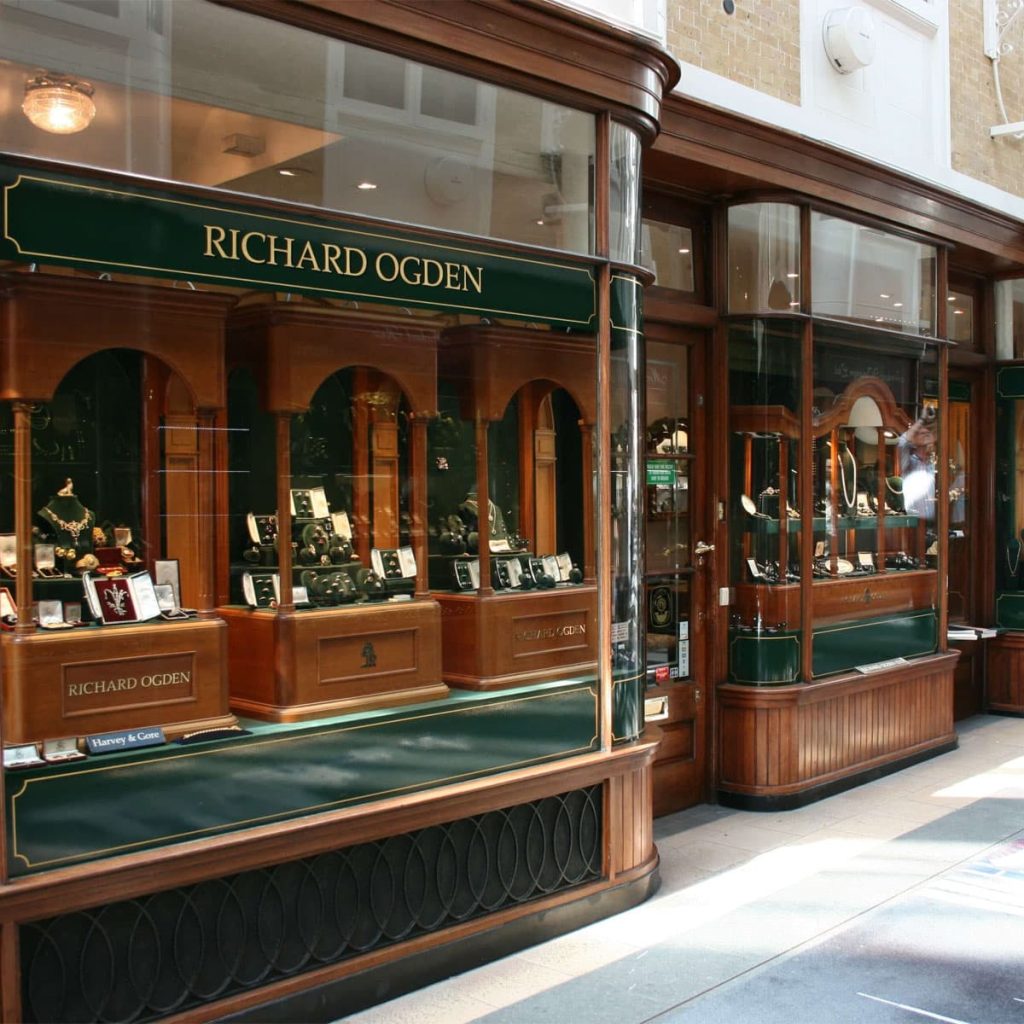
Step beneath the glass-roofed corridor of Burlington Arcade, and you enter a world that has barely changed since 1819. Commissioned by Lord George Cavendish and opened as a genteel promenade, this was London’s first purpose-built shopping arcade — a sanctuary for refined browsing, designed to keep retail civilised and elegant.
Lined with 40 boutiques, from antique jewellers to artisanal perfumeries, the arcade is watched over by liveried Beadles, Britain’s oldest private police force. Their presence preserves a strict sense of decorum — no whistling, no running, no open umbrellas — all part of a code that maintains Burlington Arcade’s rarefied air.
Yet despite its formality, the arcade is warm and deeply welcoming. Shoppers and tourists alike are free to stroll its tiled walkways and admire hand-cut glass displays under the soft glow of natural light. The architecture, with its uniform Georgian façades and Doric entrances, speaks of craftsmanship and care.
Burlington Arcade is more than retail. It is ritual, rhythm, and a statement of continuity. In a city of constant reinvention, this arcade stands still — and in doing so, it quietly defines the permanence of Mayfair’s refined sensibility.
Handel & Hendrix in London
It would be hard to script a more compelling coincidence than two music legends occupying adjacent homes centuries apart. Yet that’s exactly what visitors find at Handel & Hendrix in London, a museum housed in side-by-side Georgian townhouses on Brook Street.
At No. 25 lived George Frideric Handel, the Baroque composer whose oratorios, including “Messiah,” shaped classical music. Just next door, at No. 23, Jimi Hendrix settled during the 1960s at the peak of his fame, calling the flat his “first real home.” This remarkable juxtaposition — two revolutions in sound under one roof — has become one of Mayfair’s most meaningful cultural attractions.
The museum has undergone a meticulous restoration. Handel’s home includes his bedroom, rehearsal room, and working instruments, while Hendrix’s flat bursts with psychedelic colour, vintage records, and personal effects. The contrast is powerful, yet both spaces feel intimate and deeply human.
Following a multi-million-pound renovation in 2023, the museum now offers live concerts, educational events, and curated exhibitions that highlight the connections between music, place, and personal expression. It represents Mayfair not as a monument to wealth, but as a quiet nurturer of genius. In these modest rooms, centuries apart, music was made that changed the world.
St George’s Church, Hanover Square
In a district known for its sophistication and restraint, St George’s Church provides both spiritual centre and architectural gravitas. Built between 1721 and 1725 as part of the Fifty New Churches Act, it was designed by John James — a student of Sir Christopher Wren — and remains one of the city’s most beautiful Baroque churches.
Its façade, with six Corinthian columns, commands the corner of Hanover Square with stately presence. Inside, the soaring nave and abundant natural light reflect a classical sense of symmetry and grace. Over the centuries, it has hosted society weddings, funerals of note, and countless Sunday congregations. One of its most famous guests was Theodore Roosevelt, who married Edith Carow here in 1886.
Musically, St George’s has a long-standing connection with Handel, who lived nearby and played the church’s organ. To this day, the venue is a cornerstone of the annual London Handel Festival, celebrating the composer’s ties to the parish.
Recent upgrades have made the church more accessible while preserving its integrity. A new undercroft space now serves as a venue for community use, and lunchtime recitals remain popular with local workers. St George’s exemplifies what anchors Mayfair beyond fashion or finance — continuity, dignity, and a commitment to both faith and culture.
Final Reflections on Mayfair’s Landmarks
The character of Mayfair is not built on spectacle but on consistency. Each of these ten landmarks, whether a leafy square, a reimagined church, or a quiet arcade, contributes to a neighbourhood that values craft, elegance, and legacy over novelty. Mayfair is not static — it evolves — but it does so by respecting what has always made it distinct. In the end, these landmarks tell one story: that excellence endures when built upon thoughtful foundations.