Walk out of Bond Street Elizabeth Line‘s Hanover Square exit in 2025 and it quickly becomes clear that this is no longer a sleepy corridor for hedge funds and headhunters. The newly landscaped square now functions as a high-density hub where luxury retail, global finance and destination dining intersect, and The MAINE Mayfair has placed itself squarely at the centre of that story.
The move that changed everything was infrastructure. With the Elizabeth Line fully bedded in, Bond Street has climbed to become one of the UK’s busiest stations, handling around 38.3 million annual entries and exits in 2025, up from 19.4 million just a year earlier. That is not a gentle uplift, it is a wholesale change in who can realistically use Hanover Square restaurants as everyday haunts, not occasional treats linked to a shopping trip on New Bond Street.
Above ground, Great Portland Estates’ Hanover development has stacked 168,000 square feet of Grade A offices on top of the station, now home to the likes of KKR and Glencore. For The MAINE Mayfair, that means a built-in clientele of private equity and commodities executives whose daily patterns run on expense accounts, working lunches and high-impact client entertaining. For many of them, the restaurant has become a canteen, cocktail bar and after-hours theatre.
The arrival of Mandarin Oriental Mayfair, opened in 2024 with just 50 rooms and 77 private residences, adds another layer. Its guests, often ultra high net worth travellers, are within a minute’s walk of a restaurant that offers five-figure wine bottles if required, but feels looser and more plugged in to local life than a hotel dining room. Paired with neighbours such as Dries Van Noten, Pronovias and Grand Seiko fronting New Bond Street, the square now functions as a compact circuit where high fashion, hospitality and investment banking share the same pavement.
Demographically, the area no longer fits the lazy caricature of Mayfair as a preserve of retirees and long term absentee landlords. Data for the immediate postcode around Hanover Square indicates that around 60% of residents are aged 20 to 39, almost double the London average. A significant proportion fall into the “Other White” census category, reflecting a concentration of European and North American professionals who bring expectations shaped by New York, Dubai, and Paris as much as by traditional London clubs. For The MAINE, with its New England brasserie branding and loud dining room, this is almost the perfect audience.
In short, the external conditions are in place for an operation that serves as an office canteen during lunch, a party restaurant in Mayfair at night, and a post-shopping pit stop for visitors who can travel from Heathrow to Hanover Square in under half an hour.
Joey Ghazal and the evolution of a transatlantic brand
The driving force behind The MAINE Mayfair is not a household-name chef but Joey Ghazal, a Canadian restaurateur raised in Dubai who has built a group on concepts rather than individual celebrity. His approach sits in the fast-growing territory between polished chain and one-off independent, borrowing the scalability of the former and the personality of the latter.
Ghazal’s career began in Montreal, where he went from teenage busboy to development lead for a major restaurant group before the age of 25. That background matters because it explains why The MAINE is engineered as a commercial machine first and a chef’s playground second. The offer is built around dishes that are easy to understand, simple to execute at high volume and forgiving across a wide range of palates, which makes sense in a dining room that can seat around 350 guests at once.
The original MAINE opened in Dubai in 2014, transforming a neglected JBR car park into a brasserie that quickly became a staple of the expatriate scene. Subsequent Dubai sites refined a template of seafood towers, steaks, cocktails, and a mood not far removed from a well-funded house party. The move into Mayfair in late 2021 was consciously framed by Ghazal as a step change into heritage driven luxury, taking the bones of the Dubai concept and fitting them into a Georgian townhouse with a more intricate, theatrical edge.
Central to the brand is the “New England” narrative. In interviews, Ghazal describes the concept as a homage to summers spent on the East Coast of North America. In practice, that nostalgia has been reworked into a form of relaxed, club-like exclusivity. Oysters, chowder, lobster rolls and ribeye steaks are familiar enough to international visitors that they remove any anxiety about how to order in a high-priced Mayfair room, yet they still carry associations of old-money seaside towns and East Coast prep schools. The food is not there to shock, it is there to anchor a night that may involve live jazz, burlesque and serious drinking.
Inside 20 Hanover Square and its theatrical design
If Ghazal supplies the vision, the spatial drama comes from Brady Williams, the London studio responsible for translating the concept into a building with history that predates the United States itself. The restaurant occupies 20 Hanover Square, the only original Georgian townhouse still standing on the square.
Built in 1720 as the home of James Graham, the Duke of Montrose, the property survived both wartime disruption and waves of commercial redevelopment that replaced many neighbours with offices and car parks. Within the wider Hanover project, retaining this structure was seen as essential to preserving a sense of continuity in a square that had been subjected to intense construction work. Behind the period façade, however, the developers excavated deep into the ground, creating space for multiple dining rooms on three levels, including substantial subterranean floors.
Brady Williams and Ghazal chose to treat the building as an “immersive townhouse”, each area telling a slightly different story while still reading as part of one large, interconnected house party.
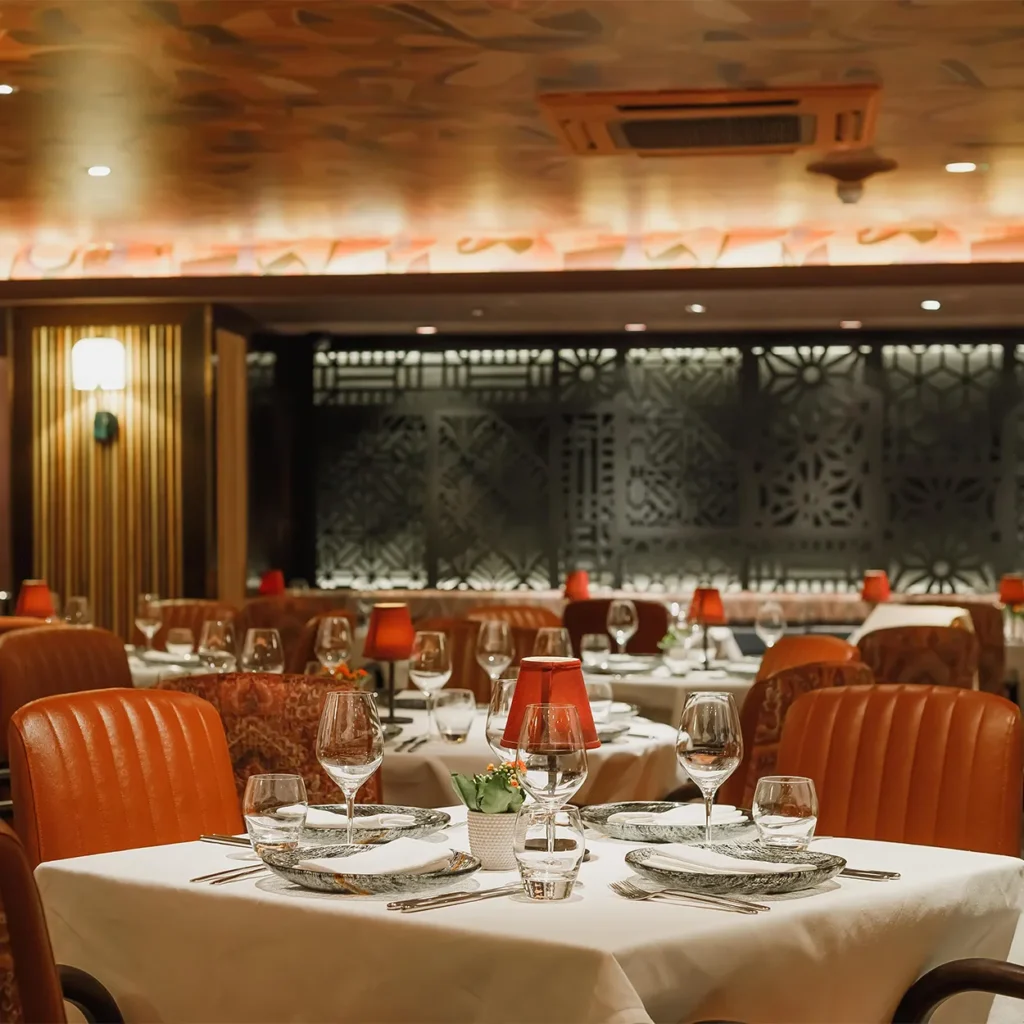
The Drawing Room, just inside the main entrance, reads as a polished, mid century tinged salon with hints of colonial club styling. A dramatic capiz shell chandelier casts a soft glow over rattan-backed chairs, plush banquettes and a mirrored cocktail bar. Specialist painted walls that mimic travertine and other stone finishes give the room a subtle depth that works for both daytime business lunches and early evening martinis.
Below, reached via a sweeping staircase that has become one of Hanover Square’s most photographed entrances, sits the Brasserie. This is the heart of the operation, a performance-focused dining room where almost every seat faces a stage framed by white columns and red velvet curtains. Oversized chandeliers, glossy surfaces and carefully calibrated low lighting combine to create the sense of walking into a set rather than a simple restaurant. When the band strikes up and the burlesque acts arrive later in the evening, the layout ensures there are very few truly anonymous corners.
Besides it, the Tavern offers a grittier counterpoint. Brick alcoves, warm timber and red leather are used to evoke something closer to a reworked cellar bar. It is here that oyster happy hours and informal drinks take place, and it serves as both a waiting area for the main room and a standalone destination for workers from nearby offices who want drinks and snacks without committing to the full Brasserie experience.
From the Medici Courtyard, which links Hanover Square to New Bond Street, guests can access the Terrace, a former stable block recast as a covered garden with striped fabrics, layers of planting and outdoor heaters that make it viable throughout the year. In a corner of Mayfair where genuine outdoor space is at a premium, the Terrace has become particularly valuable for smokers, large groups and brands seeking photogenic backdrops for events.
Even the bathrooms have been turned into a theatre. The so-called “Toilet Club” combines mirrored walls with a small, jewel box space that can double as a miniature private room for a DJ or tightly curated party. It is an example of how the design works hard to turn almost every corner into a talking point.
Fun fact: The townhouse at 20 Hanover Square that houses The MAINE Mayfair is the only original Georgian building left on the square, dating back to 1720.
Food at The MAINE Mayfair brasserie classics built for a party crowd
The menu at The MAINE Mayfair is not pitched at diners hunting the next groundbreaking tasting menu. It is built instead around a familiar brasserie repertoire that leans heavily on seafood, steak and comfort dishes, with pricing that matches its Mayfair address.
The Raw Bar is a visual and financial centrepiece. Towers loaded with oysters, crab, prawns and other shellfish arrive at tables as much as status symbols as starters, encouraging sharing and spiralling bills. Oysters, often sourced from producers such as Carlingford Lough, anchor a section that plays well with both Champagne drinkers and North American guests for whom East Coast-style seafood towers are a nostalgic staple.
Hot starters include a branded Caesar à la M, a play on the classic salad bolstered with extras such as crunchy chicken and bacon, along with beef carpaccio tonnato that merges Italian ideas of thinly sliced meat and tuna-based sauce into a richer hybrid. Baked diver scallops arrive under blankets of cheese sauce, mustard and parmesan crumb. A crispy fish taco, around the £18 mark for a serving of breaded cod and salsa, speaks to the way luxury restaurants now routinely borrow from casual formats.
On the mains, the New England narrative appears in clam chowder and lobster. Still, the majority of sales are likely driven by whole seabass, halibut with béarnaise, and the steak section. A Dover sole meunière sits at the very top of the fish pricing at around £70 for a sizeable portion. At the same time, meat eaters can opt for a 35-day aged Lake District rib eye for two or even Chilean Wagyu at higher price points. Pasta dishes such as spicy rigatoni in vodka sauce and truffle-roasted chicken are designed to comfort diners who want something rich, recognisable and easy to eat while they talk or watch the stage.
Starters cluster broadly in the low to mid teens, with many mains in the £30 to £40 range and several signature items reaching significantly higher. Add desserts such as sticky toffee pudding, side orders, and the compulsory Mayfair service charge, and a three-course dinner with modest drinks will nudge £100 per person. The venue’s own minimum spend of £100 per guest in the Brasserie on Friday and Saturday nights formalises that reality for late bookings.
Critical reaction to the cooking has been mixed. In the early days, Grace Dent‘s review in The Guardian was notably unforgiving, describing a lobster roll that looked bereft and fish tacos that “brought no happiness”, concluding that many guests were more interested in the scene than the plate. In contrast, more recent diner reviews on platforms such as TheFork have typically scored food around 8.5 out of 10, praising fresh oysters and reliable steaks while sometimes noting that the dishes feel safe for the price.
Taken together, these responses support a clear picture. The kitchen at The MAINE is built for consistency at scale rather than fireworks. Dishes rarely surprise, but they are engineered to please groups that might include clients, relatives, colleagues and friends with varying levels of culinary adventurousness. For the occasion-driven dining that dominates Hanover Square, that is arguably the point.


Wine cocktails and the late night liquid economy
If the food is the foundation, the drinks programme is where The MAINE Mayfair presses its commercial advantage. The wine list is compact by Mayfair standards yet manages to cover both classic regions and a broader spread of styles aimed at a younger, less rigidly French-focused clientele.
Instead of a weighty tome heavy with first-growth Bordeaux, guests find a more agile selection that might move from lesser-known Champagnes to Loire Sauvignon Blanc, to Argentine Malbec, and back to European Pinot Noir. Listings such as Pouilly Fumé Les Challoix Silex, Les Volelets Pinot Noir and Staphyle Iris Doble Malbec offer recognisable names and a range of price points without overwhelming diners who are already navigating a noisy room and a detailed food menu.
The sommelier team is regularly singled out in reviews for steering guests away from the most predictable choices, suggesting bottles that suit both the menu and the atmosphere. That element of guidance is particularly valuable for corporate tables where a junior staffer has been tasked with choosing wine in front of a senior client.
Cocktails, however, are the obvious headline act. Priced in the high teens, these are works of visual design as much as flavour. A spicy margarita sits alongside spicy palomas built on agave spirits, citrus and bell pepper sodas, cucumber gimlets with green juice, and other drinks that nod to wellness language while still delivering a punch. They photograph well under the restaurant’s flattering lights, and they fit the performance-led layout of the Brasserie.
The Tavern leverages an early evening “Shuck Fest” concept, pairing discounted oysters with drinks between late afternoon and early evening. This sort of targeted promotion helps fill the quieter gap between lunch and dinner, keeping the building lively and staff engaged throughout the day.
Cabaret energy and who the atmosphere suits
What truly separates The MAINE Mayfair from more conventional Mayfair restaurants is its entertainment programme, branded as The Act. The Brasserie is not just a dining room with background music, it is a purpose-built stage for live performances threaded through the evening.
Early in the night, jazz trios and soul singers set a tone that feels closer to a classic supper club than a nightclub. Names including the Jamie Safir Trio and vocalist Emma Smith have appeared on lineups, bringing a level of musicianship that rewards those who arrive for an early sitting. As service progresses, the energy rises, with burlesque performers, cabaret routines and, later still, DJs in the Powder Room shaping the trajectory from dinner to party.
Scheduled appearances from DJs such as Sun Philips, Venice X and Tony Cortez in 2024 and 2025 underline the restaurant’s commitment to staying in step with a younger demographic that values music as much as food. The ambience scores on booking platforms reflect that success. TheFork users, for example, typically rate the atmosphere around 9.5 out of 10, while also warning that this is not an environment suited to quiet catch-ups or whispered secrets.
Noise levels are frequently described as loud, and the space rewards guests who embrace dressing up. A “smart, elegant” dress code is enforced at the door, with sportswear turned away. For some, that gatekeeping confirms that they have chosen a special night out. For others, particularly those encountering the restaurant without context, it can come as a surprise.
The net result is that The MAINE is best thought of as a hybrid of restaurant, club and cabaret bar. Diners who want to talk business over a hushed three-course meal may be better served elsewhere. Those who are happy for the conversation to compete with the band, the dancers and the crowd will likely find it hits the mark.
Service culture and operations behind the scenes
Service at The MAINE Mayfair is where the polish of the setting occasionally grates against the realities of post-Brexit London hospitality. Staff wear white tuxedo jackets that match the building’s old-world glamour, and at its best, the service can feel crisp and well-choreographed, particularly when timed to musical cues and stage performances.
Many guests praise individual servers for warmth and efficiency. Others report experiences at the reception desk that feel cool or dismissive, especially on busy weekend nights when the front-of-house team are juggling strict booking times, minimum spends, and the expectations of regulars and VIPs. Reviews often mention a “velvet rope” mentality that will delight some and infuriate others.
Operationally, the building is used to the full. The Brasserie runs late, with weekend service extending beyond midnight, ensuring that The MAINE captures the post-theatre and late sitting crowd who might otherwise decamp to bars or clubs. Reservation policies explicitly state a £100 minimum spend per person for prime-time Brasserie bookings, which protects revenue while setting clear expectations about the budget before guests arrive.
Private events, corporate and celebrations
With its segmented layout and variety of rooms, The MAINE Mayfair functions as a significant events venue as well as a restaurant. The Drawing Room, with its residential feel and natural light, works for brand launches, press breakfasts and standing receptions that want to feel private yet still plugged into the prestige of Hanover Square.
The Tavern is well-suited to smaller corporate gatherings and after work drinks for local offices. The Terrace, covered and heated, is one of the relatively few outdoor-feeling spaces in the area that can host larger groups even in winter. The Powder Room and associated club-like spaces, meanwhile, appeal to birthday parties and fashion or media groups looking for a degree of seclusion along with a DJ booth.
Group dining menus are typically structured around package prices in the £100 to £120 range for food alone, with wine pairings and premium drinks lifting the spend considerably for those who opt for them. For corporates and affluent private hosts, the attraction lies in being able to book out a self-contained environment with food, drink and entertainment essentially built in, with The MAINE brand doing much of the work in terms of perceived prestige.
Market position awards and competitors in 2025
By 2025, The MAINE Mayfair occupies an interesting position in the London dining ecosystem. It does not appear in the Michelin Guide, either with a star or a Bib Gourmand, which is consistent with its emphasis on scene and experience ahead of technical experimentation. Yet it has collected accolades that speak to its influence in the lifestyle and luxury segment.
At the Fact Dining Awards London 2025, The MAINE was named Best European Restaurant, placing it in the same conversation as restaurants that are more food-centric on paper. That kind of recognition reflects the way judges and sponsors value a venue that draws crowds, generates social media impressions and keeps energy levels high night after night.
Competition comes from neighbours and near neighbours that operate in similar territory. Amazonico offers a dense jungle of decor and Latin-leaning cooking; Sexy Fish combines high-priced sushi with a club-like soundtrack; Bacchanalia pushes theatrical interiors and grand-gesture dining; while The Wolseley continues to cater to a more restrained business and society crowd. Against that set, The MAINE differentiates itself with its specific New England meets cabaret identity and the sense that you are in an actual townhouse rather than a purpose-built box.
Should you book The MAINE Mayfair now?
For readers of Mayfair London and diners weighing up where to eat in Mayfair, the key question is not whether The MAINE Mayfair delivers the most intricate cooking in W1. It does not set out to. The more relevant question is whether it fits the occasion, mood and budget for a particular night.
Location is an obvious strength. Being practically on top of Bond Street station makes it straightforward for guests coming from Heathrow, Canary Wharf or further afield. Those staying at Mandarin Oriental Mayfair or working in the Hanover offices can be from desk or suite to cocktail within minutes. The setting is undeniably impressive, and for out-of-town visitors, it delivers a hit of London glamour that feels fully formed rather than generic.
Food-wise, diners should expect well-executed brasserie dishes rather than taste-altering revelations. A table that focuses on oysters, towers, steaks and a couple of familiar desserts is unlikely to leave hungry, provided the budget stretches to the prices involved. Those who measure restaurants primarily on innovation or technical finesse will find more to excite them elsewhere in the capital.
Where The MAINE excels is at occasions that call for high-energy Mayfair dining. Birthday parties, hen groups with a healthy budget, corporate teams celebrating a deal, visiting friends wanting a memorable night in London and couples who prefer their date night with a live soundtrack rather than candlelit quiet will all find reasons to enjoy themselves. The live entertainment, polished crowd and late hours make it particularly attractive for midweek and Thursday nights when many other dining rooms are winding down.
Given the minimum spend rules and the tendency for drinks to push bills upwards, this is not a casual midweek local for most. Treat it instead as one of those rare venues that attempts to be a restaurant, club, cabaret, bar and event space all in one. In that sense, The MAINE Mayfair captures the current phase of Hanover Square itself, blending Georgian heritage with a very modern appetite for noise, spectacle and social visibility.
For diners seeking a quiet corner and intricate tasting menus, the West End offers subtler addresses. For those who want a night that feels like stepping into a well-choreographed party in a Georgian townhouse, The MAINE remains one of the most distinctive options in central London.