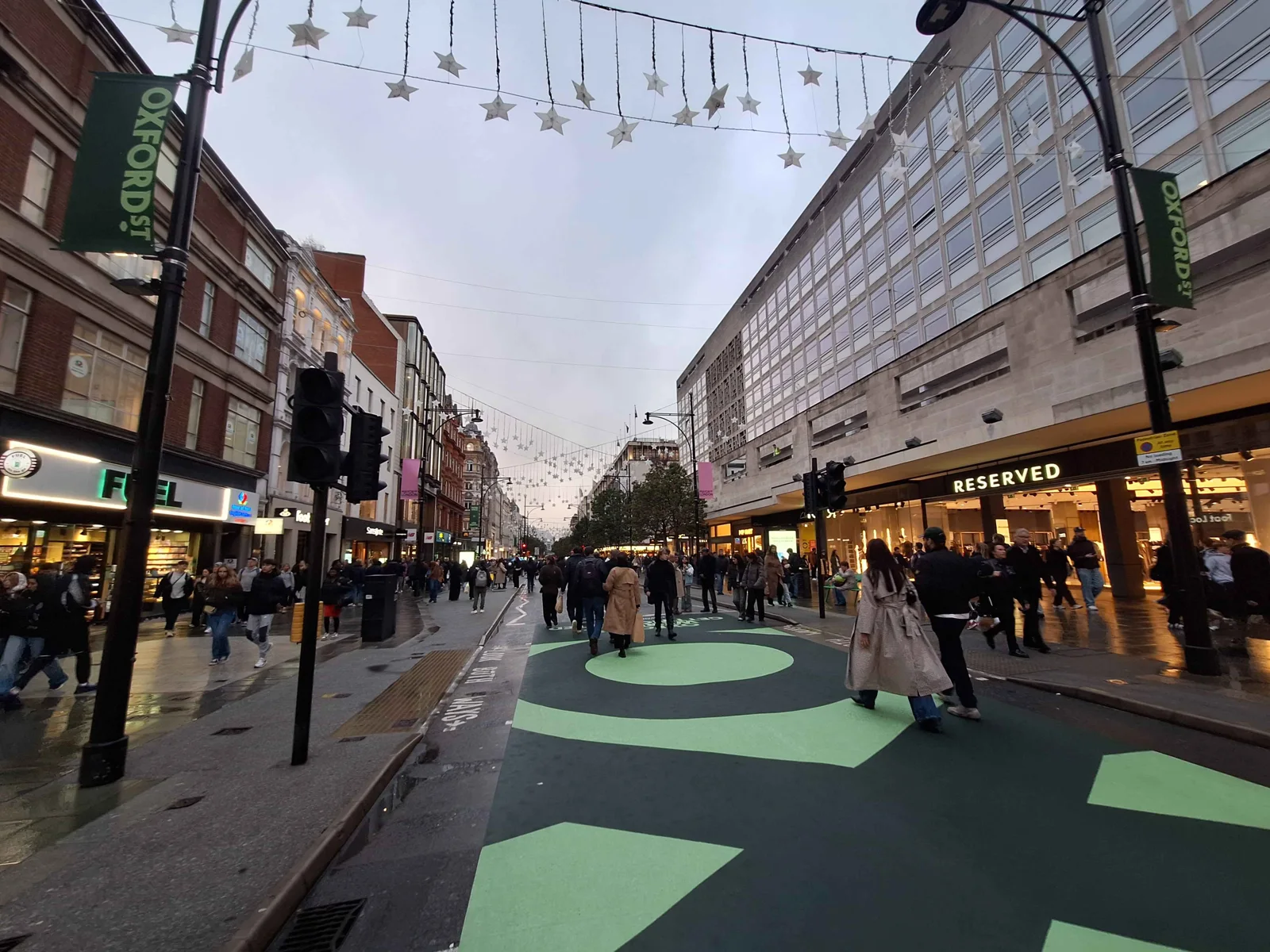
For as long as anyone can remember, the northern edge of Mayfair has been a wall of red buses, black cabs and courier bikes. Since the early hours of Monday 26 October 2026 it has been something else. Almost a kilometre of Oxford Street, from Orchard Street by Selfridges to Great Portland Street just east of Oxford Circus, is now closed to cars, buses, taxis, bicycles, e-scooters and pedicabs. Roughly half of the 1.2-mile street belongs to people on foot.
The idea had been floated, fought over and shelved for decades. Westminster City Council, which used to control the street, blocked one plan after another. What finally broke the deadlock was the Mayor’s Oxford Street Development Corporation, a body that took over planning for the street on 1 January 2026 with the approval of the then housing secretary, Angela Rayner. When we looked at the pedestrianisation plans in 2024, the question was whether it would ever happen. Now the question is how it works, and who wins and loses.
We have gathered the voices from the first days, from shoppers and shopkeepers to cabbies, couriers, cyclists and campaigners, and set them against what the change means for Mayfair, whose northern boundary runs along the south side of the street.
The night the traffic stopped
The last bus to run the full length of the old Oxford Street was a number 98 to Holborn, driven by Jackson Kabeeroe, which left Marble Arch stop K at 7.55pm on Sunday 25 October. A crowd of bus enthusiasts had gathered to ride it, and passengers told the BBC the journey felt emotional and a little sad. Some had stayed up the night before to catch the final night bus too.
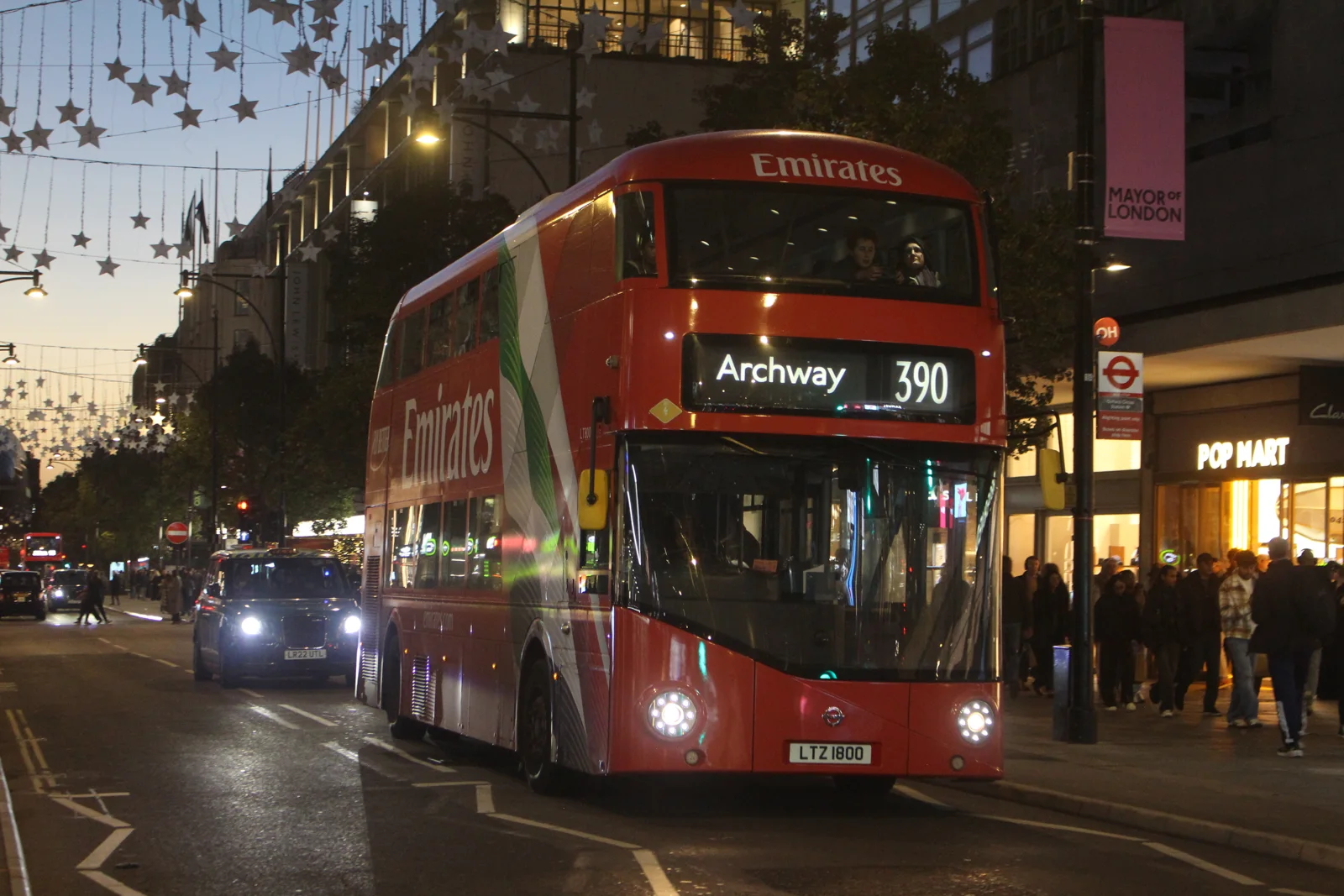
At 8pm the works permit kicked in. According to LondonCentric, which stayed on the street through the night, crews had about ten hours to install bollards, strip out bus stops, cover signs, fill potholes, repaint markings and reprogramme traffic lights before the Monday commute. The Mayor, Sadiq Khan, was spotted in a hard hat by a digger outside Selfridges at around 9.15pm. Not everyone got the memo: pedicabs were still working the road at 10.30pm, food couriers used the empty carriageway as a racetrack near midnight, and one driver nosed a Jaguar into the works zone because he wanted a last drive down Oxford Street.
Monday dawned wet. A rainbow appeared over the street just after 7am, the Mayor called it a momentous day, and by mid-morning half-term shoppers were walking where the buses used to be. Khan, who worked in shops on the street in his youth, told BBC Radio London it had been in “managed decline” for two decades, and that he was not willing to watch shops and jobs leave it.
Where the line runs now, and what still crosses into Mayfair
The traffic ban is not a sealed box. North-south roads still cut across the pedestrian zone at set points, and several of them are Mayfair streets. According to the TfL map published on the first morning, vehicles can still cross at:
- Regent Street at Oxford Circus, in both directions
- Duke Street, northbound only, so traffic can leave Mayfair heading north
- Davies Street and Stratford Place, both directions, for local access
- Vere Street into New Bond Street, southbound only, so traffic can enter Mayfair from Marylebone
- Holles Street, northbound only, on the Marylebone side
Shops can still take deliveries and servicing between midnight and 7am. Some of the barriers are retractable: they drop flat overnight for stock deliveries and on demand for ambulances, police cars and fire engines. TfL’s chief operating officer, Claire Mann, says every point of the street is within 200 metres of a bus stop and within 100 metres of a taxi rank, and that drop-offs can be made on the crossing roads. One casualty is the long-standing cab rank outside Selfridges, which LondonCentric reported was closing for good on the Sunday night.
The shoppers’ verdict: more room, less elbowing
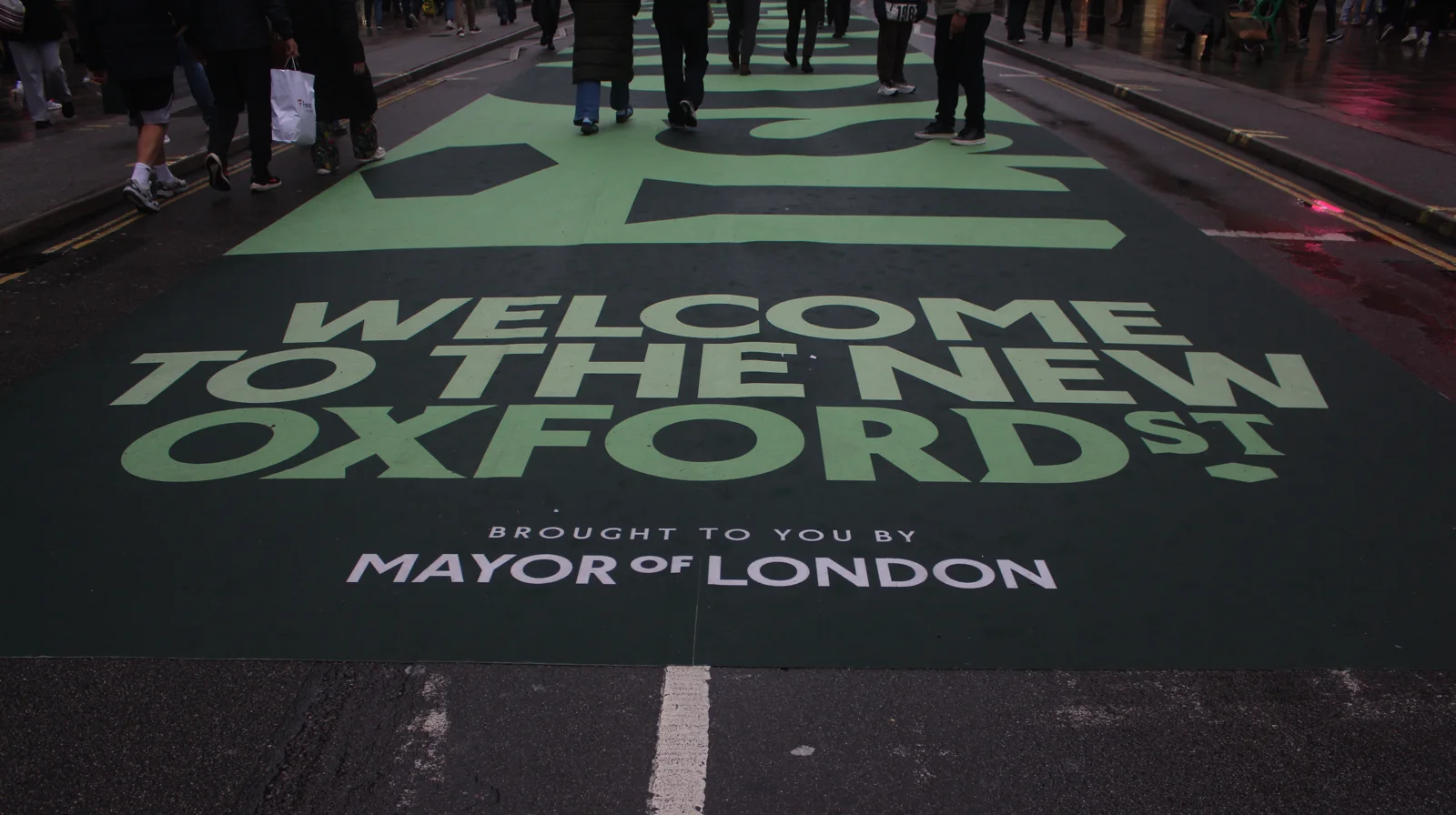
On the pavement, the mood was mostly warm. Daniel Te, a former city planner who moved to London from the US in July, was so taken with the scene that he sat down to sketch it. He told the Guardian he usually avoided the street because it was too busy, but now felt more inclined to come, and that the bus diversions were a small price to pay. Raquel Cox, on holiday from Ireland, had seen the news and came specifically to see it. She accepted the surrounding streets might suffer, but said as a shopper it was a better experience.
Henry West, a visitor who spoke to the BBC, said the street was simply easier to navigate without traffic. Lucia, who made a detour on her way to work just to see it, called it “very joyful” and said she was already imagining summer on the street, and how new kinds of shops and places to sit might appear over time.
One thing reporters noticed early on: habits die hard. For the first hours most people kept to the pavements out of instinct, leaving the carriageway half empty. By late morning that had changed, and the old bus shelters had found a new job as somewhere to stand out of the rain.
The cab rank: the loudest objection
If shoppers were the winners on day one, London’s taxi drivers were the most vocal losers. Ben McMullan told the Guardian traffic was clearly worse on the surrounding streets and that accessibility was a huge problem. He had already dropped off a mother with a pram and a woman with walking difficulties who could not be taken to the door. He could only get her so far, he said, and she was really disappointed. His fear is that once passengers realise a cab cannot reach the street, they stop taking cabs to it at all.
Gary, waiting on the Regent Street rank, told the BBC the scheme would cause chaos, pushing traffic “around the back of the West End” where it would not move. He thought it would damage trade on Oxford Street and possibly for cabbies too, and said disabled passengers would struggle.
This matters more in Mayfair than almost anywhere. A large share of Mayfair’s visitors arrive by cab or chauffeur car, and the hotels, galleries and boutiques south of Oxford Street are built around door-to-door arrival. With the Selfridges rank gone and Oxford Street closed, the natural drop-off points for anyone heading to the western end of the street become Duke Street, Davies Street and New Bond Street, and the Mayfair streets behind them. Expect those kerbs to get busier, particularly in the run-up to Christmas.
Couriers, cyclists and pedicabs: rules versus reality
The rules are simple. Nothing on wheels except emergency vehicles and permitted servicing, and that includes bicycles, which must be pushed. Riding through can bring a £160 penalty charge notice, halved to £80 if paid within 14 days. The hire firms Lime, Voi and Forest have geofenced the zone so that e-bike assistance cuts out inside it and rides cannot be ended there.
Reality has been messier. The Standard counted 51 cyclists riding through the zone on Tuesday morning, almost one a minute, including e-bike and delivery riders, and saw no fines issued. TfL says its approach is to engage and educate first, and that more greenery and seating will make the space harder to ride through. Security staff at the Oxford Circus end spent much of Monday calling on riders to dismount, with mixed success. Mohamad Barry, a 26-year-old guard working for the New West End Company, told LondonCentric that guards cannot use physical force, so all they can do is ask riders to get off the road.
The cyclists’ side of the story is not just defiance. Mona, pushing her bike to work, told the BBC she would now have to walk unless she took the back routes, where she feels vulnerable without cycle lanes, and she worried about how her disabled customers would manage. A construction worker the Guardian called Jack was blunter: he said he would keep riding down the road whatever anyone said, because the alternative makes his commute longer. The London Cycling Campaign says thousands of cyclists come through every day and is calling for proper routes north and south of the street.
Pedicabs, supposedly banned, were seen moving barriers aside to get back on the road. Sultan Salem, a 45-year-old pedicab rider, told LondonCentric he works across central London and would keep trying to reach Selfridges. Even the police are adjusting: the BBC overheard one officer outside Selfridges asking a security worker how he was meant to get his car down there.
For Mayfair, the point is that the bikes, couriers and pedicabs do not disappear. They look for the next fastest line east to west, and some of those lines run through Mayfair’s grid. Residents and businesses south of the street will be watching whether enforcement hardens once the first weeks are over.
Buses and access: the hardest question
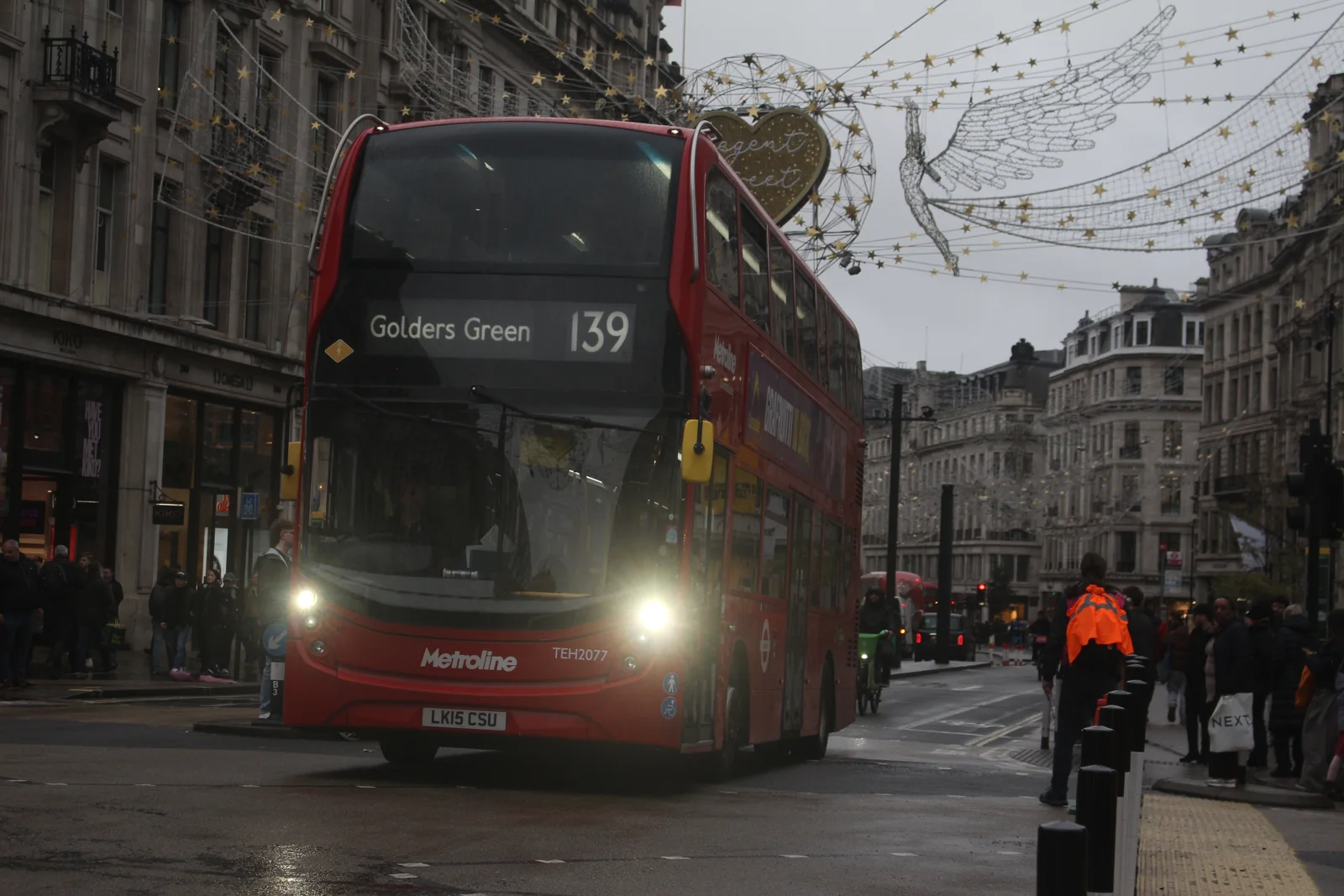
Bus routes that ran along Oxford Street have been cut back or diverted onto neighbouring roads. A BBC reporter on the 139 from Golders Green found it now turns off at Cavendish Place and heads to Tottenham Court Road. A passenger bound for Selfridges was advised to get off there and catch another bus back. TfL ambassadors in pink vests were on the street to help people find their way.
TfL insists there is plenty of capacity and points to the Elizabeth line at Bond Street, which is step-free, as a way to “arrive in style”. Westminster’s deputy leader, Tim Barnes, is not convinced. He told the BBC it would be very difficult for people with accessibility issues to reach the street, noting there is no step-free access at Oxford Circus, and that bus and taxi users now have to walk about 100 metres from alternative stops.
Disability groups are split. Adam Gabsi, chair of Inclusion London and a wheelchair user, said the proof would be in the pudding: if buses and taxis become harder to reach, people like him will have problems. He added that disabled Londoners were consulted but did not help design the scheme. Wheels for Wellbeing says the street could be a real accessibility win, but only if buses, mobility aids, Blue Badge parking and step-free transport are built into the final design. The charity Guide Dogs welcomed the change outright, saying a traffic-free street will be safer for the roughly 214,000 Londoners living with sight loss.
The neighbours: Marylebone braces, Mayfair watches
TfL expects what it calls a manageable increase in traffic on Wigmore Street, Cavendish Place, Marylebone Lane and Welbeck Street, all on the Marylebone side. Locals there are less relaxed. Michael Bolt of the Marylebone Association told the BBC that Wigmore Street would be crushed with traffic, and Karen Jones, who has lived in the area for 20 years, worried about bus routes being pushed through quiet residential streets with gardens and playgrounds.
On day one, at least, the feared gridlock did not arrive, probably because it was half term, although the BBC’s transport correspondent did see a 159 bus heading up a one-way road in Cavendish Square. The deputy mayor for transport, Seb Dance, says the modelling will keep the impact on surrounding streets to a minimum. Westminster says it will monitor traffic, noise and pollution and hold TfL and the Mayor responsible for any problems. Mayfair’s residents’ groups have opposed traffic bans on the street for years, and the real test will come with the December peak and the first ordinary weeks of January.
The money: can a car-free street get the tills ringing?
The stakes are large. Oxford Street sees more than £3 billion of spending a year and about half a million visitors a day, according to the BBC. City Hall’s economists estimate that pedestrianisation could add up to £82 million a year to the local economy and support more than 700 extra jobs. The whole project is expected to cost £150 million including highway works, funded through advertising, sponsorship, philanthropy and borrowing.
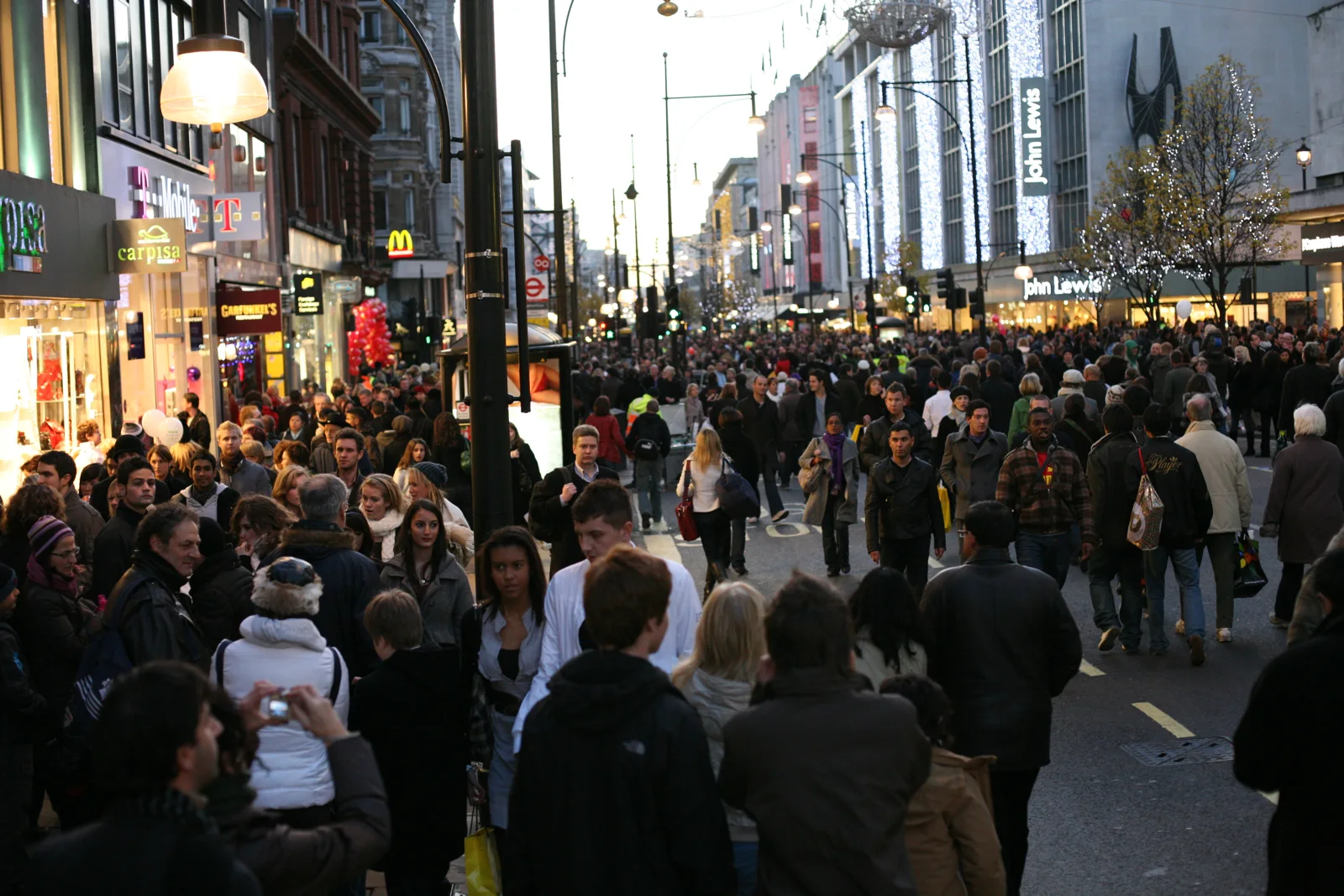
The big department stores, Selfridges and John Lewis among them, have backed the scheme. The smaller traders were more cautious. Abbas Shigival, who runs a souvenir kiosk at the start of the pedestrian section, told the Guardian it was too early to judge, though the morning had been a little busier and people seemed happier. Nadir, who works at a juice stall near Bond Street, told the BBC he was happy, that everyone seemed excited, and added: “We’ll see.” Some side-street businesses fear being squeezed out by bigger brands as the street goes upmarket.
Mayfair offers one of the strongest arguments for optimism. Kate Boothman Meier of the New West End Company points out that when the pavements on Bond Street were widened a few years ago, revenue rose by at least 10% almost immediately. Dan Parr of the data firm CACI argues that people will spend more time and money on the street, on experiences as well as shopping. The sceptics’ case was put by the Financial Times’ Lex column, which argued that Oxford Street needs to do more than ban traffic to get the tills ringing. The Mayor himself calls the first phase a proof of concept.
What it really means for Mayfair
Strip away the politics and five things change for the neighbourhood south of the street.
- A public square on Mayfair’s doorstep. One of the two new squares planned for the first phase sits near Duke Street, the other near Holles Street. Duke Street runs straight down to Grosvenor Square, so the new space becomes a natural gateway between Oxford Street and the heart of Mayfair.
- A continuous walk from the Elizabeth line to Bond Street. Coming out of Bond Street station, you can now cross from the Oxford Street crowds into South Molton Street and on to New Bond Street without stepping round a single bus. That joins the high street to Mayfair’s own shopping streets in a way they have never been joined before.
- Arrivals move into Mayfair. Cabs, chauffeur cars, and some delivery and servicing traffic will now lean on the crossing roads and the streets behind them. How Davies Street and Duke Street cope will decide how Mayfair feels about the scheme.
- Bikes and pedicabs looking for a way round. Until enforcement and new cycle routes settle, some of that traffic will try Mayfair’s side streets instead.
- A stronger western end. With the Orchard Street end now a walking gateway, and the rebuilding of the M&S Marble Arch flagship under way, the stretch closest to Mayfair is the one with most to gain.
What happens next
This is the transition phase, not the finished street. Construction will die down for Christmas trading and pick up again in the new year, the New West End Company says. More trees, seating and dining space are promised over the coming months, with the two squares due by spring 2027. As Dezeen reports, the interim design is by the London studio East working with JL Gibbons, Gehl and Publica, trees will start in sculptural pots before being planted in the ground, and the full transformation is due to begin in 2027 and finish in 2028. Hawkins\Brown is drawing up a long-term vision for the whole street from Tottenham Court Road to Marble Arch.
Not everything is settled. The development corporation’s chief executive, Nabeel Khan, admitted to LondonCentric that several of the surfacing materials being trialled had failed testing. The eastern half of the street, towards Tottenham Court Road, is not part of this phase, and future stages are still being considered and costed. You can follow the day-one detail in the BBC’s live coverage.
Visiting this Christmas: practical notes
- By train: Bond Street’s Elizabeth line station is step-free, with entrances on Davies Street in Mayfair and on Hanover Square. Oxford Circus has no step-free access.
- By cab: ask to be dropped on Duke Street, Davies Street or New Bond Street, or use the ranks TfL says are within 100 metres of the street.
- By bike: walk it through the zone. Riding risks a £160 fine, and hire e-bikes lose power inside the boundary.
- By bus: routes have been cut back or diverted, so check your stop before you travel. TfL says one is always within 200 metres.
- On foot: the old carriageway is now the fastest walking line on the street, especially on busy weekends.
For Mayfair, the story of the new Oxford Street will not be written on Oxford Street itself. It will be written on Duke Street and Davies Street, at the cab ranks and hotel doors, and in whether the crowds that now stroll the old carriageway keep walking south into the neighbourhood. The first days suggest they want to.