
Combining dental treatment with a trip abroad can look remarkably efficient. The clinic arranges the procedure, the hotel is nearby, and a few quiet days away from work create time to recover. Done well, the trip feels organised rather than medical.
Treatment plans vary widely, and the schedule should follow the clinical work rather than the flight dates. The same caution applies across everything from a single crown to all-on-4 or 6 treatment, because healing and review appointments rarely fit a rigid city-break itinerary.
Dental tourism works best when travel bends around treatment. The clinic needs close scrutiny and aftercare must be arranged before departure. Sightseeing still has a place, just not at the expense of recovery.
Check the Dentist, Not the Chauffeur
Airport collection and a polished waiting room are pleasant. Neither tells you who will perform the treatment or what happens when something goes wrong.
Ask for the treating dentist’s full name before paying a deposit. Check that name with the professional regulator in the destination country. Registration systems vary, so find out what the local regulator actually controls. A searchable name on an official register is more useful than a clinic badge copied onto a website.
The consultation also needs to involve the dentist who will make the clinical decisions. A video call with a sales coordinator cannot replace an assessment. The dentist should review your medical history and discuss the condition of your gums. If the proposal comes from photographs alone, pause there. Implant treatment, extensive crown work and major bite changes require more information than a phone camera can provide.
Ask how the clinic handles complaints. Get the answer in writing. A guarantee may sound reassuring, but its value depends on the small print. Some clinics cover replacement work but leave the patient to fund another flight and hotel stay. Others require every follow-up visit to take place abroad.
Let the Treatment Decide the Itinerary
The worst dental tourism schedule is the one built like a city break. Treatment on Monday, museums on Tuesday, flight home on Wednesday. It leaves no room for swelling, an uncomfortable provisional restoration or a review that needs another day.
A sensible trip keeps the first part simple. Stay close enough to reach the clinic without a long transfer. A quiet hotel is more useful than one beside the nightlife district. After oral surgery, a room with a lift can feel like a small luxury. Flexible travel dates are worth paying for when the dentist may need to review healing before approving the journey home.
Large implant cases often require more than one visit. A provisional bridge may be fitted near the time of surgery, followed by a healing period before the definitive restoration. The exact sequence depends on the mouth and the chosen technique. Be wary of a clinic that promises the same timetable to every patient.
Cosmetic work can also overrun. A crown may need colour correction. The bite might feel wrong after the numbness disappears. Leaving the country hours after fitting removes the easiest chance to make a small adjustment.
Premium Care Is Visible in the Planning
Premium dentistry has little to do with marble reception desks. It appears in the quality of the diagnosis.
For implant treatment, the clinician needs to assess the available bone and the condition of the remaining teeth. Gum health can change the timing. A three-dimensional scan may inform implant placement, although the scan alone does not choose the right restoration. The proposed teeth still need to fit the face and meet the opposing bite properly.
Materials deserve plain answers. Ask which implant system the clinic plans to place. Find out if replacement components are readily available in Britain. An obscure implant can work perfectly, then become a headache ten years later when a screw needs replacing and the local dentist cannot source it.
The laboratory relationship matters too. Some clinics have technicians nearby, which makes shade changes and minor alterations easier during the trip. Others send work elsewhere. Neither arrangement is automatically poor, but you should know who makes the restoration and how the dentist checks it before fitting.
Premium care also allows disagreement. A good clinician may tell you that a full set of crowns is unnecessary or that an implant should wait until gum disease is controlled. Sales pressure has no clinical value. Personally, I would trust the dentist who narrows the treatment plan over one who expands it during the first call.

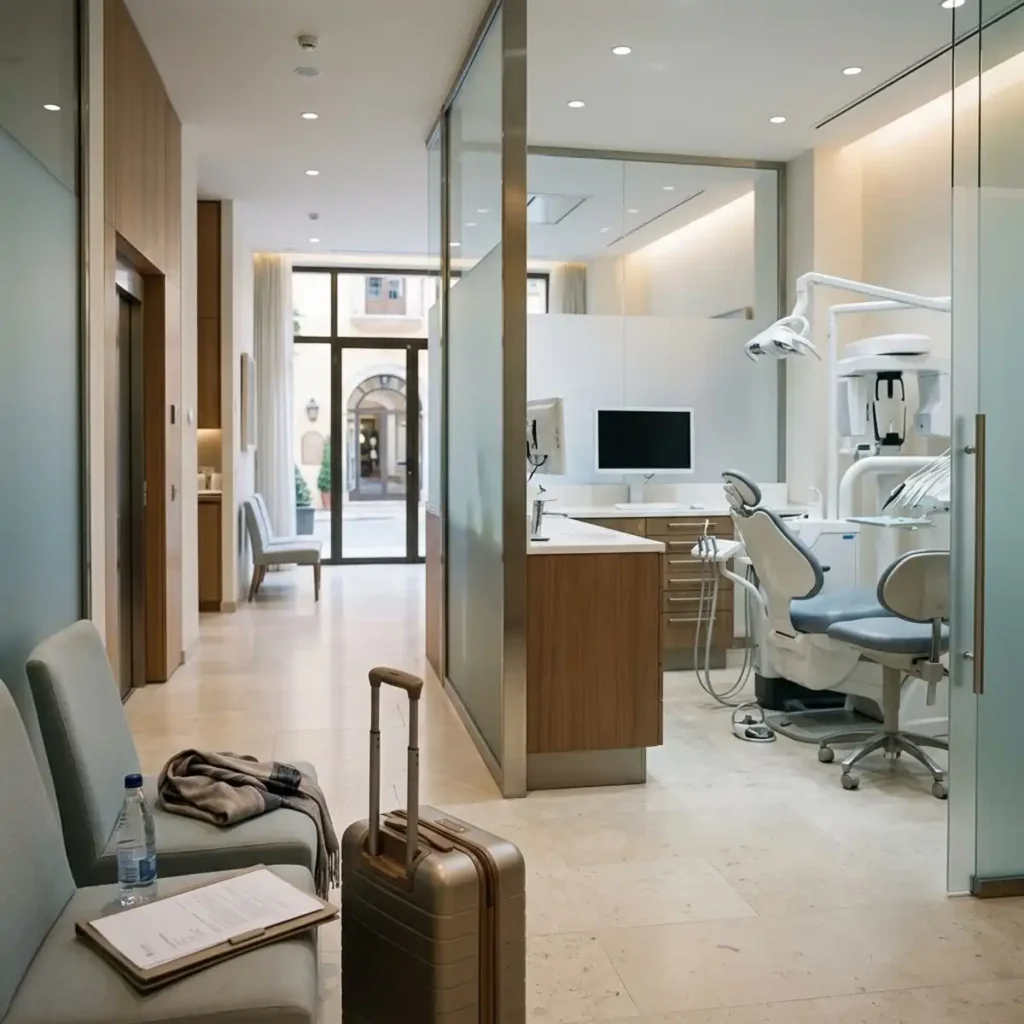
Arrange Aftercare Before You Leave Britain
Speak to your regular dentist before booking. They know your dental history and may spot a reason to question the proposed plan. They also need to know what treatment you received if you return with pain or swelling.
Do not assume the same dentist will agree to maintain work completed elsewhere. Some practices are happy to provide routine reviews but will not take responsibility for an unfamiliar implant system or a complex bridge. Ask before travelling, not after a problem appears.
The overseas clinic should provide proper records when treatment ends. The implant manufacturer needs to be identified. Your notes should explain what happened during surgery and what still requires follow-up. Keep copies of scans and radiographs in a format another clinic can open.
You also need a clinical contact after returning home. A general messaging account answered by office staff is not enough for a serious concern. Ask who reviews photographs or symptoms outside opening hours. Time zones can turn a small delay into a long night.
Price the Trip That Might Actually Happen
The quoted procedure fee is rarely the full cost. A second journey may be part of the original treatment plan. It may also become necessary after an unexpected problem.
Allow for a longer hotel stay than the brochure suggests. Flexible flights cost more upfront but may prevent an expensive rebooking. Time away from work also belongs in the calculation. A companion may need their own ticket when the procedure involves sedation or extensive surgery.
Insurance is another awkward area. Standard travel policies often exclude planned treatment and may not cover complications linked to it. A GHIC or EHIC does not fund treatment that was the purpose of the journey. Specialist cover may be available, but the insurer needs an accurate description of the planned procedure.
Read who pays when remedial treatment becomes necessary. A free replacement crown does not feel free after another flight and four hotel nights. If the clinic offers a guarantee, check its duration and find out where any corrective work must happen.
Price still matters. Dental treatment abroad can offer access to experienced clinicians at a lower fee than comparable private treatment in London. The comparison becomes useful only after travel and aftercare enter the same calculation.
There is nothing wrong with enjoying the destination. Book a good meal before treatment. Stay a few extra days once the dentist is satisfied with recovery. Just resist the package that treats dentistry as another excursion between breakfast and a walking tour. The view from the hotel can wait.


