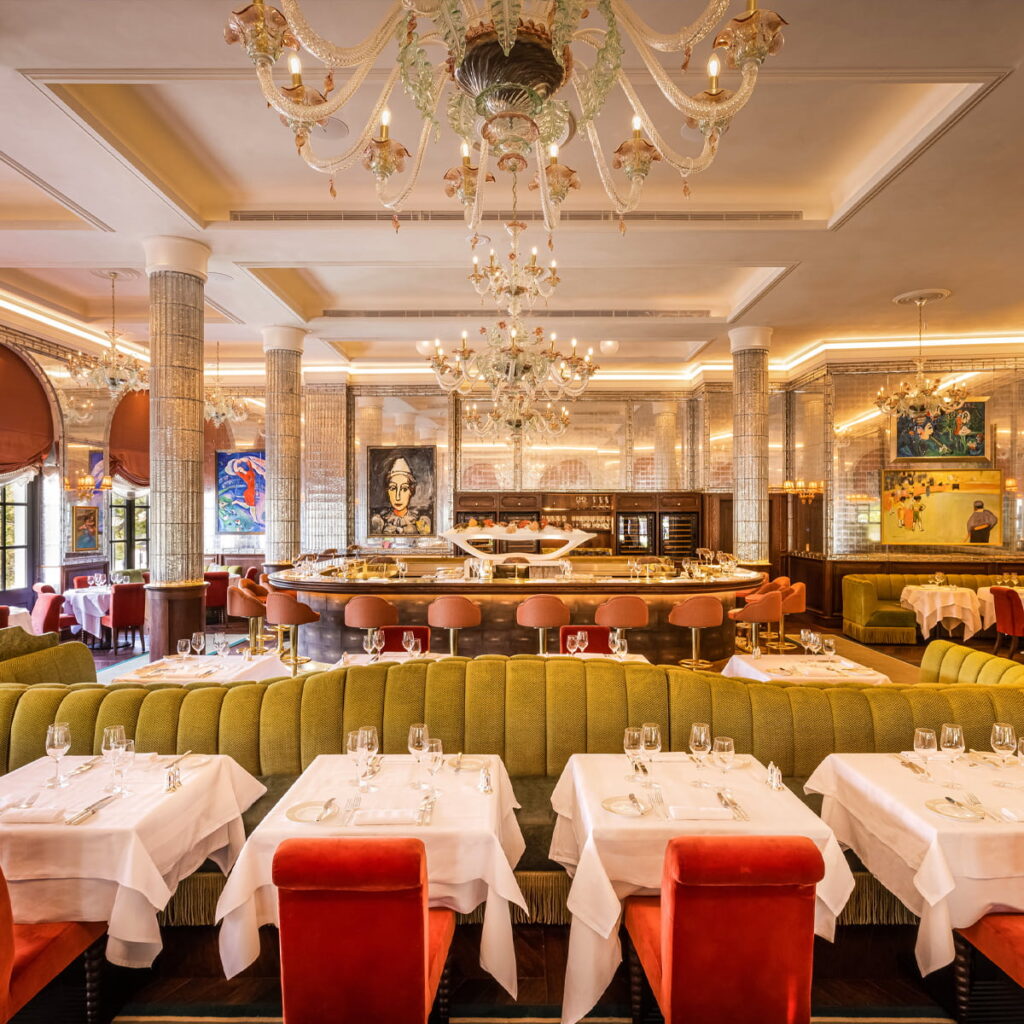
The door to Dear Darling Mayfair closes with a soft thud, and the outside world recedes. You are led through what is presented as a private drawing room, not a nightclub entrance, past velvet-heavy seating and low chandeliers that flatter every complexion. Somewhere beneath your feet, a glass floor and a louder, darker space wait to be discovered. On Jermyn Street, long associated with gentlemen’s outfitters and old clubland, this is where London’s new model of luxury nightlife chooses to show its face.
In 2025, Mayfair nightlife is shaped by the same forces transforming the wider West End. A surge in high-end hotel rooms, a shift from transactional luxury to experience-led hospitality, and a younger, more global audience have pushed venues to behave less like clubs and more like narrative-driven worlds. Dear Darling Mayfair, operated by the well-connected Cream Group, sits precisely at that junction: part high-spend bottle room, part theatrical salon, part late-night refuge for hotel guests who are not ready to call it a night.
For diners, drinkers and hospitality professionals trying to understand where London luxury hospitality is heading, Dear Darling offers a useful case study. It is not a restaurant in the classical sense, but it does offer substantial late-night food, a serious cocktail programme and a level of service calibrated to guests who think nothing of a four-figure table spend. Located at 91 Jermyn Street, a site with a colourful past and high commercial value, it has quickly become a barometer of how the district’s night-time economy is recalibrating. The question for anyone weighing up a booking is simple: what exactly does this place offer, who is it for, and what does a night here really cost in money, effort and energy?
London luxury hospitality in transition
To understand why a concept like Dear Darling resonates, it is useful to zoom out to the district-level picture. By mid-2025, central London is experiencing its steepest rise in high-end hotel capacity in more than a decade, with industry analysis pointing to roughly 757 new luxury rooms added to the market in a single year. In reports from organisations such as Walpole, this is framed not as a blip but as a strategic reweighting of the city’s hospitality assets in favour of the wealthiest global travellers.
That influx has direct consequences for nightlife in Mayfair and St James’s. High-spend visitors from the United States, the Gulf and Asia expect late-night options that feel like a seamless extension of their hotel. They are used to concierge-level attention, security and service. Independent venues that want a share of this audience effectively become the unofficial after-hours wing of the five-star properties around them.
Dear Darling’s upstairs “Living Room” responds to that demand. Styled as a genteel parlour rather than a club bar, it offers soft seating, polished service and a mood that can pass for a sophisticated lounge early in the evening. Guests who have come from nearby suites can move from the lobby to the nightclub without feeling they have dropped a rung in comfort or care. For hospitality operators and investors, Dear Darling illustrates how the “hotelification” of the West End is reshaping the expectations placed on late-night venues.
The same shift is visible in retail. The New West End Company’s focus on record turnover and on “clean, safe and healthy streets” underlines how the area is repositioning itself as a 24-hour lifestyle district rather than a simple shopping strip. Crucially, spending patterns have changed. Shoppers and diners increasingly favour immersive experiences in London over simple transactions, and they carry that expectation into their nights out. Dear Darling is structured around that reality; it does not sell just drinks, it sells a deliberate story.
Demographics are moving too. While women still account for a slight majority of luxury goods purchases overall, the male segment is expanding at a notable speed, fuelled by interest in streetwear, watches and grooming. Policies such as a relaxed but high-spec sneaker rule for men in the Secret Basement speak directly to that growth segment. At the same time, the Elizabeth Line has widened the catchment, bringing affluent partygoers into the West End later and more reliably than past transport patterns allowed. Licensing documents show that operators like Dear Darling are expected to manage the consequences, with conditions that include traffic marshals during key late-night hours.
Cream Group ownership and nightlife strategy
Behind Dear Darling sits the Cream Group, one of the most influential operators in London’s high-spend club world. Founded by Ryan Bishti, the group built its reputation with Cirque Le Soir, a venue recognised for surreal circus elements, stunt performers and a consciously provocative approach. Later came The London Reign, with aerial acts and visually aggressive bottle shows, and then House Party in Soho, created with musician Stormzy and pitched as an exaggerated version of a multi-storey house gathering.
Bishti’s philosophy can be summed up as “disruptive luxury”: the belief that if wealthy guests are to be coaxed away from private home cinema rooms, private jets and members’ clubs, the night out must feel like something that could not be staged quietly at home. Spectacle, character and narrative are not optional extras; they are the product.
Dear Darling marks a subtle but important evolution of that approach. Where Cirque relied on shock and sensory overload, and Reign on explosive theatricality, Dear Darling emphasises curation and story. The energy is still high, but the framework is more controlled. The choice of Jermyn Street, with its history of clubs and discreet addresses, demands a degree of polish that might not be necessary in Soho.
Cream Group’s habit of launching new projects with credible creative talent and high-profile guests remains intact. Dear Darling’s opening period featured a DJ set from Skepta, signalling its intention to attract fashion, music and art insiders. This strategy functions as both marketing and quality control. When the people who influence what others wear and listen to choose your venue, you need to match their expectations on service, sound and setting.
The comparison with House Party is instructive. Both spaces trade on simulated domesticity, but they occupy different positions on the cultural map. House Party is exuberant and knowingly chaotic, mirroring the feel of a student’s dream weekend across multiple floors of Soho. Dear Darling is styled as the home of a wealthy, eccentric figure, full of curated clutter and heavy fabrics, more salon than student digs. Together, they allow Cream Group to address street-luxe crowds in Soho and more established money in Mayfair without diluting either brand.
Lady Darling as a narrative device
If contemporary luxury hospitality is about experience, Dear Darling takes that principle to its logical conclusion by building everything around a single fictional character. Guests are told that they are entering the private residence of “Lady Darling”, an elusive, widowed society figure with a taste for theatrical evenings and unguarded late-night behaviour.
In practice, this narrative justifies the club’s split personality. The ground-floor Living Room is presented as Lady Darling’s public space: urbane, sociable, polished, suitable for a drink with colleagues, a pre-dinner catch-up or a low-key date. The lower level, reached through a theatrical wardrobe entrance, is framed as her private domain, where the polite veneer drops and impulses are less controlled.
The psychological split is clear. Upstairs, the design and service encourage conversation and display: it is where people come to be seen, exchange greetings with hosts and weigh up the crowd. Downstairs, the energy rises sharply. Lighting gets darker, sound levels climb, and the décor embraces fetish-inflected flourishes and mirrored surfaces. The transition is engineered to feel like stepping over a line.
For guests, that structure allows a single night to follow a recognisable arc. Early arrivals might settle into the Living Room with a martini and a plate of canapés before deciding, at midnight or later, that they are ready for the intensity of the basement. For operators, it maximises yield within one address; the same customer can be hosted through multiple mood shifts without relinquishing them to another venue nearby.
Digital branding reinforces the mystery. The club’s own channels lean heavily on storytelling language, period styling and suggestive copy, while revealing little that would satisfy a traditional fact-finding search. Pricing, floor plans and menus are sparingly presented, if at all. That information imbalance is deliberate. It prompts potential visitors to contact promoters, concierges and hosts directly, and it encourages guests to document their own nights on social media, feeding the venue’s visibility without the need for heavy overt advertising.
From Oscar’s to Dear Darlin,g the Jermyn Street address
The building itself is an asset. 91 Jermyn Street carries its own stories, some of them whispered rather than written. In recent years, it was home to Oscar’s Mayfair, but local accounts point to earlier incarnations as more charged spaces, including a brothel and a gay club that traded on a sense of secrecy at a time when the surrounding streets were grittier than their current polished image suggests.
Dear Darling, do not bury that past. Instead, it folds it into the concept. The decision to push the more explicit design and performance elements into the subterranean level plays neatly with the idea of things happening out of sight. Latex details, provocatively dressed performers and the voyeuristic vantage offered by a section of glass floor all nod to the building’s reputation as a place where people historically came to do what they would not do in the light of day.
Fun fact: The glass floor in the Secret Basement is carefully positioned so that guests can see, and be seen, from multiple angles at once, reinforcing the club’s preoccupation with display, performance and discreet observation.
The interior design, created by Fitzpatrick Design, uses this history as a springboard rather than a constraint. Upstairs, the Living Room references the late-19th- and early-20th-century drawing room, with deep sofas, richly textured fabrics, and framed art that leans into portraiture and period motifs. Lighting is intentionally flattering, pooling softly around tables and encouraging photographs.
Downstairs, the Secret Basement adopts a different vocabulary. Exposed brick, reflective surfaces and industrial details give it a more underground feel, while still signalling money in the choice of finishes and the quality of sound and light equipment. The glass floor is both a focal point and a talking piece, inducing a slight vertigo that plays into the sense of entering somewhere less stable and more permissive.
Licensing documents from 2025 show that the operators have pushed to increase capacity, seeking permission for up to 320 guests split between the two levels. The negotiations with authorities, including agreements on ID scanning and traffic management, underline both the venue’s popularity and the regulatory scrutiny applied to late-night venues in St James’s.
Cocktails, bottle service and late-night food
Although Dear Darling is not a restaurant destination in the classical sense, food and drink are integral to the way the space earns its keep and shapes its guests’ evenings.
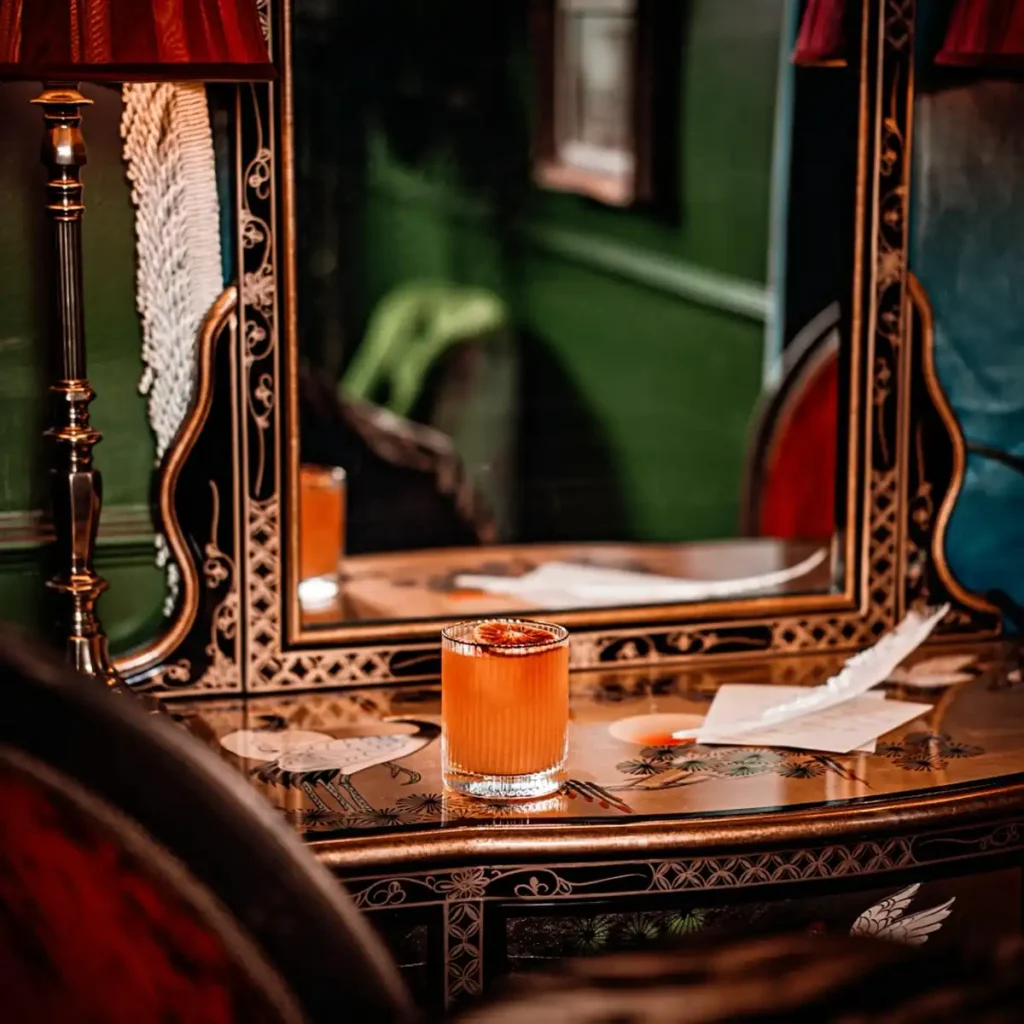
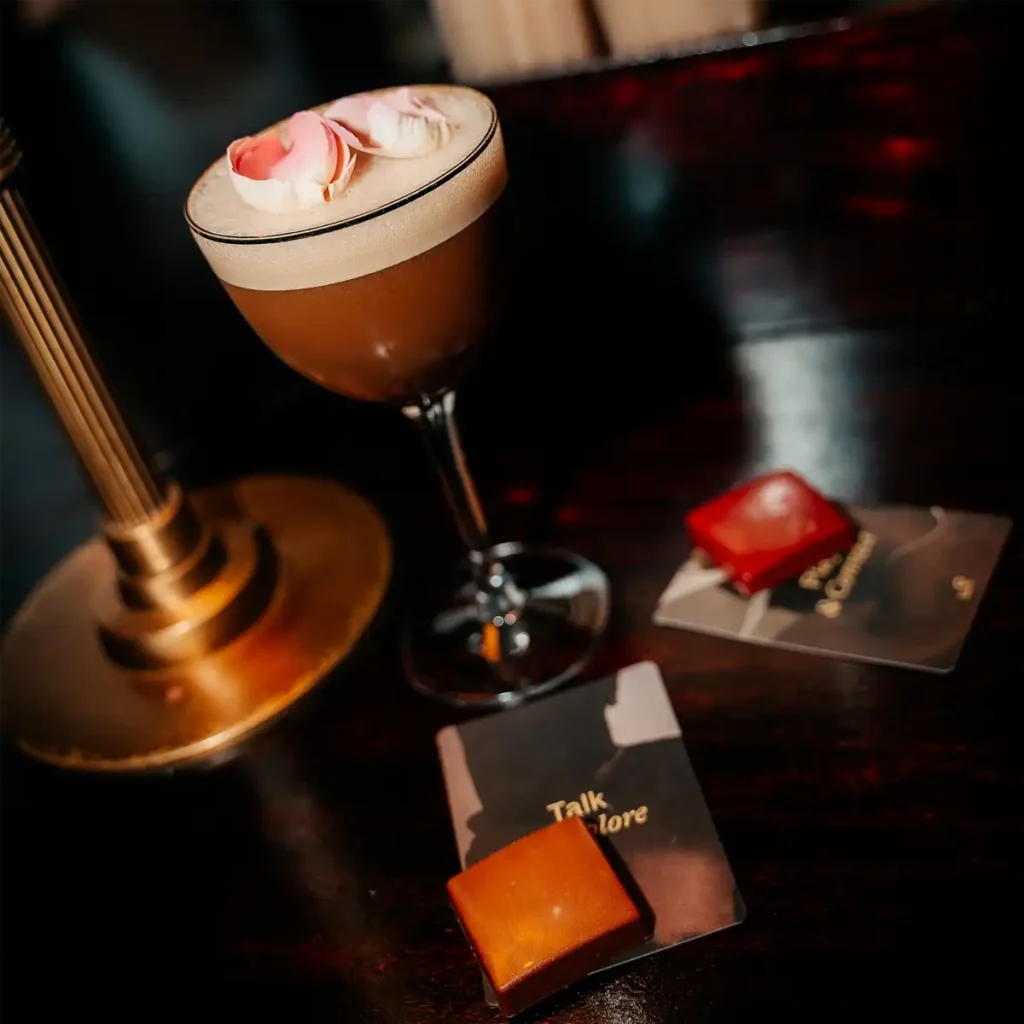
The cocktail programme is presented as “strictly clandestine”, a phrase that hints at seasonal or verbally shared menus. Signature serves such as “Darling’s Delight”, a bright gin-based drink spiked with elderflower, cucumber and mint, emphasise freshness and approachability for early-evening guests in the Living Room. A contrasting option, “Midnight in Mayfair”, leans darker, with rum, chocolate bitters and orange zest more suited to the basement’s deeper soundtrack and lighting.
Techniques popular in 2025’s higher-end bar scene, such as clarified mixtures, fat-washed spirits and a serious approach to agave and whisky, are likely to feature. The glassware, garnishes and presentation are tuned to a crowd that expects cocktail bars in Mayfair to double as photographic backdrops. Servers maintain a rhythm that keeps tables supplied without breaking the illusion that guests are in a private home rather than a transactional space.
Financially, the real engine is bottle service. Minimum spends for standard tables begin around the £1,000 mark, rising to several thousand for premium positions near the dancefloor or performance focal points. Top-tier tables can reach figures in the mid-five digits once packages, magnums and high-end champagne are factored in across the night. These spends are not merely about liquid consumption; they purchase visibility, control over space and the right to be at the heart of the action.
The accompanying ritual matters. When a guest orders certain high-value bottles, the room reacts: music drops or swells, lights shift, and performers appear carrying bottles with sparklers. These “bottle shows” are designed to draw eyes, spark friendly competition and send a clear signal that significant money is being spent. For visitors used to similar displays in Dubai or Las Vegas, this is part of the expected grammar of a luxury club.
On the food side, Dear Darling runs its own kitchen rather than partnering with a separate restaurant. The offer focuses on elegant bar food calibrated for sharing at tables or eating while standing: sliders built with premium beef, seafood in bite-sized formats, snacks with generous toppings, perhaps caviar or truffle in line with Mayfair norms. Presentation is upscale but practical; this is food designed to sustain a long night, not to support a three-course tasting menu. For those comparing it with venues such as Sexy Fish or Bacchanalia, it is important to understand that at Dear Darling, the party comes first and the food supports it, not the other way round.
Music performance and crowd management
Any high-energy night out lives or dies on sound. Dear Darling separates its music policy between the two floors as sharply as it separates décor.
In the Living Room, the soundtrack leans towards house and disco-house, with melodic lines and vocal hooks that encourage conversation and head-nodding rather than all-out dancing. The association with beach clubs in Mykonos, Ibiza and Dubai is intentional. It reassures international visitors that they are in familiar territory, even as the room around them is dressed as a Mayfair parlour.
Downstairs, the Secret Basement switches to open-format club music: Hip-Hop, R&B, Afrobeats and Amapiano. This is where the younger, fashion-oriented and often higher-spending crowd gravitates as the night deepens. Programming reflects current charts and international touring DJ patterns, with an emphasis on records that connect quickly across cultures. The inclusion of Amapiano, in particular, shows a close watch on global trends; the genre’s rolling basslines and layered percussion translate well to a subterranean room that wants to feel both intimate and explosive.
Live performance is part of the mix. Burlesque-style acts, costumed hosts and dancers in latex-inflected outfits move through the space, perching on ledges, interacting with tables and breaking the barrier between “performer” and audience. This is not a club where entertainment happens only on a distant stage. At its best, the effect can feel like being inside a travelling theatre company’s after-hours party; at its worst, it can risk crowding, which is where operational discipline matters.
Access is carefully controlled. A strict door policy governs who enters and when. The default dress code is “smart and elegant”, with high heels expected for women and a preference for tailoring or luxury streetwear for men. Clean designer trainers are often accepted, but the message is clear: this is not a casual bar where you can drift in unplanned at the end of a pub crawl.
For many mixed groups and for male-heavy parties, a table is effectively the ticket in. Guest list spots, often coordinated through promoters and concierges, tend to favour women and those arriving early. Standard entry, when available, is typically around £20, sometimes waived for early arrivals before midnight. Licensing conditions require ID scanning on entry, adding a layer of visible security and enabling the venue to track who its guests are and how they move through the night.
Online feedback by mid-2025 sits in broadly positive territory, with average ratings hovering above 4 out of 5 on major platforms. Guests praise the “vibe”, the quality of the music and the photogenic interiors. Some reviews from the launch period mention confusion over promoters and lists, a common feature of London’s club ecology, but more recent comments suggest that systems have tightened as the venue has bedded in. Noise and late-night disturbance complaints from nearby residents continue to be touchpoints in licensing debates, reminding operators that every additional guest carries regulatory implications as well as potential revenue.
The theatrical instinct behind rooms like this one has travelled. Immersive staging, a named character, a story that unfolds across an evening: the same devices now shape digital entertainment, where operators build worlds rather than menus. The carnival theming at Samba Slots works on that principle, borrowing from cabaret and costume much as Lady Darling borrows from the drawing room. What a venue still holds over a screen is consequence. A room reads you back, adjusts, and remembers. That remains difficult to reproduce.
Whoa, Dear Darling Mayfair suits and how to book?
For someone browsing Mayfair-London.co.uk or searching for the best clubs in Mayfair, the key question is whether Dear Darling is the right fit for their occasion.
This is a venue built for people who want to dress up, spend with intent and be part of a theatrical night. It suits groups celebrating birthdays, promotions or milestone gatherings where the social cachet of the venue is as important as the drinks in the glasses. It also suits couples who enjoy people-watching and are comfortable in high-energy environments, especially if they are content to stay mainly in the Living Room and dip into the basement rather than stay on the dancefloor all night.
Typical total spend will vary widely. A couple could, in theory, visit early, share a few cocktails and snacks and leave with a bill roughly in line with a high-end cocktail bar in the area, though that is not the core use case. For groups reserving a table at peak times, minimum spends of £1,000 or more should be considered the starting point. For prime positions or peak nights, the commitment can climb sharply. Prospective guests should clarify minimum spends, expected arrival times, and gender-balancing conditions at the time of booking.
For hospitality professionals and investors, Dear Darling demonstrates a particular direction of travel in London’s luxury nightlife. It shows how a club can integrate a robust narrative, interior detailing, food and beverage, and a disciplined door policy into a single, commercially successful concept. It highlights the pressures created by increased hotel capacity, the rise of experience-driven spending and the regulatory focus on noise and crowd control. It also underscores the importance of story in differentiating one high-spend venue from another competing for similar guests.
For diners, bar-hoppers and corporate hosts deciding where to channel their budgets, the choice comes down to appetite for intensity. Suppose you are looking for a quiet dinner and unhurried conversation. In that case, many Mayfair restaurants and hotel dining rooms are better suited. If you want a night that feels like stepping into a modern gothic fantasy, with serious drinks, late-night grazing and a crowd that treats the room as a stage, Dear Darling Mayfair offers one of the more distinctive propositions in the district.
Think of it as the nocturnal double life of Jermyn Street: upstairs, the polished sitting room where the evening begins; downstairs, the secret party that powers the stories guests will tell long after the lights come back up.