
The quality of a commercial property is not judged solely by its buildings. Visitors, employees, tenants and prospective occupiers begin forming an opinion as soon as they approach the site. Lawns, planting, trees, paths, car parks and entrances all contribute to that initial experience.
A well-planned external environment can make a property feel safer, easier to navigate and more professionally managed. It can also support biodiversity, improve resilience to changing weather conditions and create outdoor areas that people genuinely want to use.
Successful commercial landscapes therefore need to be designed and managed as long-term assets rather than treated as decorative additions.
First Impressions Begin At The Site Boundary
The landscape surrounding a workplace, residential development, school, retail park or public building communicates how the wider property is managed.
Overgrown shrubs, damaged turf, weeds and poorly defined entrances can make an otherwise high-quality building appear neglected. In contrast, clean edges, healthy planting and unobstructed routes establish a sense of order before anyone reaches the building itself.
The objective is not necessarily to make every site elaborate. It is to create an environment that suits the property, supports its daily use and remains presentable throughout the year.
This can strengthen customer confidence, improve the experience of employees and tenants, and demonstrate that the property is being managed proactively.

Plan Grounds Maintenance And Landscaping Together
Landscape design and routine maintenance should not be treated as entirely separate stages.
A planting scheme may look impressive when it is first installed, but it can become difficult and expensive to manage if the selected species are unsuitable for the location. Mature plant size, root spread, seasonal growth and ongoing maintenance requirements should all be considered during the design process.
A coordinated approach to grounds maintenance and landscaping helps property managers balance appearance with practical site management.
Planting beds can be positioned where they will not obstruct access. Lawns can be shaped to support efficient mowing, while trees can be selected with future canopy and root growth in mind. Considering these details early can reduce avoidable remedial work and help the landscape mature as intended.
Use Soft Landscaping To Shape Outdoor Space
Soft landscaping includes the living elements of an external environment, such as trees, shrubs, hedging, herbaceous planting, grass and wildflower areas.
These features can be used to define entrances, separate pedestrians from vehicles and soften large areas of paving, brickwork or concrete. Planting may also screen service yards, refuse areas, boundaries and neighbouring properties.
Professionally planned commercial soft landscaping should respond to the way a site operates.
Low-growing planting can preserve visibility near vehicle entrances and road junctions, while robust hedging can help guide pedestrians or create separation between different areas. Trees can provide shade and structure where sufficient rooting and canopy space is available.
Planting and seating can also transform an unused courtyard or perimeter area into a welcoming place for breaks, informal meetings or social interaction.
Choose Plants For The Conditions
Successful planting begins with a clear understanding of the site conditions.
Soil type, drainage, sunlight, exposure and available rooting space can all affect whether a plant establishes successfully. A species selected only for its appearance may struggle in compacted soil, deep shade, waterlogged ground or an exposed position.
This can result in weak growth, poor presentation and repeated replacement costs.
Maintenance resources should also influence plant selection. Busy commercial sites often benefit from dependable species that provide structure and seasonal interest without demanding constant intervention.
A layered planting scheme might combine trees, shrubs, ornamental grasses, perennials and ground-cover plants. However, each species should be suitable for the available space and allowed enough room to reach its mature size.
Irrigation, mulching, soil preparation and establishment care should also be considered before planting begins.
Build Biodiversity Into A Practical Landscape
Commercial landscapes can support wildlife without becoming untidy or unsuitable for public use.
Flowering plants, mixed hedges, mature trees and less intensively managed boundaries can provide food, shelter and nesting opportunities for insects, birds and other wildlife.
Planting species that flower at different times of the year can extend the availability of nectar and pollen. Trees and hedging can also create valuable connections between habitats, particularly within urban and industrial areas where green space may otherwise be fragmented.
Formal planting can still be retained around entrances and high-visibility areas. Quieter boundaries may be suitable for native hedging, meadow planting or less frequently cut grass.
Clear edging, planned mowing patterns and appropriate signage can help these features look intentional rather than neglected.
Prepare Landscapes For Rainfall And Dry Weather
Outdoor design should respond to increasingly variable weather conditions.
Large areas of paving and compacted ground can cause rainwater to move rapidly towards drains. At the same time, unsuitable planting may require significant irrigation during prolonged dry periods.
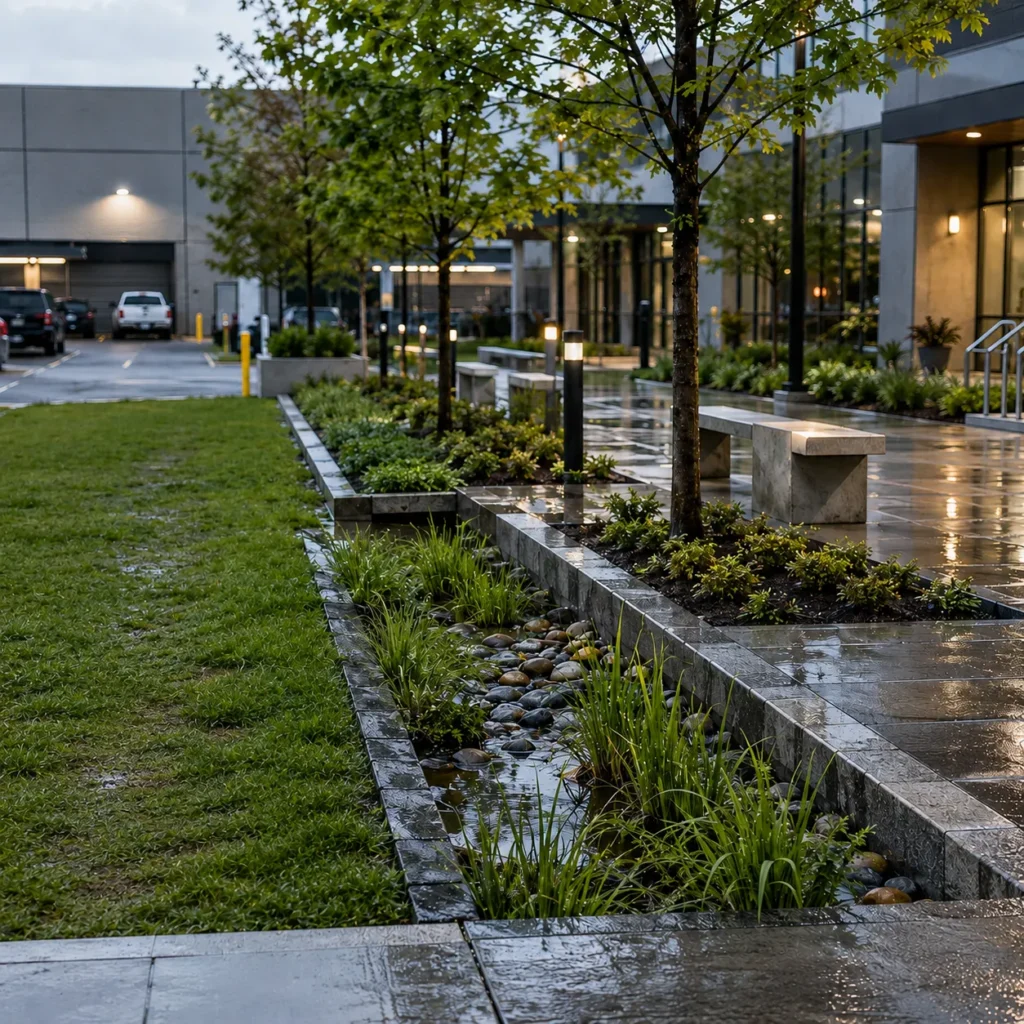
Where site conditions allow, planted depressions, rain gardens and permeable surfaces can help slow the movement of surface water. These features can reduce pressure on conventional drainage systems while contributing to biodiversity and visual interest.
Drought-tolerant planting, suitable mulches and improved soil structure can also help retain moisture and reduce watering requirements.
These measures need to be coordinated carefully with underground services, drainage infrastructure, building foundations and maintenance access.
Protect Safety, Access And Visibility
A commercial landscape must work safely for everyone using the property.
Trees and shrubs should not obscure road signs, lighting, CCTV cameras or visibility at vehicle exits. Branches should be kept clear of entrances and pedestrian routes, while exposed roots, damaged edging and uneven surfaces should be addressed before they become more serious hazards.
Routes should remain clear and easy to understand. Planting can support wayfinding by defining paths and entrances, but it should not narrow walkways or conceal changes in level.
Species with thorns, irritant sap or toxic berries may be unsuitable beside frequently used paths, seating areas, schools or play spaces.
Seasonal maintenance should also be planned around the operation of the site. Grass cutting, pruning, leaf clearance and planting work should be scheduled to minimise disruption to employees, residents, visitors and deliveries.
Manage The Entire Landscape Life Cycle
Commercial landscaping is an ongoing process rather than a one-time installation.
New planting requires establishment care, including watering, weed control, formative pruning and replacement where necessary. Once established, the landscape should continue to be reviewed as plants mature, usage patterns change and new risks emerge.
A long-term management plan can make expenditure more predictable. Routine care protects the original landscaping investment, while planned improvements can prevent minor issues from developing into urgent problems.
Inspection records can also help property managers understand which areas are performing well and which require redesign.
Where the same plant repeatedly fails, or an area is continually damaged by foot traffic, vehicles or poor drainage, changing the design may be more effective than repeatedly repairing it.
Creating Commercial Landscapes That Continue To Perform
A successful commercial landscape should look appropriate, function reliably and remain manageable as it matures.
This requires early consideration of plant selection, access, safety, biodiversity, water management and ongoing maintenance. Landscaping decisions should support the practical operation of the property as well as its appearance.
For property owners, facilities teams and managing agents, the greatest value comes from treating external areas as part of the site’s wider infrastructure.
Coordinated design and maintenance can improve first impressions, reduce avoidable problems and create greener, more useful spaces for people and nature. With a clear purpose and a realistic management plan, the landscape can become a durable asset that contributes to the identity, usability and long-term performance of the entire property.


