
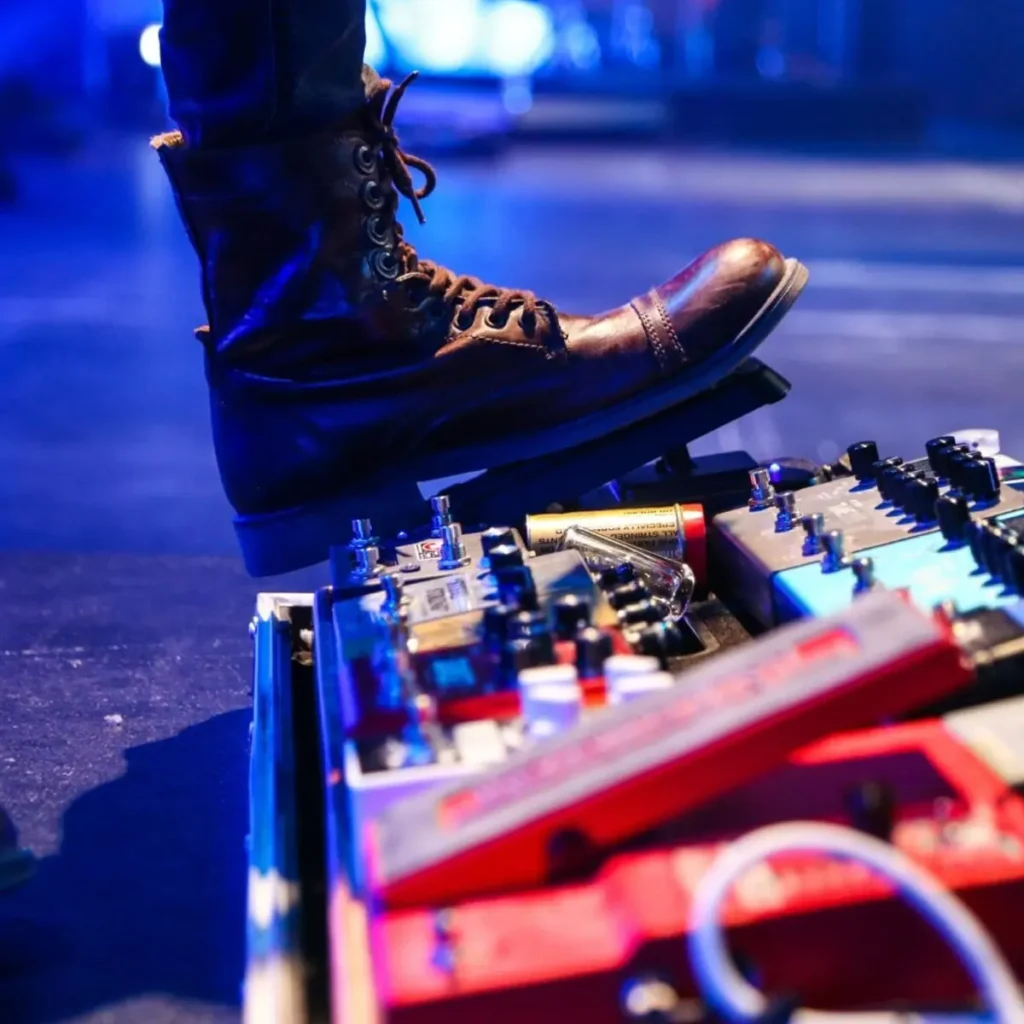
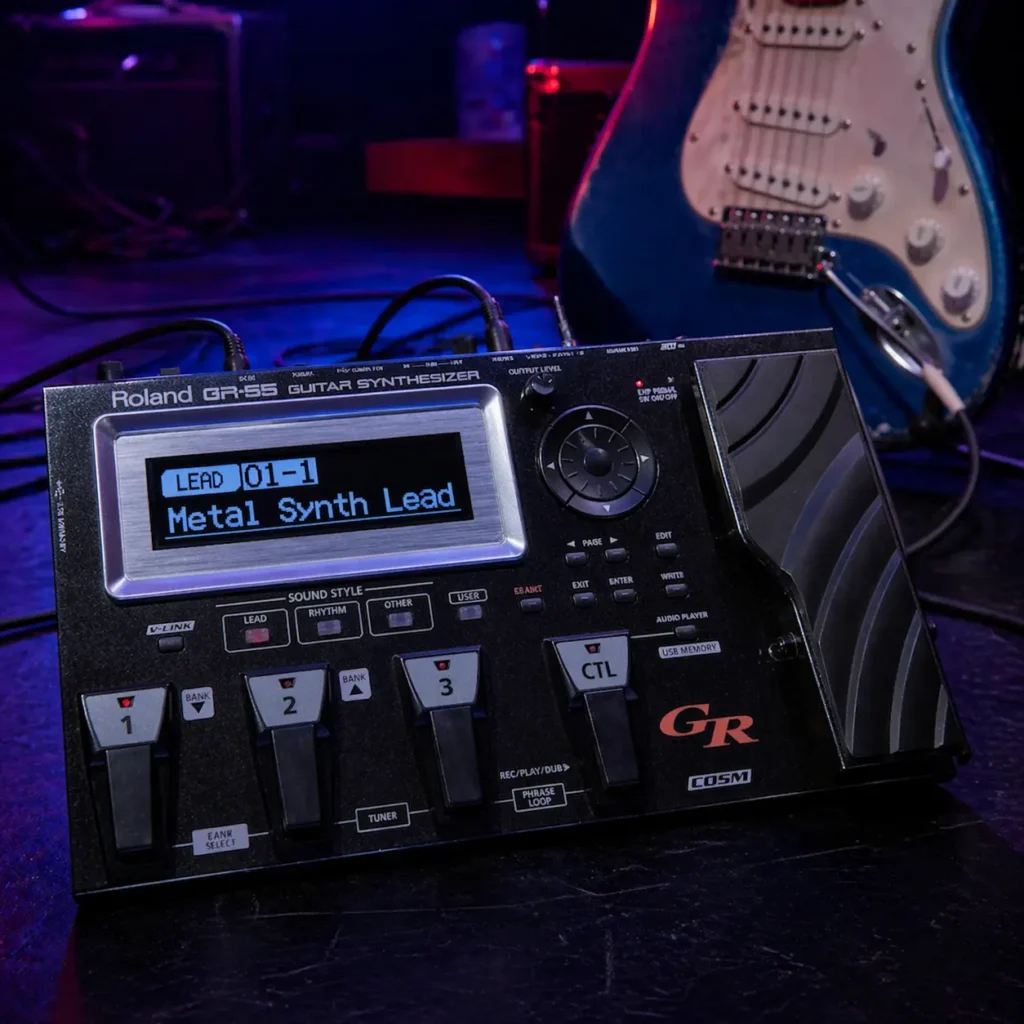
It’s never just about the notes during a live performance. Movement, tension, release, and the way a band fills a space are all important. In the centre of the encounter are guitar pedals. To cover multiple sounds without carrying more equipment, a player may use a single drive box, bring a larger board, or rely on a multi-effects pedal. Foot-controlled effects still influence what the audience hears and how the performance feels, regardless of the rig’s construction. They enlarge the area, add colour, and enable a guitar to transition from rhythm support to lead vocal quickly.
From Experiments To Essentials
Early electric guitar tones were influenced by studio techniques and hard-charged amplifiers. Players could add those textures onto a stage when compact effects became available. The initial units were simple and frequently a little erratic. This unpredictability enhanced the appeal. A tiny combination amp might sound huge with a fuzz box. Without altering the musician’s touch, a straightforward boost could raise a solo above the band.
As touring expanded, musicians required consistent performance every night. In response, manufacturers produced pedals that could withstand frequent use, quieter circuits, and stronger switches. Effects evolved from novelty to an essential component of stage sound. Pedals are frequently the quickest way to give the textures that a contemporary audience demands in particular genres.
The Core Sounds That Move A Crowd
Because they provide solutions to everyday issues, some impacts have evolved into building blocks. Sustain is added via overdrive and distortion, which lengthens single-note duration and thickens chords. When the bass and drums are playing loudly, the additional weight helps the guitars remain audible. A simple riff can become something raw and urgent with Fuzz’s more shredded, spitting character.
Modulation pedals produce motion. A clean part can shimmer and be widened by a chorus. A static chord can become a moving surface by adding a sweeping tone with a phaser and flanger. Tremolo may produce pulsing rhythms that lock to a drummer’s groove by quickly changing volume.
Space is shaped by delay and reverb. A brief delay can thicken a section without producing an echo-like sound. Rhythmic lines that interact with the drummer’s pattern can be produced via longer repeats. When a venue feels dry or the sound needs more depth, reverb can help place the guitar in the room.
Pedals as Real-Time Arrangement Tools
Live music necessitates rapid adjustments. Loud choruses are frequently interspersed with quiet sections, followed by a breakdown and another surge. A guitarist can precisely follow that structure with the aid of pedals.
During a line, a singer may have a clear tone behind them. For a chorus, the guitar can be brought forward using a driving pedal. Without changing playing style, a boost can raise a lead line. A filter effect can make the sound seem smaller in one area and then louder in the next.
There is more to these changes than just volume. They mould a song’s emotional trajectory. Even though they cannot identify the effect, the audience senses the turn when the tone shifts at the appropriate time. That is a foot-controlled real-time configuration.
Stage Presence And The Feeling Of Control
On stage, presence is both auditory and visual. Pedals have an impact on both. Mobility is also an obvious component. The audience is given a clear cue when a player steps forward for a solo, flips a switch, and lets the sound blossom. It indicates that something is currently taking place.
Control also produces a more subdued form of confidence. A guitarist plays more purposefully when they are confident in their ability to provide the appropriate tone at the appropriate time. Performance energy is a result of that focus. The guitar’s ability to quickly change textures and still land on its feet allows the ensemble to take chances.
Singers can also benefit from effects. Gaps between voice lines can be filled with a slight delay that doesn’t draw attention to itself. Under a verse, a swollen reverb section can create a mood. These decisions strengthen a band’s sound, giving them a sense of richness and consideration.
The Pedalboard As A Live System
A pedalboard is more than simply a stack of boxes. The sequence is important since it is a signal chain. The signal is kept clean for precise tuning when a tuner is initially placed. Clean pieces sit more uniformly when dynamics are smoothed out by installing a compressor early. Drives frequently precede modulation, allowing a chorus or phaser to modify the tone that has already been established. To prevent distortion of repeats and ambience, delay and reverb are typically placed later in the signal chain.
Stage sound is also impacted by power and cabling. Hum can be introduced by low power. In the middle of a song, loose patch cables may crackle or cut out. A neat board decreases those dangers. With spare leads and obvious signal-flow routes, many touring musicians arrange their boards like a tiny electrical system.
That way of thinking is beneficial even for a simple setup. If constructed carefully, a beginning board with a tuner, one motor, and one delay can be dependable. If everything is powered and secured correctly, a larger setup can remain stable.
Consistency In Changing Venues
Every venue has a unique sound. One room may be harsh and bright, while another may have a boomy low end. In a new setting, a guitar tone that performed flawlessly during rehearsal may have trouble. Pedals offer rapid solutions.
Frequencies can be reshaped to fit the space using an equaliser pedal. The guitar may cut through without becoming uncomfortable by adjusting the drive level. On louder stages, hiss can be managed with a noise gate. A volume pedal enables seamless transitions between parts and can manage swells.
In live work, this adaptability is crucial. Not every venue allows musicians to rebuild their amplifier configuration. Effects allow them to change without losing who they are.
Lasting Influence On The Live Experience
By expanding a guitar’s capabilities on stage, pedals continue to influence performances. They transform the instrument into a more expansive sound source that can quickly alter roles, fill in gaps, and create atmosphere. Additionally, they enhance stage presence by making scenes more dramatic and obvious while empowering performers to deliver intentional performances. There will always be new pedals, but they remain crucial for a straightforward reason. A direct connection between a musician’s concept and the space is called a footswitch. A show becomes more than just a recitation of songs when there is a strong connection between the audience and the performers.


