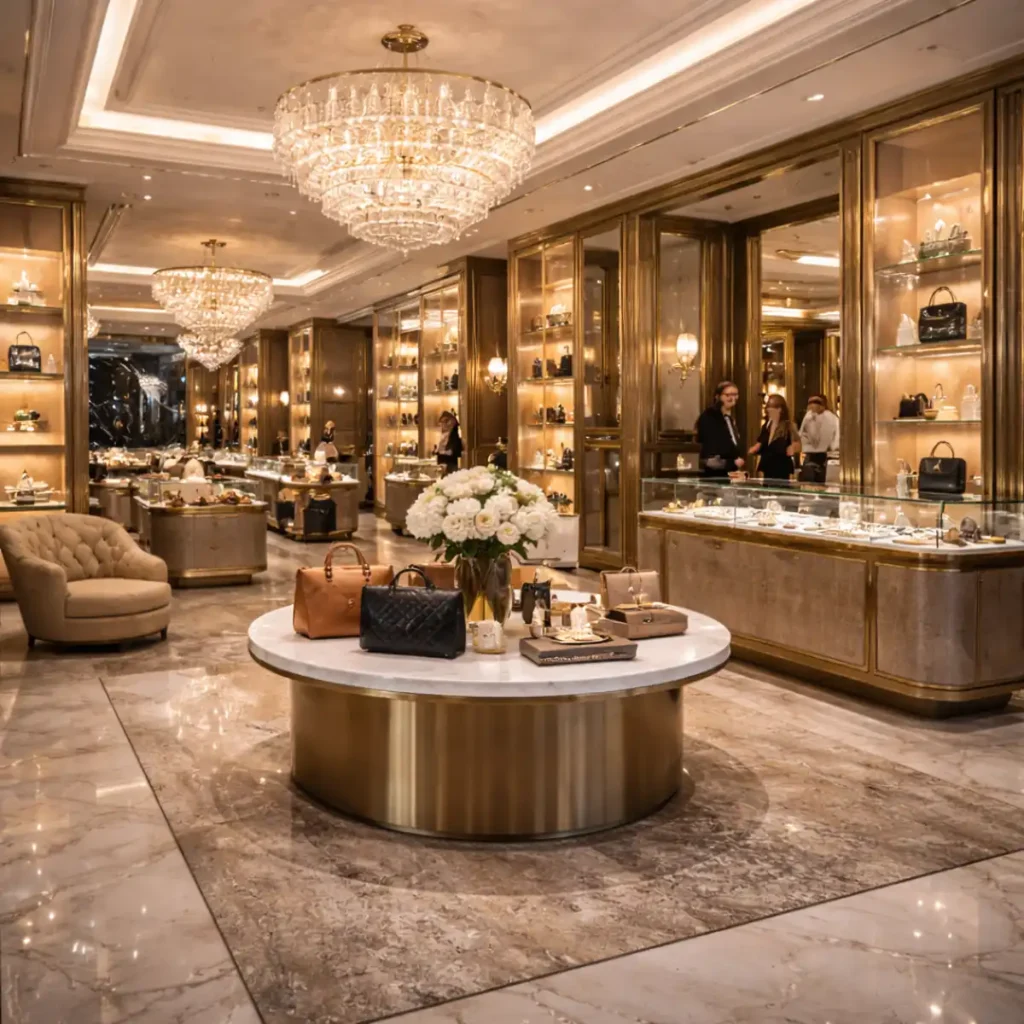
On an ordinary Thursday afternoon in Soho, a quiet queue begins to snake around a nondescript building. There’s no fanfare, no glossy signage — just a few in-the-know shoppers waiting with quiet anticipation. What lies behind the unmarked door is no ordinary retail space, but a fleeting opportunity to purchase high-end fashion at a fraction of the price. Welcome to the world of London’s luxury flash sale pop-ups, where scarcity fuels status and secrecy becomes a form of social capital.
These events aren’t advertised on billboards or promoted through glossy magazine spreads. Instead, they whisper through invitation-only mailing lists, encrypted messaging apps, and niche Instagram pages. To attend is not just to shop — it’s to be part of something limited, urgent, and culturally prized. For luxury shoppers in London, especially those navigating Soho and Mayfair, this is the new frontier of designer access.
Ephemeral Boutiques: The Mechanics of the Modern Flash Sale
Flash sale pop-ups are short-term, temporary retail spaces where designer stock is sold discreetly and often dramatically discounted. These events typically run for two to ten days and are designed to offload inventory, including showroom samples, past-season collections, and archival pieces, without eroding the prestige of flagship stores. They’re held in easily transformable venues: blank-canvas gallery units, converted showrooms, or unbranded retail spaces nestled in fashionable boroughs.
What sets these sales apart is not only the price but the experience. The last-minute nature of the announcement, the concealed venue, and the curated access all reinforce a sense of insider privilege. They are not designed to attract everyone — they’re for those who know where to look and how to act fast.
Brands rely on this tightrope of discretion and desirability. By offering select items through these events, they maintain full-price integrity on current lines while moving unsold stock through low-profile channels. The use of phrases like “archival release” or “private inventory event” reframes surplus goods as rare finds, aligning with the growing trend of investment-focused luxury shopping.
A Strategic Way to Manage Surplus — Without Sabotaging Prestige
For luxury houses, excess inventory is a perennial challenge. The historical solution — incinerating unsold stock — is no longer viable, both due to tightening EU regulations and growing consumer demand for ethical fashion practices. Flash sales offer a solution that is both financially practical and brand-safe.
Items sold at these events include:
- Runway or showroom samples
- Past-season collections
- End-of-line or discontinued items
- Archival or reissued designs
What makes these events so effective is their linguistic repositioning. A dress from last year is no longer discounted — it’s “archival.” A bag with a slightly modified logo isn’t outdated — it’s “vintage-inspired.” This reframing transforms bargain hunting into treasure hunting, preserving the brand’s value while facilitating discreet stock clearance.
Soho and Mayfair remain favoured districts for these operations. Their proximity to wealth, fashion media, and international clientele makes them ideal. Yet, the venues themselves are often hidden in plain sight — subtle and easily missed unless you’re on the list.
Why Consumers Queue for Hours — The Magnetic Pull of Flash Sales
At the heart of these events is an irresistible mix of psychological triggers and tangible rewards. Unlike the sales racks of department stores, flash pop-ups carry an energy that’s both thrilling and intense — part fashion frenzy, part social experiment.
Exclusive Prices, Familiar Labels
The headline draw is simple: real designer goods at up to 90% off. Whether it’s a Chanel blazer or a Gucci handbag, the discounts are dramatic. Even at reduced prices, the items remain premium, meaning shoppers still feel they’re investing in luxury, not compromising on quality.
Importantly, these aren’t off-brand or low-end seconds. The cachet of the label remains. The psychology here is powerful: even discounted, a designer piece retains its symbolic capital.
Urgency and Scarcity: Why the Clock Matters
These sales are fleeting, typically lasting less than a week, often less than a weekend. Stock is limited. The event might be announced on a Monday and over by Friday. This ticking clock creates buying urgency, compelling people to act fast before someone else does.
That sense of scarcity, both in time and availability, triggers the classic Fear of Missing Out (FOMO). In the world of luxury, exclusivity is currency. When something is available only to a few, and only briefly, it becomes inherently more desirable.
Social Proof: The Power of the Queue
Odd as it may seem, the queue outside a pop-up is part of the appeal. Long lines outside low-key doors serve as real-world proof that something special is happening inside. Passers-by are intrigued. Instagram users snap pictures. In a city obsessed with curated experiences, being spotted in the queue becomes a social flex.
Even better? Surviving the queue adds to the reward. Shoppers who endure the wait feel they’ve earned their haul. That effort increases the perceived value of their purchases, reinforcing the exclusivity of the event.
Fun Fact: According to trend analysis by Chicmi and SampleSaleGuide, sales featuring Chanel or Dior regularly prompt queues forming as early as 7 a.m. — hours before doors open.
Resale Culture: From Shopping to Smart Investing
Today’s luxury consumer is more than fashion-conscious — they’re financially shrewd. The rise of luxury resale platforms like Luxe Collective and Vinted has blurred the line between indulgence and investment. For many, attending a flash sale is not just about finding a stylish piece — it’s about scoring a future asset.
Classic pieces from legacy brands like Louis Vuitton, Dior, or Hermès retain or even increase in value. The phrase “archival find” is not mere marketing — it signals to resellers and collectors that a piece may be rare, coveted, or historically significant.
In this light, a flash sale becomes more than retail therapy. It’s part treasure hunt, part portfolio diversification. Shoppers scour rails for that one item they can resell months later at double the price, or keep as a fashion heirloom.
Who Pulls the Strings? The Architects Behind the Curtain
While brands like Louis Vuitton maintain strict “no sale” public policies, their past-season stock still finds its way to these events. How? Through a carefully layered web of authorised intermediaries, event organisers, and tactical partnerships.
The Brand’s Official Position
Luxury houses often frame these events as “experiences” rather than sales. By focusing on curation, storytelling, and heritage, they can offload stock without compromising their full-price identity. Items at pop-ups are framed as rare reissues or collector’s editions, not clearance rack leftovers.
This nuanced strategy lets brands tap into flash sale benefits — inventory movement, customer engagement, brand buzz — while technically maintaining their no-discount stance on current lines.
The Organisers: Flash Sale Specialists
Companies like Showcase.co, Sample Sale London, and Sign of the Times are pivotal. They coordinate everything: ticketing, stock management, staffing, and event promotion — often under strict non-disclosure agreements. These firms have built reputations on running high-efficiency, low-profile events that keep both brands and customers happy.
Snapshot of London’s Leading Flash Sale Players
| Organiser | Brands Featured | Access Style | Location |
| Showcase.co | Frame, Belstaff, others | Ticketed (£2), RSVP-based | 12 Regent St & more |
| Sign of the Times | Chanel, Prada (pre-owned) | Public tickets on Eventbrite | Chelsea, various locations |
| Secret Sales | Dolce & Gabbana, Ted Baker | Online, member-only | UK-wide (online only) |
| Sample Sale London | Burberry, others | VIP membership, online/in-store | Marylebone |
| Luxe Collective | Louis Vuitton, Dior (pre-loved) | Pop-up + resale | City of London, online |
How the Privileged Few Find Out: Cracking the Code of Promotion
In a world saturated with digital noise, luxury flash sales thrive by whispering — not shouting. Their appeal lies in discretion. The fewer who know, the more valuable the knowledge becomes.
No Billboards, No Broadcasts — And That’s the Point
Unlike conventional sales, these events avoid mainstream advertising altogether. No glossy magazine spreads, no tube posters, no online banner campaigns. This absence isn’t a limitation; it’s a strategy. Exclusivity cannot exist in plain sight.
Mass promotion would attract chaotic crowds, dilute the sense of privilege, and undermine the very essence of the event. Instead, brands and organisers operate through closed loops — controlled, curated, and difficult to access unless you’re part of the right digital corridors.
Mailing Lists and VIP Memberships: The Inner Circle
At the top of the pyramid are private client lists. Long-time customers and high-spending regulars often receive direct invitations via email or SMS, complete with RSVP requirements. Event platforms such as Showcase.co and Sample Sale London operate VIP systems that grant early entry and priority access — a significant advantage when stock is limited and queues are long.
Some brands, like Temperley London and Aspiga, host exclusive shopping nights and trunk shows for newsletter subscribers or top-tier clients. Entry is by request only, reinforcing the principle that access itself is the commodity.
Telegram Tips, WhatsApp Whispers, and Instagram Alerts
For those outside the elite list, access often depends on being connected to the right whisper networks. Telegram groups, WhatsApp communities, and niche Instagram accounts share flash sale alerts in real time. These spaces are fast-moving and intentionally low-key, catering to dedicated followers who know how to act fast.
Popular sample sale trackers like Chicmi and SampleSaleGuide aggregate listings and offer Pro memberships for enhanced access. Others like Secret Sales and Luxe Collective use their online platforms to host digital flash events — often with members-only entry and countdown timers to build suspense.
What unites these channels is the need for effort. You won’t find a flash sale by chance — you must know where to look and how to listen.


The Psychology of Luxury Pop-Ups: More Than Shopping
Luxury flash sales are not just about saving money. They tap into deep psychological mechanisms — from status signalling to scarcity bias — that make the entire experience as valuable as the items themselves.
The Pilgrimage of the Queue
Hours spent queuing outside an unmarked door are not wasted time — they’re part of the ritual. This effort investment increases the perceived value of the experience and the products acquired. It’s classic cognitive dissonance theory: the more effort expended, the greater the reward feels.
TikTok users often document their queue experiences, sharing both frustrations and triumphs. One user recalled waiting outside a Soho venue for over an hour just to enter an Anine Bing sample sale — and still considered it worthwhile.
This phenomenon builds community among strangers, turning the act of waiting into a shared moment of insider status.
Last Season, Still Luxurious
In luxury, brand identity trumps seasonality. A Chanel tweed jacket or Dior bag from two years ago still holds immense cachet. These are not disposable trends — they are markers of cultural and social standing.
Buyers understand this. They’re not hunting for novelty — they’re securing symbols. The badge value of a designer piece endures beyond fashion cycles, particularly when the item is instantly recognisable or part of a signature collection.
This mindset allows flash sales to offload older stock without compromising desirability. It also means shoppers can rationalise their purchases as smart, timeless investments, not just spontaneous splurges.
Inclusion Over Innovation: The Prestige of Participation
Perhaps the most underrated psychological element is the joy of being included. For many, gaining access to these secretive events — navigating the cryptic announcements, scoring early entry, discovering gems before others — is as valuable as the product itself.
To attend is to say, “I was there.” To show your haul is to signal status. It’s experiential luxury: a moment, not just a thing.
These sales are built to create stories, not just transactions. For modern consumers, especially those who value curation and identity expression, that distinction matters deeply.
Why Brands Do It: The Hidden Blueprint
To outsiders, luxury flash sales may appear as a compromise — a brand breaking its own price rules. In truth, they are surgical manoeuvres: calculated, discrete, and rooted in long-term strategy.
Inventory Relief Without Brand Harm
Flash sales provide a low-visibility method for stock liquidation. Items that can no longer be sold at full price in boutiques — whether samples, excess inventory, or discontinued lines — are rerouted through pop-ups to avoid cluttering core retail space or risking online discounting.
This method safeguards pricing structures, avoids visible markdowns, and prevents consumer conditioning (where shoppers wait for sales rather than buying new). Crucially, it also circumvents the now-damaging practice of destroying unsold goods, aligning brands with modern sustainability narratives.
Market Testing in Disguise
A temporary pop-up allows a brand to trial a location, product line, or demographic without committing to a long-term retail lease or advertising campaign. If a concept underperforms, it can quietly be shut down. If it succeeds, it informs future decisions.
Pop-ups are essentially live A/B tests in the wild — capturing data on foot traffic, conversion rates, and item desirability without formal research overheads. They also expose the brand to new customers who might never step inside a flagship store but will queue for a one-week-only sale.
Reinforcing Exclusivity by Restricting Access
While the premise seems paradoxical — selling luxury at a discount — the execution ensures brand equity is preserved. As long as access is limited, the item’s original status remains intact. In fact, flash sales can boost perceived exclusivity, not harm it.
The message isn’t “this brand is now cheaper” — it’s “you were lucky to get in.”
Fast Cash and Financial Flexibility
Short-term revenue from flash events unlocks tied-up capital. Unsold stock becomes liquid cash, which can fund next season’s collection, digital campaigns, or investment in experiential retail. Especially in times of market volatility, pop-ups offer financial agility without reputational sacrifice.
What Shoppers Should Expect Inside
The interior of a flash sale event is far from plush. These are functional, focused environments designed for quick browsing and even quicker transactions.
- Setup: Industrial rails, basic tills, plain lighting — emphasis is on products, not aesthetics.
- Crowd Control: Timed entry slots and ticketing are common, especially with Showcase.co and similar organisers.
- Staff: Often freelance or agency-hired under strict NDAs to prevent leaks.
- Trying On: Fitting rooms may be communal or restricted. In some cases, trying items is discouraged entirely.
- Returns: Almost all sales are final. “Sold as seen” is the default. No refunds, no exchanges.
- Payments: Card only. Cash is rarely accepted at modern events.
- Etiquette: Be polite, decisive, and quick. Wear clothes suitable for trying items on top. Check items thoroughly. Avoid hoarding or pushing. Bring only essentials — large bags are usually checked in.
Success depends not on browsing leisurely but on moving smartly and strategically. These sales reward preparation and confidence, and punish hesitation.
Final Thoughts: Theatre, Not Clearance
To dismiss London’s flash sale pop-ups as simple discount clearances is to misunderstand their true function. These events are not logistical fixes — they are carefully choreographed retail theatre.
The time pressure, the limited access, the insider buzz — it’s all part of the script. Each event, whether lavish or minimal, contributes to the brand’s evolving story. Shoppers aren’t just buying items; they’re participating in a live performance of exclusivity.
Luxury has always depended on narrative. These flash sales offer a new chapter — one where access replaces opulence, where secrecy replaces signage, and where the hunt becomes the luxury itself.