
There is a particular kind of confidence that comes with wearing a well-made Italian suit. It is not loud, not performative: it is simply the quiet assurance of a man who knows that what he is wearing is right. In a neighbourhood like Mayfair, where the standard for dress is set by some of the most discerning men in the world, that confidence matters. And time and again, it comes back to Italy.
Italian suits have occupied a dominant position in men’s tailoring for the better part of a century, and not without reason. The tradition runs deep – from the fabric mills of Biella in Piedmont, which have supplied the finest wool in the world for generations, to the ateliers of Milan and Naples, each with their own philosophy on how a man should be dressed. What unites them all is a shared belief: that a suit should enhance the wearer, not constrain him.
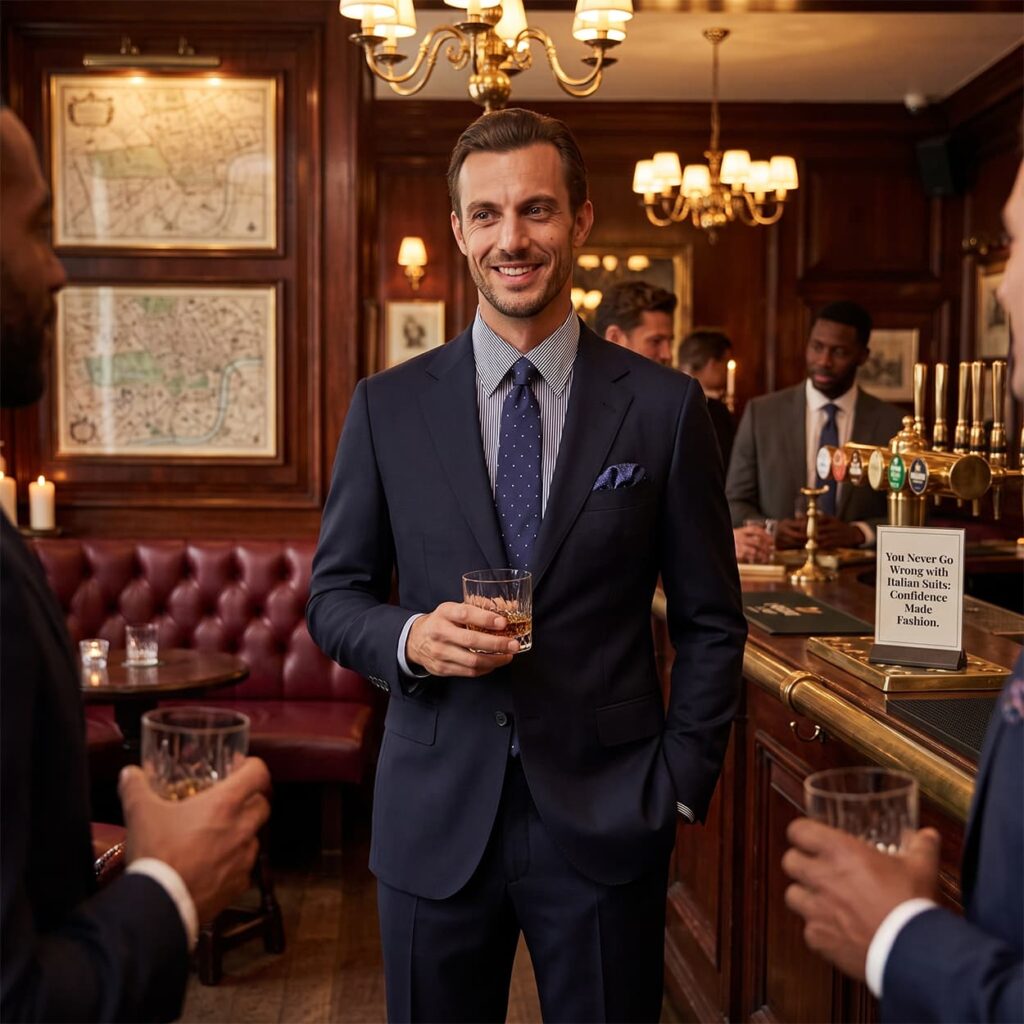
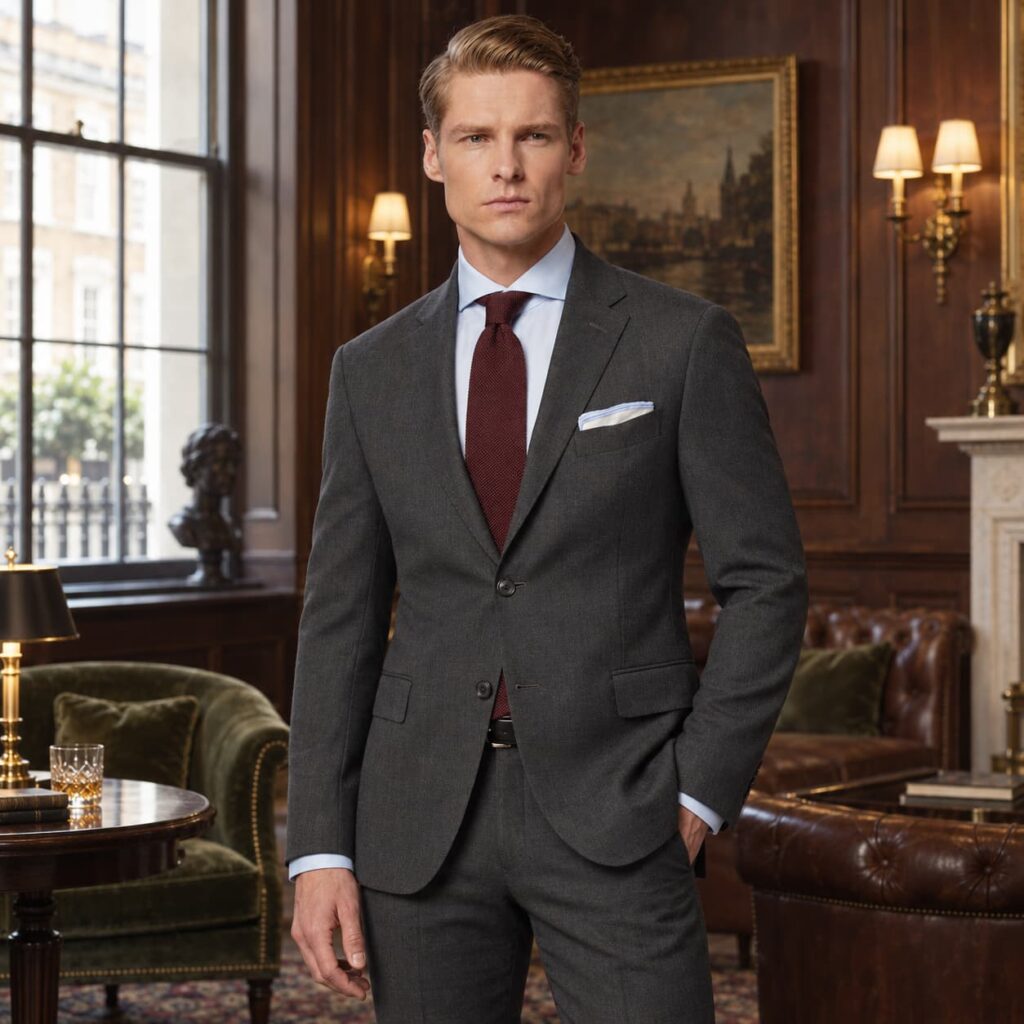
The Milanese approach is perhaps the most relevant to the modern wardrobe. Clean lines, a structured-but-yielding shoulder, a silhouette that flatters without being theatrical: it is precision without severity. A suit cut in this tradition reads as entirely serious in a boardroom and entirely appropriate at dinner. That versatility is not accidental; it is engineered into every seam.
Then there is the Neapolitan school, rather more romantic in its sensibility. The spalla camicia, the “shirt sleeve” shoulder, with its gentle ripple rather than a sharply padded line, gives a suit a more relaxed, almost draped quality. It moves differently. It suggests ease. For the man who wants to look impeccably dressed without appearing to have tried, it is the ideal choice.
What elevates Italian suiting above all others is the fabric. The best Italian houses offer access to a remarkable range of textiles like pure wool in extraordinary fineness, wool blended with silk or linen for seasonal comfort, and stretch compositions that retain a sharp silhouette while allowing genuine freedom of movement. A pinstripe suit in 130s pure wool is not the same garment as a high-street approximation of the same thing. The hand, the drape, the way it holds its shape over a long day: the difference is immediately apparent to anyone who has worn both.
Colour deserves consideration too. Navy remains the indisputable foundation; endlessly versatile, and entirely appropriate from Monday morning to a formal evening engagement. Charcoal follows closely as the suit of authority and gravitas. But Italian tailoring also does something interesting with indigo tones and deep blues, which sit beautifully against the greys and creams that dominate the Mayfair streetscape in all seasons.
In a world that has grown increasingly casual, the Italian suit has not surrendered its relevance – it has adapted. Stretch fabrics and softly constructed jackets now meet modern expectations of comfort without sacrificing an ounce of elegance. The silhouette has subtly relaxed, the shoulder has softened, but the essential proposition remains unchanged: a man in a beautifully made Italian suit is a man who has understood something that cannot be easily explained and is impossible to ignore.
In Mayfair – a postcode that has always understood the difference between dressing well and merely dressing – that is precisely the standard.


