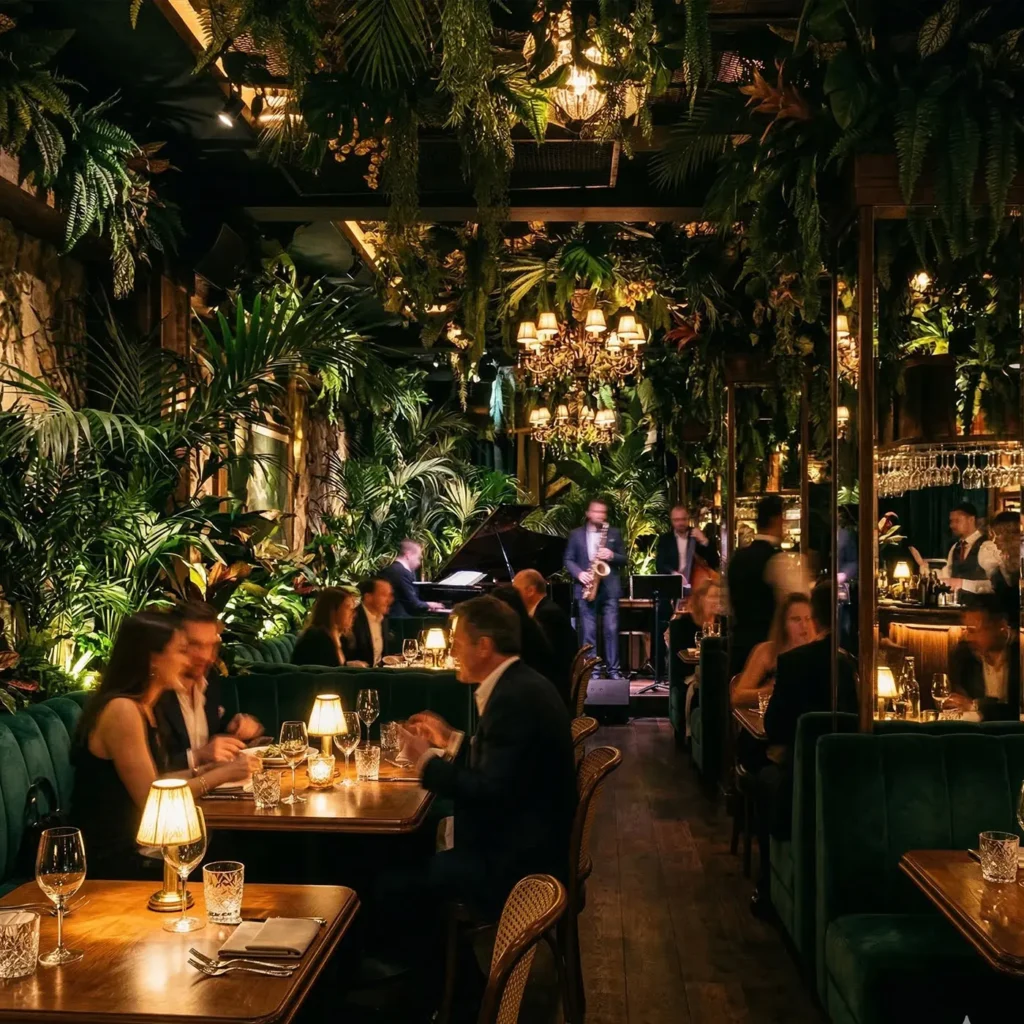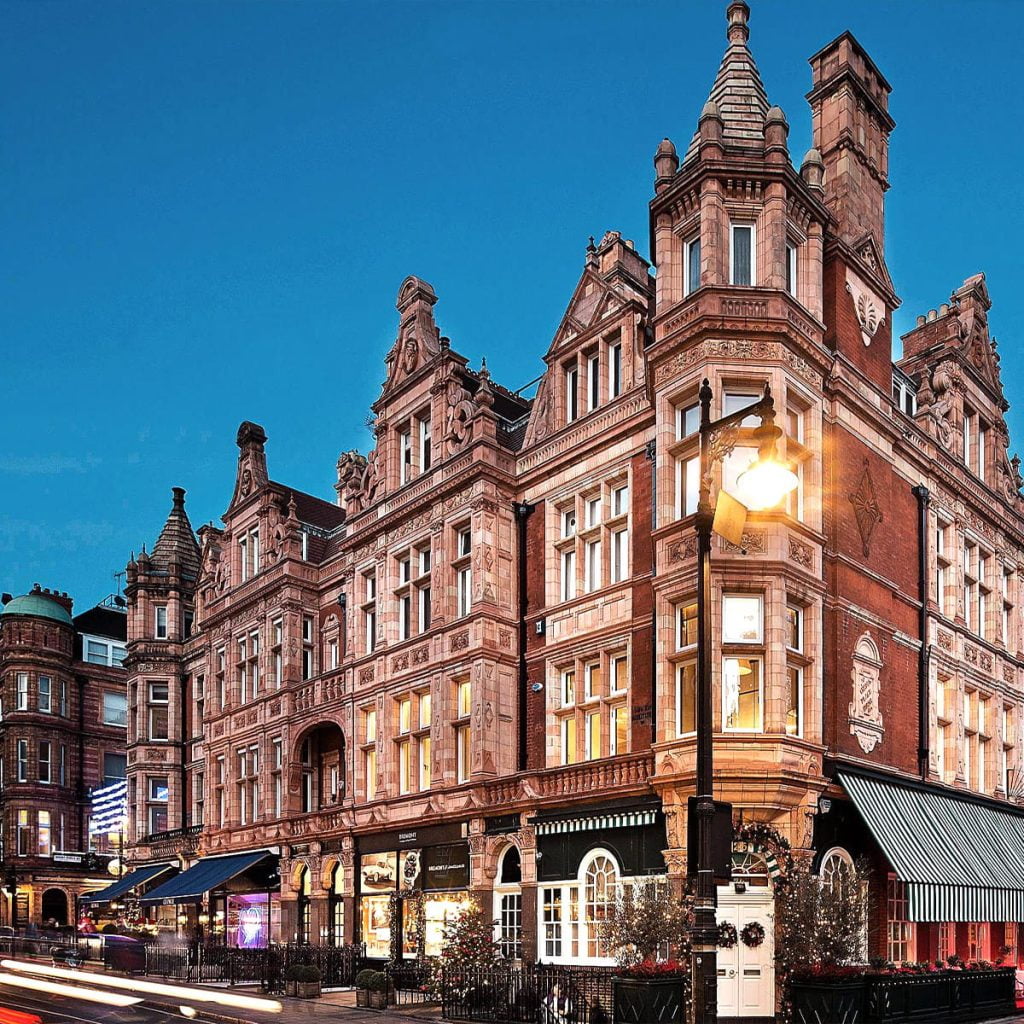
Walk through the doors of COYA Mayfair on a Saturday night, and you step from the formal sweep of Piccadilly into a different temperature of London. Outside, the grand terraces facing Green Park signal old money and quiet power. Inside, bass lines roll across a low-lit dining room, pisco sours arrive in frosted vessels and plates of bright citrus-dressed ceviche flash past on their way to tightly packed tables. This is not a hushed temple of fine dining. It is a calibrated piece of Mayfair theatre that understands exactly who is sitting in its seats.
By late 2025, Mayfair restaurants will operate in one of the most competitive hospitality environments on the planet. London has seen its largest growth in luxury hotel rooms in over a decade, with around 757 new high-end rooms added in a single year. That influx includes heavyweight names such as Chancery Rosewood, Six Senses, and the now bedded in Mandarin Oriental Mayfair, all of them filled with guests paying four figures a night and looking for somewhere to eat, drink and gather. For a venue like COYA Mayfair, these hotels are not competition so much as a pipeline. They deliver a rolling cast of international diners who recognise global brands, expect sharp service and do not blink at tasting menus or late-night Champagne.
The wealth that underpins this part of London is unusually concentrated. London now counts almost twice as many millionaires as cities such as Beijing or Dubai, and leads Europe in the number of so-called centi-millionaires with investable assets above $100 million. Transactions on ultra prime homes above £15 million have steadied, with buyers from the United States and the Middle East now responsible for roughly half of these purchases. The net effect is a local audience that is highly mobile, highly moneyed and used to being courted. If you operate a high-end restaurant in Mayfair in 2025, you are not just serving dinner. You are selling a total environment that has to work for this crowd and for the corporate diners, tourists and Londoners who orbit around them.
Who Eats At COYA Mayfair And What They Come For
The dining room at COYA Mayfair reflects that mix. On any given service, you will hear American drawls, Gulf accents, French, Spanish and Russian with London voices woven through. The front of house team must move fluently between cultures, calibrating service to guests who want either high-touch attention or discreet efficiency. It is a balancing act between warmth and pace. Plates arrive briskly, yet the team are trained to read the room: one table is clearly celebrating, another is closing a deal, a third has slipped in for a late service supper after a show.
The menu is written to appeal to this international audience without blunting the edges of Peruvian flavour. Nikkei cuisine, the fusion of Japanese technique and Peruvian ingredients that sits at the heart of COYA, is rooted in the history of Japanese migration to Peru in the late 19th and early 20th centuries. In Mayfair, it translates into sashimi, precise raw Fish dressed with lime-heavy marinades, grilled meats brushed with chilli pastes and spice rubs, and a battery of sauces that lean into acidity, heat and richness in equal measure. Alongside classic ceviches and tiraditos, you find dishes that signal global luxury: Wagyu beef, Oscietra caviar, truffle-scented dressings. They exist not as gimmicks but as recognisable markers for guests who collect experiences the way others collect hotel loyalty points.
Price-wise, this is firmly special occasion territory. Ceviches hover around the £20 mark, a plate of yellowtail tiradito with green chilli and truffle oil sits closer to £24, and Chilean sea bass is a high-ticket main. Tasting menus start at around £90 per person for a chef-led Discovery selection and climb to roughly £120 for an Indulgence line-up. Add cocktails, Pisco sours, and perhaps a bottle from the predominantly European wine list and a night here can comfortably run into three figures per head. For the right guest, the question is less whether it is expensive and more whether the experience feels coherent, generous and well executed. That is where COYA has spent more than a decade refining its offer.
Design Atmosphere And The Psychology Of 118 Piccadilly
Part of COYA’s pull is the building it occupies. Number 118 Piccadilly is a Georgian structure with the kind of formal frontage that suggests ambassadorial receptions and private clubs. That façade does important work. It signals the weight and seriousness of the British establishment before you pass through the threshold into something much freer in its energy. The contrast is deliberate. COYA trades on the idea that serious fun happens behind serious doors.
Inside, the interiors are the work of longtime collaborators Sagrada, led by Richard Saunders. The aesthetic has often been described as worn in luxury. Walls look layered rather than freshly painted, with hand-worked murals, gilded Incan motifs and art that feels collected rather than commissioned in one sweep. Refurbishments in the mid 2020s have introduced more planting and biophilic touches, softening metalwork and hard edges with leaves, branches and texture. The result is a room that reads as dense and atmospheric without tipping into theme restaurant pastiche. It nods to Peru and to Latin America without relying on clichés.
Lighting is treated as a design discipline in its own right. Specialist studios such as The Lighting Design Studio and Northern Lights have shaped a scheme that works almost like stage lighting. Pools of warmth pick out tables, bar counters and art pieces, while other corners recede into the background. Laser-cut brass pendants, suspended on dark chains, add an industrial note to the glamour. In corridors leading towards private dining rooms, turned wood lamps topped with deep red shades create a club-like glow against antique furniture and Chinoiserie panelling. The cumulative effect is not just that the room looks good, but that the people in it do too. In a dining room that doubles as a social catwalk, flattering light is non-negotiable.
The floor plan itself is carefully zoned. The Pisco Bar acts as both holding pen and destination, with louder music and darker light. The main dining room centres on an open ceviche counter and robata grill, offering diners clear sightlines into the kitchen’s movement. Behind those spaces, the members’ club offers quieter corners, softer music and a terrace where cigar smoke drifts over Piccadilly. Each zone answers a different need: to be seen, to mingle or to retreat. That flexibility helps COYA hold guests for hours at a time, shifting them from pre-dinner drinks to late-night dancing without ever needing to send them elsewhere.
Inside The Kitchen Nikkei Cooking And The 2025 Menu
Under head chef Fabrizio Fossati, the kitchen at COYA Mayfair has continued to evolve its take on Nikkei cooking. The menu is structured to encourage sharing. Smaller plates arrive in a steady flow, encouraging tables to sample widely, then anchor the meal with a couple of larger dishes. It is a format that suits groups, encourages conversation and, candidly, tends to increase spend per head.
The raw section is where COYA’s reputation was built and the 2025 menu keeps it central. Ceviches remain an essential order. The Lubina Clásica, a sea bass ceviche dressed in leche de tigre with red onion, sweet potato and giant white corn, balances salt, sour and sweetness with precision. More luxurious is a stone bass ceviche enriched with truffle ponzu, a clever bridge between Latin citrus punch and European earthiness. Tiraditos, best described as Peruvian sashimi, are sliced more thinly, dressed more delicately and often gilded with extras such as truffle oil and thin strands of chilli. The yellowtail version has become one of those dishes that regulars insist on ordering every time.
From the robata grill come anticuchos, skewers that hark back to Lima street food, reworked with fine dining produce and technique. Chicken skewers brushed with aji amarillo and mirin are smoky, sticky and bright with chilli. Beef fillet skewers marinated with aji panca carry a deeper, almost chocolate-like note. Larger plates include a Chilean sea bass dish cooked with miso and served over rice scented with lime and chilli, and a sirloin steak marinated with aji limo and star anise that lands on the table sliced and ready to share.
Vegetarian and plant-forward dishes are not an afterthought. A quinoa salad with pomegranate, white beans and feta offers tang, crunch and freshness. Corn empanadas arrive hot and crisp, with generous fillings rather than parsimony. Sides such as potatoes in huancaina sauce provide comforting starch and heat. Desserts continue the Latin lens: churros scented with orange zest and served with dulce de leche are built to seduce those who thought they had no room left.
The tasting menus corral these elements into guided experiences. The Discovery option serves as a cross-section of the COYA canon, ideal for first-timers or corporate groups who prefer not to negotiate a long à la carte. The Indulgence menu leans harder into premium ingredients and more courses. Both allow the kitchen to manage pacing and portions tightly, something that matters in a room that is rarely anything other than full.
Brunch Pisco And A Serious Late Night Bar Programme
If dinner at COYA Mayfair is a polished performance, brunch is closer to a day party. The Soul Grandioso Brunch runs on Saturdays from midday until late afternoon, with a defined free-flowing window for Champagne and cocktails to start, then a gradual ramping up of music and performance. By mid-afternoon, dancers and live musicians are weaving between tables, and the energy is far from languid. For hospitality professionals looking at revenue per square foot, it is a smart play. A traditionally quiet period has been turned into a signature product that pulls in a younger crowd who may later graduate to evening bookings or club membership.
The bar is a serious proposition in its own right. COYA styles its Piccadilly counter as London’s first Pisco library, a phrase that implies curation and education rather than a basic cocktail list. Pisco, a grape-based spirit long overshadowed in the international market, is treated with the same reverence that other venues might reserve for whisky or gin. The back bar showcases an extensive range of Peruvian brands, from names such as 1615 Quebranta to Barsol, and the team hosts regular tastings and masterclasses that walk guests through the spirit’s four-century history.


Since opening in 2012, COYA has also developed a signature maceration programme. Behind the bar, large glass vessels hold Pisco infused with passion fruit, lychee, coffee and other fruits and spices. These macerados are not simply decorative. They provide the base for some of the venue’s most popular cocktails, offering concentrated flavours that preclude the need for sugary syrups. The classic Pisco sour here is a reference drink, but the list runs wider: a drink built on tequila, soursop and coffee beans, for instance, lands somewhere between a sour and an after-dinner drink, while a spritz built from Pisco, hibiscus and sparkling wine offers colour and lift without being cloying.
Beyond Pisco, the rare spirits collection reads like a wish list for agave and rum collectors. Bottles such as Avion Reserva 44, Clase Azul and Don Julio 1942 cater to guests who drink tequila neat and know exactly what they are ordering. Rum drinkers are offered treasures such as Havana Club Máximo and long-aged El Dorado expressions. The members’ terrace, with its cigar-friendly policy, makes clear why these spirits are given space.
Inside The Members Club And Private World Of COYA
Behind the main restaurant lies a quieter, more controlled world. The COYA Members’ Club functions as a semi-private extension of the brand, with its own entrance, bar, dining areas and terrace. In Mayfair, where privacy is the purest currency, it is an attractive proposition. Official membership fees are not publicly posted, but the context is clear. Comparable clubs in central London charge joining and annual fees in the four-figure range, with some, such as Apollo’s Muse, reaching £5,000 and others, like AllBright, sitting above £1,600 a year. COYA positions itself in that ecosystem rather than outside it.
What members are buying goes far beyond a card in their wallet. Priority booking in the main restaurant is a significant benefit in a venue that runs at high occupancy. Members also gain access to sister clubs in locations such as Dubai, Abu Dhabi and Monaco, which means a regular guest can land in several global hubs and have an immediate social base. Concierge support covers restaurant and travel planning, sourcing of rare bottles and coordination of private events.
The design of the club area leans more towards residential comfort than the high-energy main floor. There are velvet armchairs, fireplaces, art filled walls and vantage points over Green Park. The terrace, a rarity in this part of town, offers outdoor seating where smoking is permitted, surrounded by heaters and blankets when London’s weather intervenes. For diners who love the cooking and atmosphere of COYA but prefer to avoid the full volume of the main room, this inner sanctum is likely the most appealing part of the proposition.
Art, Music, And Cultural Branding Around The Table
One of the reasons COYA Mayfair stands out among Mayfair dining rooms is its embrace of culture as part of the business model. The restaurant runs a formal art programme, with quarterly exhibitions that turn the walls into a rotating gallery. Recent years have seen work by artists such as Courtenay Kusitor, who blends ink with digital and NFT elements, and Kate Mayer. Pieces are chosen to echo the brand’s colour-saturated aesthetic and to sit comfortably alongside the antiques and architectural features of 118 Piccadilly rather than overwhelming them.
Art is integrated into the mechanics of service as well as the décor. Projects such as the painted Pisco jars invite artists to customise the glass vessels that sit behind the bar, turning functional containers into one-off works. Guests drink from, and in front of, this art, which subtly shifts the experience from simple consumption towards patronage. It supports the positioning of COYA as not just a restaurant but a venue that participates in London’s creative life.
Music is treated with equal seriousness. The brand operates COYA Music, its own label and production arm, which curates and releases tracks that then form the soundtrack in each restaurant worldwide. Resident DJs in Mayfair work with this catalogue, varying tempo and intensity through each service. Lunch might sit at a gentle 100 beats per minute, allowing conversation to flow, while the late evening service builds towards a more urgent 120 plus, nudging the room into party mode and, not incidentally, encouraging higher drink sales.
Fun fact: Because COYA produces its own music, the playlist drifting over sea bass ceviche in Mayfair is often exactly the same as the one soundtracking dinner in Mykonos or Dubai on the same night.
This attention to sound matters. Many high-end restaurants still treat music as an afterthought or something to be turned down when a critic arrives. Here, it is a key part of the identity, as recognisable as the ceviche and the Pisco sour.
How COYA Mayfair Competes In A Crowded Luxury Scene
COYA’s competitive set in 2025 is formidable. Within a few minutes’ walk, you can move from the Peruvian-inflected energy of COYA Mayfair to the rainforest-style dining room of Amazonico in Berkeley Square, the art-heavy, high-gloss spectacle of Sexy Fish, or the marble-saturated Greco-Roman fantasy of Bacchanalia. All are designed to feed the same broad demographic of wealthy Londoners, visitors, influencers and business diners who want food, drinks and a sense of event in one hit.
Where COYA differentiates itself is through culinary focus and narrative. Amazonico offers a broader Latin palette and leans into Brazilian steakhouse cues. Sexy Fish is an Asian fusion powerhouse with a polished, almost club-like aesthetic. Bacchanalia delivers theatrical Greek and Italian dishes under sculpture-laden ceilings. COYA, by contrast, presents a more tightly defined Peruvian and Nikkei identity with a design language that feels rougher-edged and more layered. Its art and music programmes give it a distinct cultural voice and the members’ club adds a layer of private space that many of its rivals do not have in the same way.
Critically and commercially, it has held its ground. Online booking platforms consistently score strongly, hovering above 8 out of 10, which is not a given for a restaurant that seats large numbers and runs at full tilt. Reviewers frequently single out the ceviches, the sea bass and the energy of the room for praise, while almost all acknowledge that prices are high. For some, the soundtrack and the crowd will be part of the attraction. For others, the volume and tightly packed tables may feel overwhelming. That polarity is, in some ways, the point. COYA is designed to be bold rather than universally soothing.
Should You Book COYA Mayfair Now
So who should put COYA Mayfair on their shortlist, and when is the best time to go. If you are looking for quiet, contemplative fine dining or minimal intervention cooking, this is not your room. If, however, you want a night where strong flavours, strong drinks and a sense of occasion are baked into the experience, it is one of the most complete packages in this corner of London.
First-time visitors should start with ceviche and tiradito, add a couple of anticuchos, and share a larger plate, such as Chilean sea bass or spiced sirloin. The Discovery tasting menu is a good route if you prefer to hand decision-making to the kitchen, particularly for corporate or mixed groups. Cocktails built around Pisco are the obvious order at the bar, but the rare tequila and rum listings repay attention for those who care about such things.
For occasions, COYA excels at birthdays, anniversaries and big nights out where dressing up and staying late are part of the brief. The Soul Grandioso Brunch offers a way in for younger diners or those who prefer daytime parties. The members’ club will appeal to regulars who live or work nearby and want a more controlled environment with priority access. Hospitality professionals will look at COYA as a case study in modern Mayfair strategy: a venue that spreads its risk and its revenue across restaurant, bar, brunch, art, music and membership.
Value is a relative concept in this market. You will pay significantly more here than at a neighbourhood Peruvian spot in another postcode, but you are also buying into a complete evening that aims to cover food, drink, soundtrack and scene. As London’s luxury hotel stock expands and Mayfair continues to attract mobile wealth, COYA’s integrated model looks well-suited to the decade. For diners choosing where to spend serious money on a night out, it is a place where Peruvian flavours, high octane hospitality and Mayfair spectacle are tightly bound together.