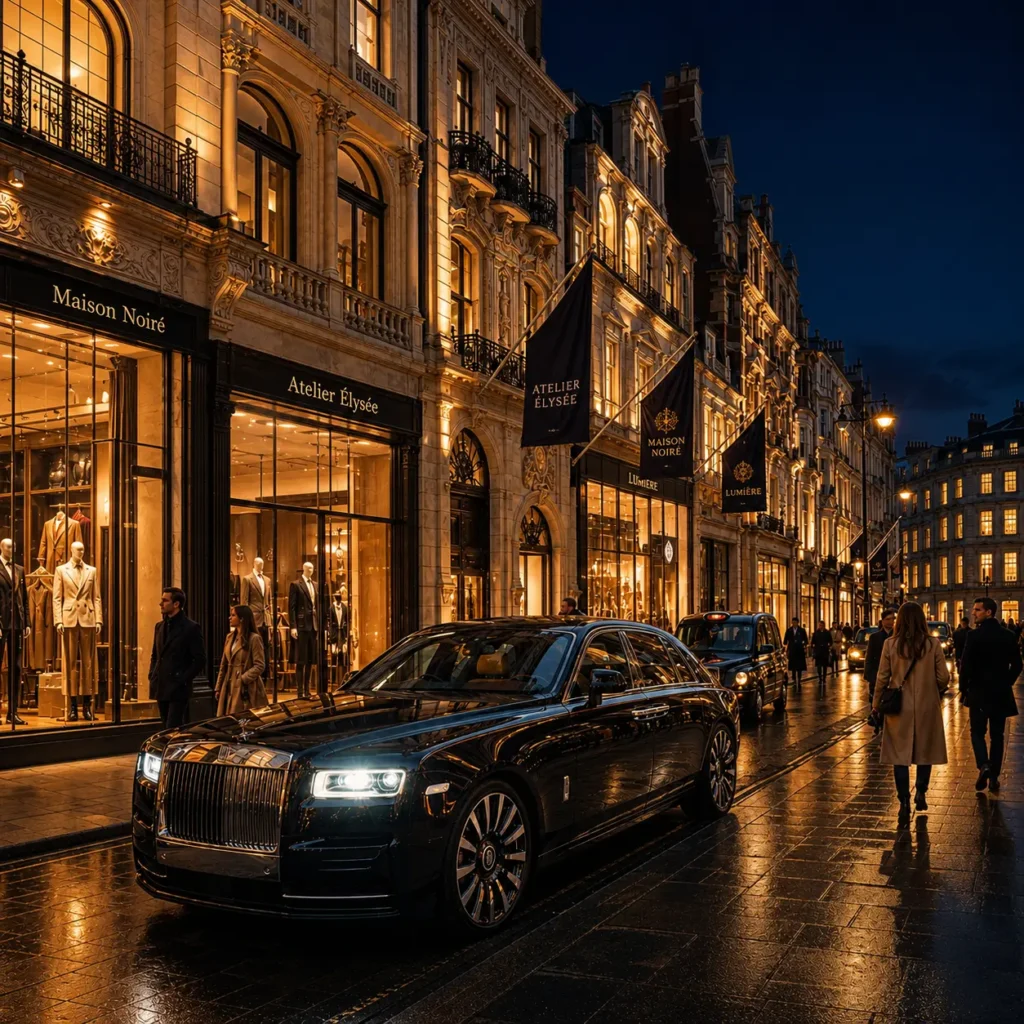
Why does a green baize table still hold such a grip on the imagination, even in an age when almost every pleasure can be summoned to a phone screen? Wander through Mayfair on a warm evening and the answer starts to reveal itself. Behind discreet Georgian doorways, past attentive doormen and softly lit foyers, the district’s members’ clubs carry on a tradition of refined evening entertainment that has scarcely changed in its essentials for well over a century. The click of a roulette wheel, the crisp snap of a dealt card, the murmur of well-dressed guests — these remain the signatures of a Mayfair night. And yet the thrill they represent has quietly found a second life, extending far beyond the square mile itself.
That extension is worth understanding, because the same appetite for elegant play now shapes how enthusiasts explore the wider world of gaming from home. For UK players curious about how the classic table experience translates online, comparison guides such as gamereactor.eu/gambling/non-gamstop-casinos review the best online casinos not registered with GamStop, weighing up licensing, the variety of bonuses on offer, the UK payment methods available and the way winnings are handled. Such resources also examine matters of safety and legality alongside the range of games — from slots and blackjack to roulette and live-dealer rooms that stream a real croupier to the screen. For someone who admires Mayfair’s tables but wants a considered view of the digital equivalent, that kind of measured overview offers a sensible starting point.
A Tradition Rooted in Discretion
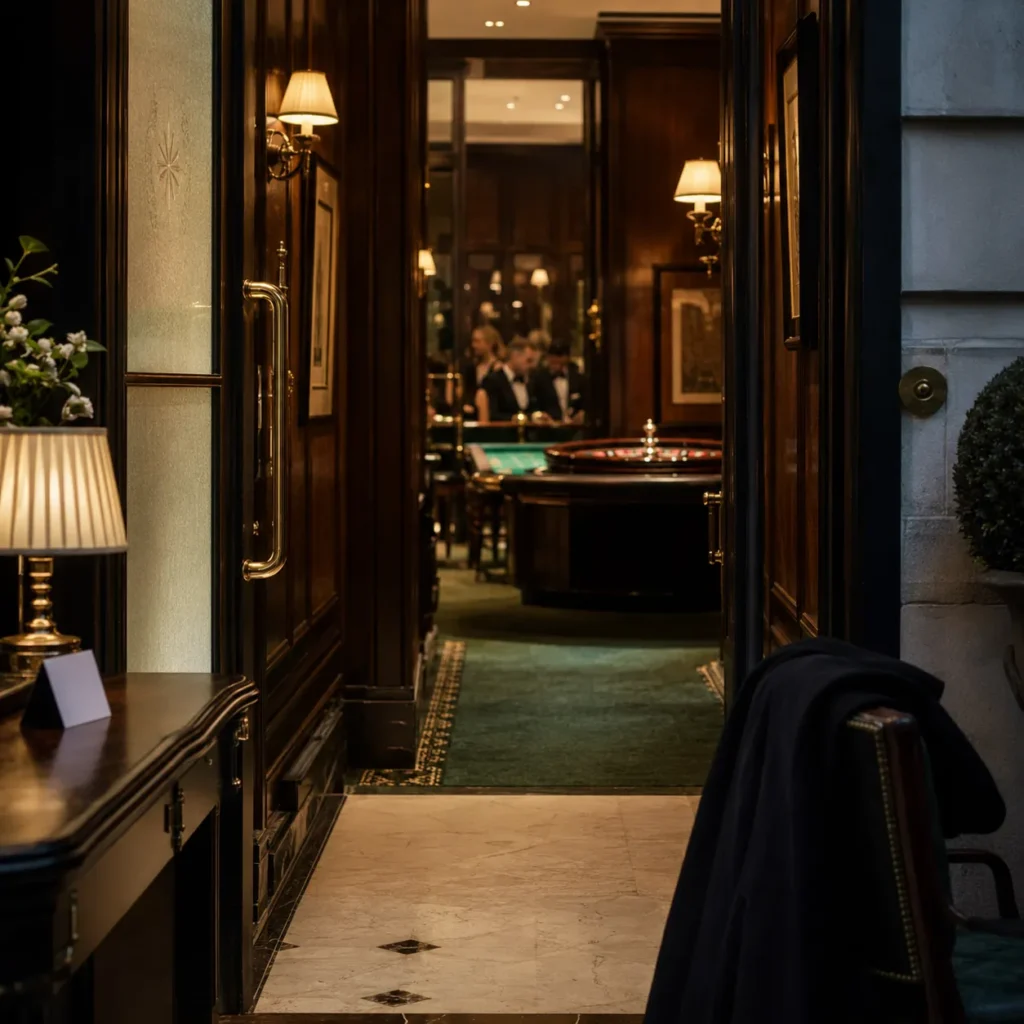
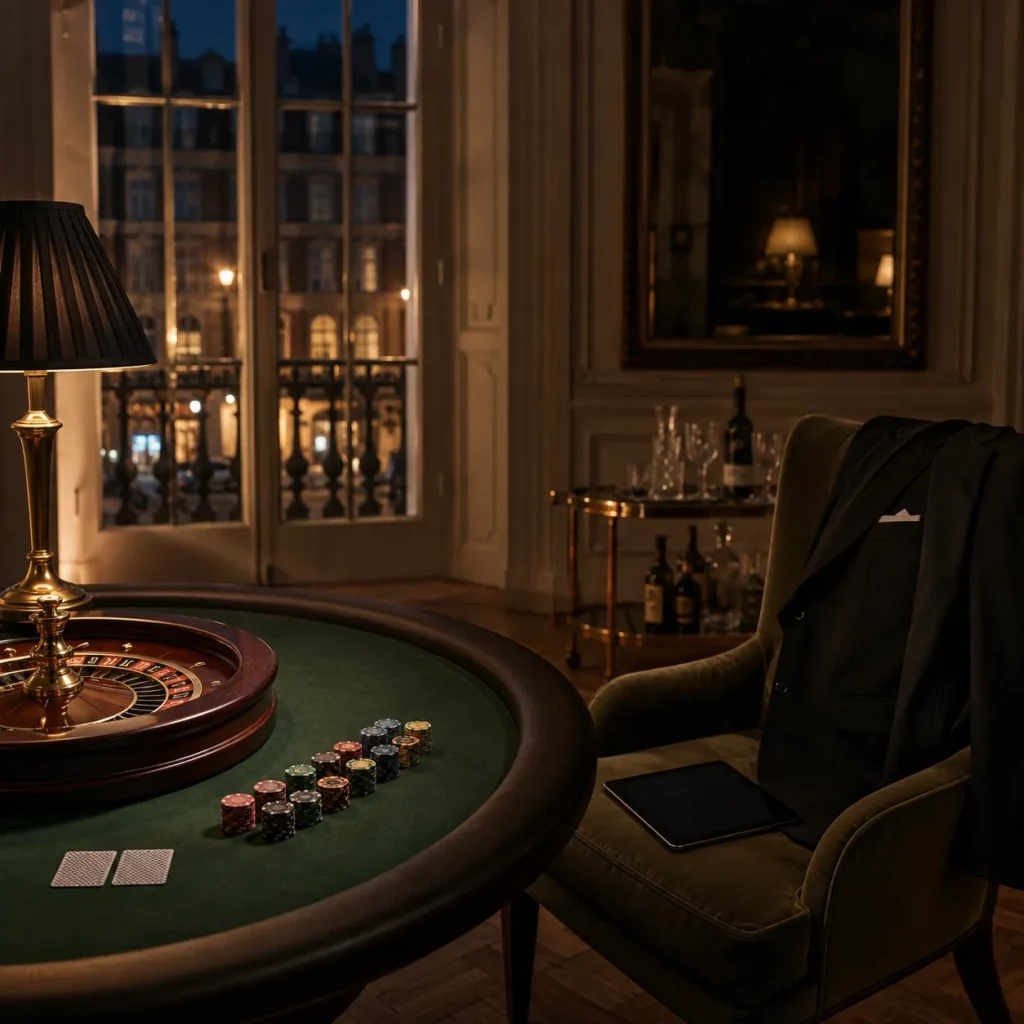
Mayfair’s relationship with games of chance is a long one. The district has always understood that true glamour lies not in spectacle but in restraint — the unmarked entrance, the whispered password, the sense of belonging to something quietly exclusive. Clubs here have never needed neon. Their allure comes from mahogany-panelled rooms, impeccable service and a clientele that treats an evening’s play as one thread in a broader tapestry of fine living, alongside dinner at a celebrated restaurant and a nightcap in a favoured drawing room.
There is a reason this culture took root precisely here. Mayfair’s geography — its proximity to the great hotels, the auction houses, the jewellers of Bond Street — made it the natural home for those with both the means and the inclination to spend an evening in style. The tradition has proved remarkably durable. Historical accounts of Mayfair’s wheel of fortune trace how the district’s gaming rooms became woven into its social fabric, drawing figures from politics, finance and the arts to the same green tables.
The Ritual of the Evening
What makes a Mayfair gaming night memorable is rarely the outcome. It is the ritual. The evening tends to follow an unhurried arc: a table booked at a Michelin-starred kitchen, a bottle chosen with the sommelier, a slow drift towards the clubroom as the night deepens. Play, when it comes, is almost secondary — a pleasurable punctuation rather than the whole sentence.
Blackjack suits this rhythm particularly well. It repays attention without demanding it, allowing conversation to flow between hands. Roulette, by contrast, offers pure theatre: the spin, the pause, the collective lean towards the wheel. Both games have survived because they translate a simple thrill into a shared social occasion, something that a well-tailored jacket and a good glass of Burgundy only enhance.
How the Thrill Travels Beyond the Square
For all its permanence, Mayfair’s gaming culture has never been static. Its influence has spread outward, and the classic table experience now reaches people who may never set foot inside a Berkeley Square club. Live-dealer technology, in particular, has done a remarkable job of capturing the atmosphere — a genuine croupier, a real wheel, the same unhurried cadence, all delivered to a laptop or phone.
This shift reflects a broader change in how Londoners approach leisure. Studies looking inside the online gambler’s mind have explored why the digital table appeals so strongly, pointing to convenience, control over the setting, and the ability to enjoy a favourite game on one’s own terms. For the Mayfair enthusiast, the online room is not a replacement for the club — it is a companion to it, a way of keeping the pleasure alive on the many evenings when a black-tie outing simply isn’t practical.
Where History Meets the Present
The district’s gaming heritage is inseparable from its architecture and its story. To understand why Mayfair became synonymous with elegant play, it helps to know something of Berkeley Square and its neighbourhood, whose grand houses and leafy calm set the tone for the whole area. This was, and remains, a place built for those who value quality over noise — a sensibility that runs through everything from its tailoring and jewellery to the way it approaches an evening at the tables.
That same instinct for quality now guides how the modern enthusiast chooses their gaming. The demand is not for the biggest or the loudest, but for the best — the most authentic live rooms, the smoothest experience, the sense of occasion that Mayfair itself has always prized.
An Evening That Never Quite Ends
Perhaps the real secret of Mayfair’s tables is that the evening was never confined to the table at all. It lived in the dinner beforehand, the wine, the company, the walk home beneath the plane trees. Today it lives, too, in the quiet pleasure of a live-dealer game enjoyed after hours. The glamour endures precisely because it adapts — carrying the elegance of the clubroom into wherever the enthusiast happens to be. Green baize or glowing screen, the allure remains the same.