
AI, automation, fintech growth, digital payments, and cloud reporting are changing what it means to build a finance career in the UK. Employers still value accounting knowledge, commercial awareness, and regulatory understanding, but those strengths now need to sit alongside data literacy, cyber awareness, automation confidence, and clear digital communication.
For students, graduates, and career changers, the shift is practical. Finance is no longer only about processing numbers. It is about using systems, interpreting information, explaining risk, and helping businesses make better decisions in a digital environment.
Why Digital Skills Are Becoming Essential in Finance Careers
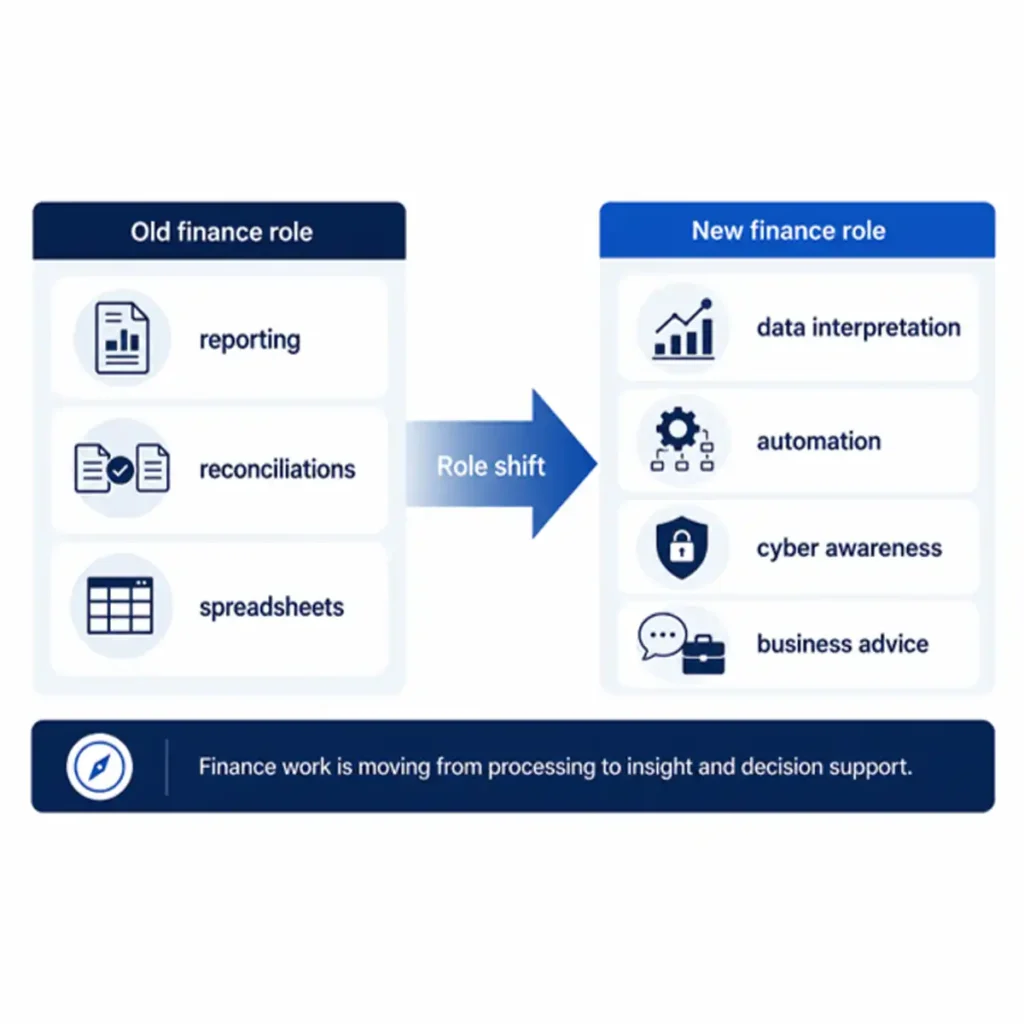
Finance roles have moved from routine reporting toward analysis, advisory input, and cross-team decision support. A finance professional may still prepare reports, but they may also need to question data quality, use automation, explain dashboard findings, and understand how technology affects financial risk.
Trusted educational resources can help professionals build these skills without falling into hype-driven content. MoneyHelper provides free, impartial money and pensions guidance backed by the UK government, while structured platforms such as TFXC can support learners who want to connect financial education with strategy, digital literacy, and long-term decision-making.
The UK Finance Industry Is Undergoing Rapid Digital Transformation
The UK finance sector is being reshaped by fintech, AI, open banking, digital payments, and tokenisation. GOV.UK has highlighted work to modernise payments regulation, support stablecoin payments, and adapt regulation for technologies such as AI agents. It also notes that the UK has more than 3,000 fintech firms supporting skilled jobs. GOV.UK’s fintech and payments update gives useful context for this shift.
This affects hiring. Banks, fintech firms, insurers, accountancy practices, and investment businesses increasingly need people who understand both financial processes and digital systems. That is where the digital skills gap becomes visible: many candidates can use basic software, but fewer can work confidently across data, automation, cyber risk, and technology-led reporting.
Why Employers Are Prioritising Adaptability Over Traditional Experience
Traditional finance experience still matters, but employers also want people who can adapt when systems change. A candidate who knows one reporting process may struggle if a company introduces new software, cloud workflows, or AI-assisted analysis.
Adaptability now means learning tools quickly, documenting processes clearly, and working with colleagues outside finance. A finance assistant may need to understand automation workflows. A management accountant may need to explain dashboard outputs to commercial teams. A risk analyst may need to discuss data quality with IT or compliance.
The Rise of Hybrid Finance and Technology Roles
Modern financejobs often sit between finance, operations, compliance, technology, and business strategy. A finance analyst may build reports in Power BI. A payments specialist may need to understand digital wallets and open banking. A risk professional may work with cybersecurity teams on operational resilience.
This is why digital finance skills are becoming more valuable. They help professionals move from “I can prepare the numbers” to “I can explain what the numbers mean, where they came from, and what the business should consider next.”
The Most In-Demand Digital Skills for Finance Professionals in 2026
When people ask “What are digital skills?”, the simple answer is this: the ability to use technology confidently, responsibly, and critically at work. In finance, that includes AI literacy, data analytics, digital reporting, cybersecurity awareness, automation, and communication across digital systems.
| Skill Area | Why Employers Value It | Practical Workplace Use |
| AI literacy | Helps teams use automation responsibly | Reviewing AI-supported forecasts before sharing them |
| Data analytics | Turns raw numbers into insight | Building dashboards for cash flow or sales trends |
| Digital storytelling | Makes finance useful to non-finance teams | Explaining why margins changed |
| Cyber awareness | Reduces fraud and operational risk | Spotting suspicious payment requests |
| Commercial thinking | Connects finance to strategy | Linking costs, revenue, and customer behaviour |
A practical way to prioritise these skills is to connect them to workplace tasks:
- Reporting: Learn dashboards, spreadsheet accuracy, and data visualisation.
- Planning: Build confidence with forecasting, scenario analysis, and budgeting tools.
- Risk: Understand cybersecurity basics, fraud prevention, and data quality checks.
- Communication: Practise turning financial findings into clear recommendations for non-finance teams.
AI Literacy and Automation Awareness
AI is already used in finance for reporting, forecasting, document review, customer support, fraud monitoring, and operational efficiency. The FCA says it wants to support safe and responsible AI adoption in UK financial markets while balancing benefits and risks for consumers and markets. The FCA’s AI approach also explains that firms remain accountable under existing regulatory frameworks.
For professionals, AI literacy is not just knowing how to use a chatbot. It means understanding what AI can do well, where it can be wrong, and when human review is essential. A polished automated answer is still unreliable if it is based on poor data or weak assumptions.
Data Analytics and Financial Forecasting
Employers increasingly value professionals who can interpret data, build simple dashboards, and explain what changed. Forecasting is also becoming more important because businesses need to plan around uncertain demand, costs, interest rates, and customer behaviour.
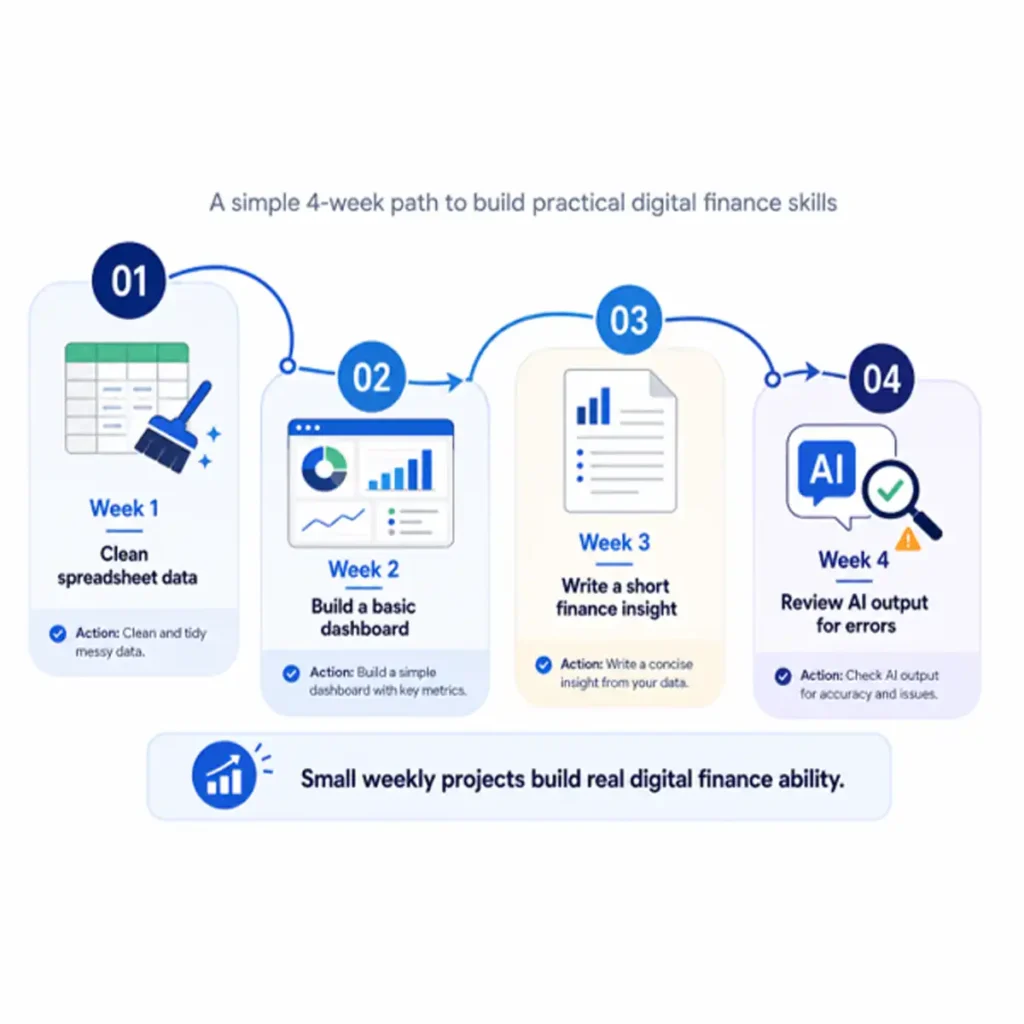
Useful digital skills examples include cleaning spreadsheet data, building variance analysis, using Power BI, preparing scenario models, and explaining why a forecast has changed. These are not advanced tricks. They are practical skills that help finance teams support better decisions.
Digital Communication and Financial Storytelling
Finance professionals often need to explain complex information to people who do not work in finance. A technically accurate report is not enough if leadership cannot understand the decision behind it.
Financial storytelling means connecting numbers to consequences. Instead of saying “operating costs increased by 8%,” a stronger communicator explains what caused the increase, whether it is temporary, and what options the business has.
Cybersecurity and Digital Risk Awareness
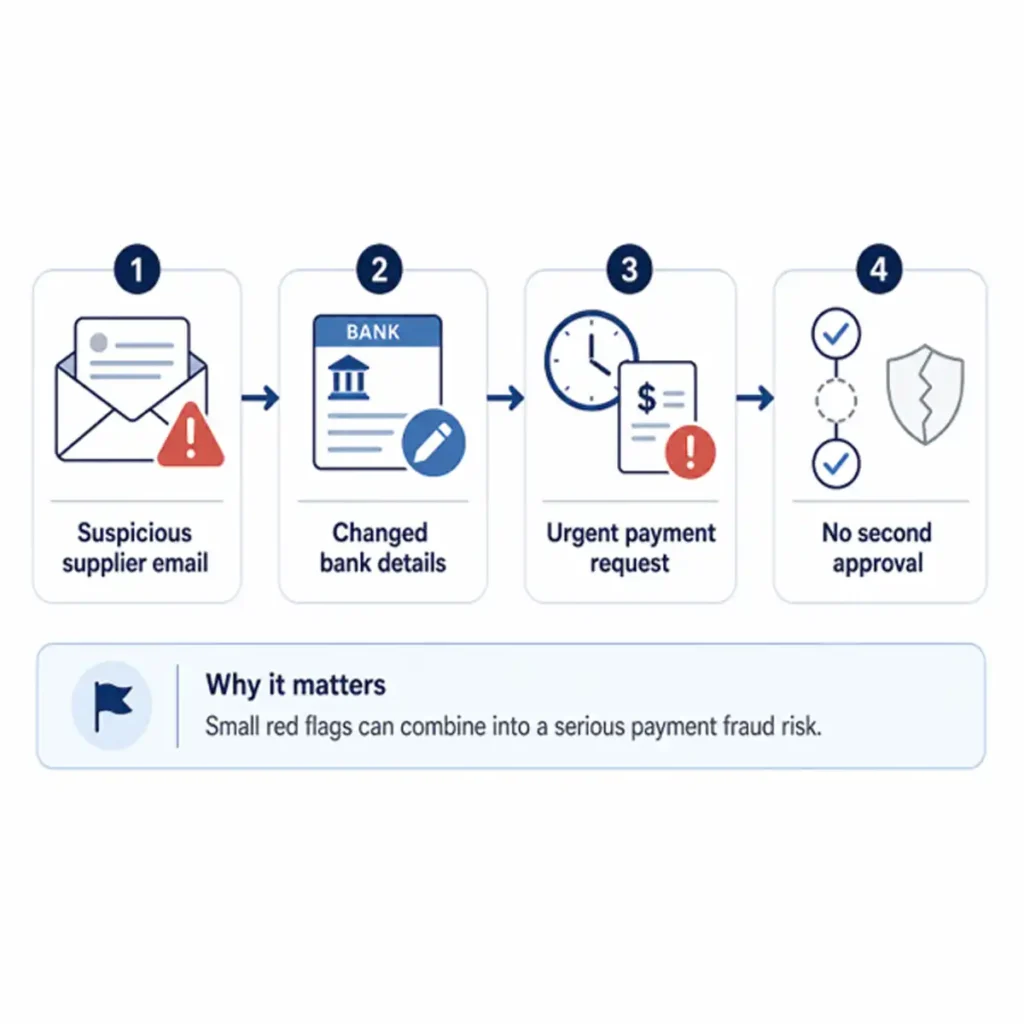
Finance teams handle payments, payroll, supplier details, customer data, and commercially sensitive reports. That makes cyber awareness a finance skill, not only an IT skill.
The Bank of England’s 2025 CBEST thematic highlights heightened cyber risk in the financial sector, including risks connected to cloud services, AI, third-party suppliers, and system interdependence. It also stresses resilience across people, processes, and technology.
Commercial Awareness and Strategic Thinking
Commercial awareness is the ability to understand how financial decisions affect the wider business. Employers want finance professionals who can see beyond the spreadsheet.
That may mean questioning whether a cost cut harms customer experience, whether a new product affects cash flow, or whether pricing changes could damage retention. This is where finance becomes advisory rather than purely administrative.
Why Soft Skills Are Becoming More Valuable in Digital Finance
Technology can automate repetitive tasks, but it cannot fully replace judgement, context, communication, or accountability. The strongest candidates combine technical confidence with professional maturity.
The Importance of Critical Thinking in an AI-Driven Workplace
Critical thinking helps professionals question outputs instead of accepting them because they look polished. If an AI tool creates a forecast, someone still needs to ask what data was used, what assumptions were made, and what risks are missing.
This is especially important in regulated financial environments. Automation can make a process faster, but speed does not guarantee accuracy, fairness, or suitability.
Managing Information Overload and Digital Burnout
Finance professionals now deal with dashboards, alerts, shared documents, emails, chat platforms, learning portals, and system notifications. More information does not automatically lead to better decisions.
Strong digital skills for work include managing attention as well as using tools. Useful habits include setting dashboard review windows, separating urgent issues from routine updates, and documenting recurring processes so work does not depend on memory alone.
Collaboration Across Finance, Technology, and Operations Teams
Finance departments are no longer isolated. They work with IT, compliance, marketing, procurement, operations, and senior leadership. That requires shared language.
A finance professional who can explain reporting needs to a data team, challenge a system issue calmly, and translate financial findings into business action becomes more valuable than someone who only works inside their own department.

How Professionals Can Build Digital Finance Skills in 2026
The best way to build digital skills for finance professionals is through structured practice. Random tutorials can help with awareness, but career value comes from applying skills to realistic tasks.
Online Courses, Certifications, and Digital Learning Platforms
Online courses, employer training, webinars, and certifications can support digital skills training. The strongest learning options include practical exercises, workplace examples, and projects that result in something tangible.
| Learning Goal | Useful Skill to Practise | Simple Project Idea |
| Better reporting | Power BI or Excel dashboards | Build a monthly expense dashboard |
| Stronger forecasting | Scenario planning | Model best, base, and worst-case revenue |
| AI confidence | Prompting and review | Compare an AI summary with source data |
| Cyber awareness | Payment controls | Map approval steps for supplier payments |
| Communication | Financial summaries | Write a one-page margin explanation |
Why Structured Learning Matters More Than Random Online Advice
Many professionals lose time because they consume fragmented advice. One week, they watch AI tutorials, the next they try dashboard design, then they move to coding before understanding how the pieces connect.
A better path starts with the role. Someone targeting finance jobs UK may need stronger reporting, forecasting, and spreadsheet skills. Someone looking at remote finance jobs may need better digital communication, cloud collaboration, and self-management. Candidates applying for finance jobs in London may benefit from stronger fintech awareness, stakeholder communication, and commercial analysis.
Combining Technical Knowledge With Long-Term Career Skills
Technical skills open doors, but long-term growth depends on judgement. A professional who can use a reporting tool is useful. A professional who can use it, question the data, explain the insight, and recommend a sensible next step is more valuable.
This balance matters because tools change. The ability to learn, communicate, analyse, and adapt lasts longer than knowledge of one software platform.
What the Future of Finance Careers Could Look Like
Finance careers will continue changing as AI adoption, fintech expansion, hybrid work, and digital transformation accelerate. The safest strategy is not chasing every new platform. It is building flexible skills that remain useful as tools evolve.
Why Continuous Learning Will Become a Career Necessity
Continuous learning is becoming part of career maintenance. Systems change, regulations evolve, and employers adopt new tools faster than traditional training cycles can respond.
That does not mean studying constantly. It means building a realistic rhythm: one new tool, one practical project, one process improvement, or one clearer communication habit at a time.
The Growing Connection Between Finance, Technology, and Productivity
Finance work increasingly overlaps with digital operations, automation, productivity systems, and business intelligence. A finance analyst may improve reporting workflows. A controller may help select a new system. A risk professional may work with technology teams on resilience planning.
This creates an opportunity for people who understand both numbers and systems. They can reduce manual work, improve reporting quality, and help teams make decisions faster without losing control.
Building Sustainable Careers in a Rapidly Changing Industry
Sustainable careers are built on transferable skills. A specific platform may change, but data interpretation, cyber awareness, commercial judgement, and clear communication remain useful.
Professionals should avoid building their value around one tool only. A stronger approach is to understand the purpose behind the tool: what problem it solves, what risk it creates, and how it supports better decisions.
Conclusion
UK finance employers in 2026 are looking for people who can work confidently in digital environments. AI literacy, data analytics, forecasting, cyber awareness, digital communication, and commercial thinking are becoming part of everyday finance work.
The strongest candidates will not be those who chase every new platform. They will be the ones who understand how to learn, question information, communicate clearly, and connect digital tools with real business decisions.
For anyone building a finance career, the priority is practical: strengthen digital literacy, build structured learning habits, and stay adaptable. Finance is becoming more digital, but the human advantage remains judgement, clarity, and responsible decision-making.