
Trading naturally means hours in front of charts, numbers, and multiple screens at once, often with very little thought given to what this actually does to the eyes over a long trading day that can easily stretch from pre-market checks through to after-hours analysis. A single day rarely feels dramatically different because of screen use, but the cumulative effect across a full trading week tends to catch up eventually, usually showing up as a familiar tiredness by Friday that gets blamed on the market’s volatility rather than traced back to hours of accumulated screen time. Here is a look at why this happens and what actually helps.
Why Trading Screens Are Harder on the Eyes Than Other Screen Work
Multiple Screens, Constant Scanning
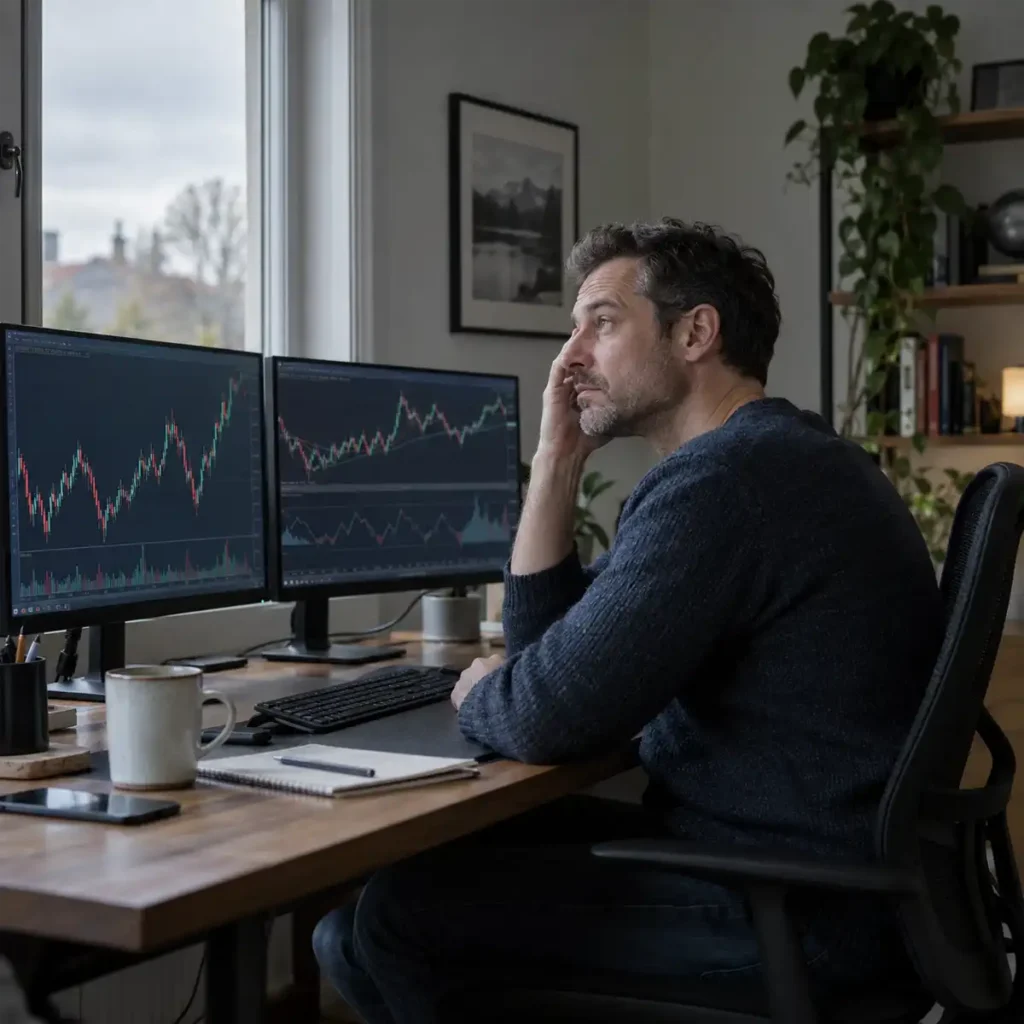
Eyes moving rapidly between several monitors and data points, rather than resting on one point, work harder than they would with a single screen setup, constantly adjusting focus as attention shifts from one display to the next. This constant scanning adds more strain than a single screen ever would, since the eyes are repeatedly adjusting focus and distance across multiple displays throughout the day, a pattern of movement that few other screen-based jobs demand to the same degree.
A trader monitoring three or four monitors simultaneously puts their eyes through a level of constant micro-adjustment that a single-screen office job simply doesn’t require, and this difference compounds considerably over the course of a full trading session.
Small Text and Dense Data
Charts, tickers, and numbers require close, precise focus for long stretches, often involving small text and densely packed information that demands constant attention to detail throughout the trading day. This level of detail demands more from the eyes than typical screen use, given how much concentrated focus reading fine price movements and data points actually requires, particularly during fast-moving market conditions where every small detail matters.
The density of information on a typical trading screen, often several charts, tickers, and data feeds crammed into a limited visual space, asks considerably more of the eyes than the more spread-out layouts common in most other kinds of screen-based work. Multifocal contact lenses can help here too, giving clear focus at both the close range needed for reading dense data and the slightly greater distance of a second or third monitor, without switching between separate pairs of glasses.
The Trading-Specific Habits That Make It Worse
Long, Uninterrupted Sessions During Market Hours
Staying glued to screens through open market hours, with few natural breaks, gives the eyes little chance to recover throughout a full trading session that can run for many consecutive hours without pause. Stepping away can feel risky even when the eyes clearly need a rest, since missing a key market movement feels like a real cost that competes directly with taking a proper break, creating a genuine tension between eye health and perceived trading performance.
This tension rarely gets resolved in favour of the eyes, since the immediate, visible cost of a missed opportunity feels far more pressing than the slower, less visible cost of accumulated eye strain building up session after session.
Reduced Blinking During High-Focus Moments
Blink rate drops further during volatile market moments or fast decision-making, when full attention gets locked onto screens at exactly the moments requiring the sharpest focus and quickest reaction time. This adds an extra layer of strain on top of already long screen hours, compounding the dryness and fatigue that build up over a demanding trading day, particularly during periods of high market volatility that demand sustained, unbroken attention.
The moments that matter most for trading performance, fast-moving markets requiring quick decisions, are precisely the moments when the eyes receive the least natural relief through blinking.
Poor Lighting in a Home or Office Trading Setup
Screens used in dim rooms or with poor contrast against ambient light force the eyes to work harder than the trading task itself already demands, adding an entirely avoidable layer of strain on top of the inherent demands of the work. This common setup mistake adds unnecessary strain, particularly for traders working from a home setup that was never properly optimised for hours of screen-based work in the way a dedicated professional workspace might be.
A trading desk set up hastily, without much thought given to lighting or screen positioning, tends to accumulate strain far faster than one properly configured from the outset with eye comfort genuinely in mind.
The Signs Traders Often Push Through
The Obvious Symptoms
Headaches, blurred vision, and burning eyes by the end of a trading day get dismissed as just part of the job rather than something worth addressing directly, treated as an unavoidable cost of the profession rather than a genuine problem. These symptoms show up predictably after a demanding trading session, yet rarely prompt any real change in habits or setup, mostly because the discomfort fades overnight and rarely feels urgent enough to investigate properly.
This normalisation of daily eye strain as simply part of the trading lifestyle tends to prevent traders from seeking the kind of straightforward fixes that could genuinely improve their daily comfort.
The Subtler Signs
Difficulty refocusing on distant objects after a long session is a subtler sign that often goes unnoticed, since it usually passes within a few minutes of stepping away from the screens. Dry, gritty eyes build up gradually across the week, often becoming a familiar, accepted discomfort rather than something flagged as worth fixing, blending into the general fatigue that accompanies a demanding trading role.
These subtler signs tend to compound quietly over months and years of trading, gradually shifting what feels normal rather than announcing themselves as a problem worth addressing at any single point.
What Actually Helps
Structured Breaks That Don’t Disrupt Trading
Short, scheduled breaks timed around natural lulls in market activity give the eyes a genuine chance to rest without meaningfully affecting trading performance or missing significant market movements. Even brief breaks make a measurable difference over a full session, since a minute or two away from the screen every so often prevents strain from building up unchecked across the day, particularly when timed around predictable quieter periods in market activity.
Identifying these natural lulls in advance, rather than trying to find a break whenever the market happens to allow one, tends to make this habit far easier to actually maintain consistently throughout a trading day.
Adjusting Monitor Setup and Lighting
Screen distance, brightness, and glare offer simple, low-effort fixes that reduce strain without disrupting a trading workflow or requiring any change to the actual monitors or software being used. Most traders never properly adjust their setup after the initial installation, missing an easy opportunity to reduce daily strain with a one-off adjustment that would pay off considerably over the following months and years of trading.
Taking an hour to properly reassess a multi-screen trading setup, checking distance, angle, and lighting across every monitor rather than just the primary one, tends to reveal considerably more room for improvement than most traders initially expect.
The 20-20-20 Rule Adapted for Multi-Screen Setups
Applying this habit even with several monitors in view at once still works, simply by choosing a point beyond all the screens to focus on briefly every twenty minutes throughout the trading session. Consistency matters more than doing it perfectly every time, since the habit works best as a regular pattern built into a trading session rather than an occasional effort remembered only once discomfort has already set in.
Setting a quiet, unobtrusive reminder that doesn’t interrupt active trading tends to make this habit considerably easier to maintain without feeling like a distraction from the actual work at hand.
Getting the Right Vision Correction
Comfortable glasses or contact lenses suited for close, detailed screen work make a real difference for anyone whose trading day involves hours of consistent, precise focus across multiple monitors throughout a demanding session. An outdated prescription makes trading-related strain worse than it needs to be, since the eyes end up compensating for a correction that no longer matches the demands of a genuinely screen-heavy role, adding unnecessary effort on top of an already demanding visual task.
Many traders put off checking whether their current prescription genuinely suits the specific demands of a multi-screen trading setup, simply because they’ve grown used to a slightly strained feeling and assumed it was an unavoidable part of the job rather than something a straightforward update could meaningfully improve.
When to See an Optician
Signs Worth a Proper Check
Persistent discomfort that doesn’t improve with breaks or setup changes is worth a proper check rather than continued guesswork, particularly if the discomfort has persisted for weeks despite genuine effort to address it through the fixes already covered here. Vision changes that seem to line up with increased screen time are also worth mentioning at an appointment, since they can point to a prescription that needs updating rather than simply reflecting normal fatigue from a demanding role.
The Value of a Regular Check
Catching a change in prescription before it affects focus and decision-making matters more for anyone spending most of their working day on screens, given how much sharp, sustained focus trading actually demands throughout every session. This matters more for anyone with this kind of screen-heavy role, since even a small decline in visual comfort can affect concentration during exactly the moments that call for it most, potentially affecting the quality of decisions made under time pressure.
The Bottom Line
Trading isn’t going anywhere, and for most people in the profession, cutting back on screen time simply isn’t a realistic option given how directly it ties to performance and income. What actually makes the difference isn’t a dramatic change to the job itself, but a handful of small, consistent adjustments applied regularly rather than only once discomfort has already built up considerably by the end of a demanding week. A short break timed around a natural lull in the market, a properly adjusted multi-screen setup, the 20-20-20 rule built into a trading routine, and vision correction that genuinely suits the demands of the role all work together far more effectively than any single change attempted in isolation.
None of this asks a trader to give up the multi-screen setups, the long sessions, or the sharp focus that the job genuinely requires to perform well. It asks for a bit more awareness of how these small, repeated moments of visual strain add up across a trading day, and a willingness to build in the kind of small habits that keep discomfort from accumulating unchecked from the opening bell through to close. A regular eye test remains one of the most reliable ways to stay ahead of any changes, catching a shift in prescription or a developing pattern of strain before it starts affecting focus and decision-making during exactly the moments that matter most. Protecting your eyes across a demanding trading career comes down to consistency far more than any single fix, and the earlier these habits become part of a normal trading routine, the less catching up there is to do once the cumulative effects of unaddressed strain finally start to show.