
When a player spends forty-five minutes scouring forums and community boards for a specific string of twelve alphanumeric characters, they are not simply looking for a financial discount. They are engaging in a highly complex neurological loop. The act of hunting for promotional codes has evolved into a standalone meta-game, completely separate from the actual spins of a slot machine or the dealing of a blackjack hand. Understanding why consumers willingly spend their limited leisure time deciphering terms and conditions requires looking past the monetary value of a bonus and diving directly into the cognitive science of anticipation, perceived control, and the thrill of the hunt.
The Dopamine Anticipation Cycle
To understand the modern player, we must first look at how the human brain processes reward. Neuroscience tells us that dopamine is not primarily released when a reward is received; it is released during the anticipation of the reward.
When a user begins searching for a valid code, their brain is already simulating the feeling of winning. The search itself becomes a highly engaging activity. This is heavily influenced by the psychological concept of a variable ratio schedule—the exact same mechanism that makes standard casino games entertaining. Players know that a highly lucrative, zero-wagering code might be out there, but they do not know exactly where it is or how long it will take to find. This uncertainty heightens their focus. When they finally locate a valid string of text, the brain registers a massive victory before a single wager has even been placed. The player has successfully “beaten” the initial stage of the experience.
The Illusion of Exclusivity and Control
Operators could easily apply bonuses automatically to every new account that registers. However, making a promotion automatic strips away the psychological weight of the reward. If everyone receives the exact same benefit without lifting a finger, the perceived value of that benefit drops to zero.
The friction of manual input is a deliberate design choice. When a consumer has to actively seek out a reward, copy it, and paste it into a specific field, they experience the “IKEA effect”—the cognitive bias in which people place a disproportionately high value on products they partially created or worked to acquire. For instance, when a user actively tracks down a mr bet promo code and types it into the cashier interface, they feel a sense of ownership over those resulting funds. It transforms a standard marketing tactic into an exclusive reward that the player feels they have rightfully earned through their own cleverness and dedication. They are no longer a passive consumer; they are a savvy insider who knows how to work the system.

Information Asymmetry and the Savvy Consumer
This desire to feel like an insider has created a distinct divide within the online entertainment space. There are those who simply want to log on and play, and those who view the preparation phase as an essential part of the experience. The code chaser fundamentally believes that information asymmetry—knowing something the general public does not—is their primary advantage.
This behavioural split is easily identifiable when comparing the two demographics:
| Behavioural Trait | The Casual Participant | The Dedicated Code Chaser |
| Primary Motivator | Immediate, frictionless gameplay. | Maximising initial value and extending playtime. |
| Research Duration | Minimal (usually under two minutes). | Extensive (often exceeding fifteen minutes). |
| Brand Loyalty | High (tends to stick to one familiar operator). | Low (frequently rotates based on the best active offers). |
| Perceived Control | Accepts that outcomes rely entirely on luck. | Believes thorough preparation mathematically reduces risk. |
The code chaser views the casual participant as someone who is leaving money on the table. By taking the time to research, compare, and hunt, the chaser feels they have successfully tilted the environment slightly more in their favour before the game even begins.
The Ecosystem of Verification
Players who engage in this behaviour do not blindly enter strings of text into any website they stumble across; they rely on heavily curated information ecosystems. They understand that a massive bonus number means nothing if the attached rules make it impossible to withdraw winnings.
To navigate this complex environment effectively, they turn to Slotozilla. Serving as a massive independent database and review hub, Slotozilla allows enthusiasts to read expert breakdowns, compare payout structures, and test thousands of games entirely for free before they ever open their wallets. If a player wants to uncover the specific wagering requirements tied to a major software provider’s offer, they will independently verify these details to ensure the promotion actually holds mathematical weight. This reliance on independent databases proves that code-chasing is not a reckless pursuit of free money; it is a highly calculated, research-driven process aimed at finding genuine value in an overcrowded market.
The “Near Miss” and the Evolution of the Hunt
Interestingly, encountering an expired or invalid code does not usually deter a dedicated chaser. In the realm of psychology, this is known as a “near miss.” When a player inputs a code and receives an “expired” notification, their brain interprets it as proof that the high-value rewards do exist—they were just a little too late. This near miss actually stimulates the desire to keep searching, often resulting in longer, more intense research sessions.
Recognising this intense consumer engagement, marketing teams have evolved their strategies to lean into the thrill of the hunt. They are moving away from static, permanent promotions and employing dynamic tactics:
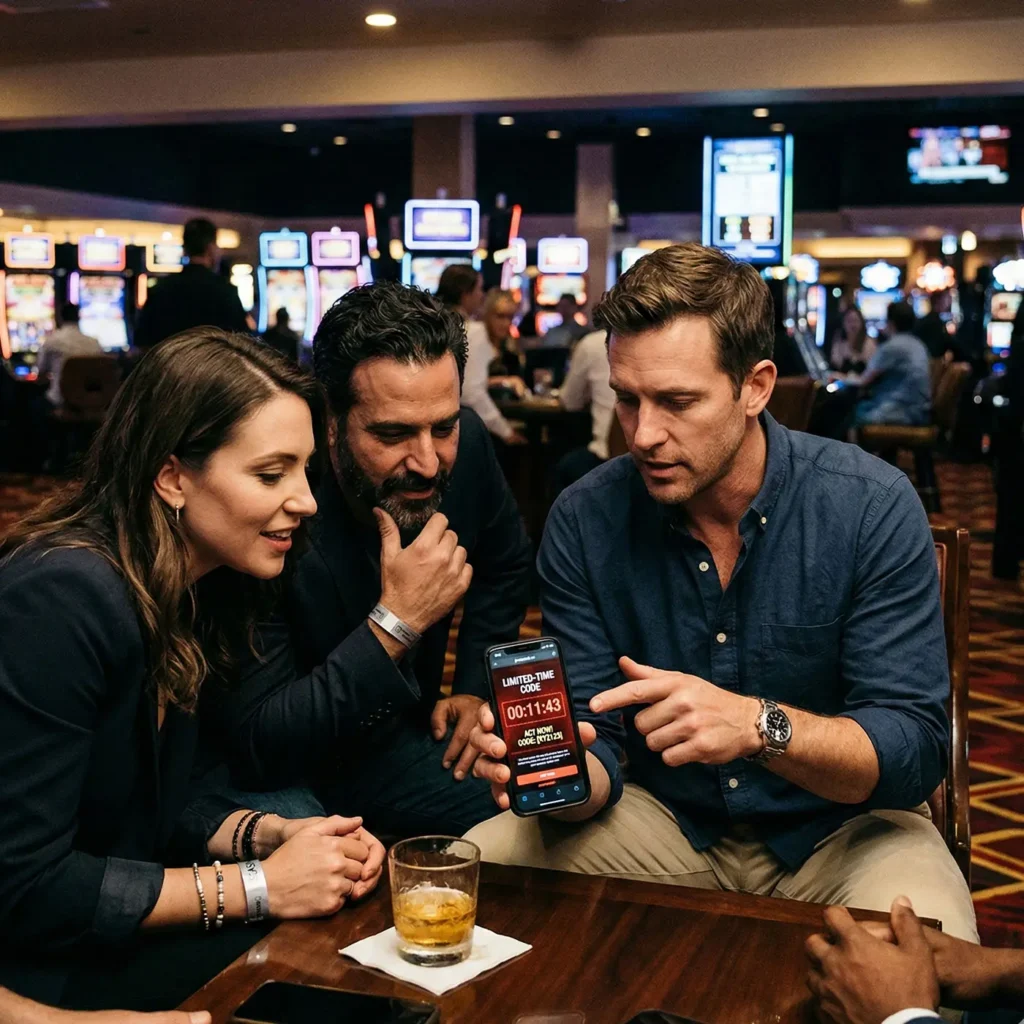
- Time-gated drops: Releasing highly lucrative codes that expire in exactly two hours, creating a sense of extreme urgency and immediate action.
- Gamified discovery: Hiding alphanumeric sequences within social media puzzles, promotional videos, or newsletter crosswords, requiring genuine effort to decipher.
- Social currency: Encouraging players to share unique referral strings in dedicated forums, turning a solitary hunt into a communal activity that builds social capital among peers.
The industry has long misunderstood the code-chasing demographic as simply being frugal. In reality, the pursuit of these promotions satisfies a deep psychological need for competence, discovery, and perceived control. The actual monetary value of the bonus is often secondary to the emotional high of successfully uncovering it. For these players, the online casino experience does not begin when the reels start spinning or the cards are dealt. The game begins the exact moment they open a search engine and start hunting for the key to the vault. Operators who understand and respect this meta-game will consistently capture the attention of the internet’s most dedicated and engaged consumers.