
For a lot of people who are losing their hair, the idea of a hair transplant brings to mind major surgery, obvious scars, and occasionally outcomes that don’t seem natural. Even if traditional procedures have worked for years, more and more people are looking for alternatives that claim to be less intrusive and have a better effect. Step into the fascinating world of stem cell hair restoration, a revolutionary new way to cure hair loss that changes how we think about it.
Understanding Stem Cell Hair Transplants
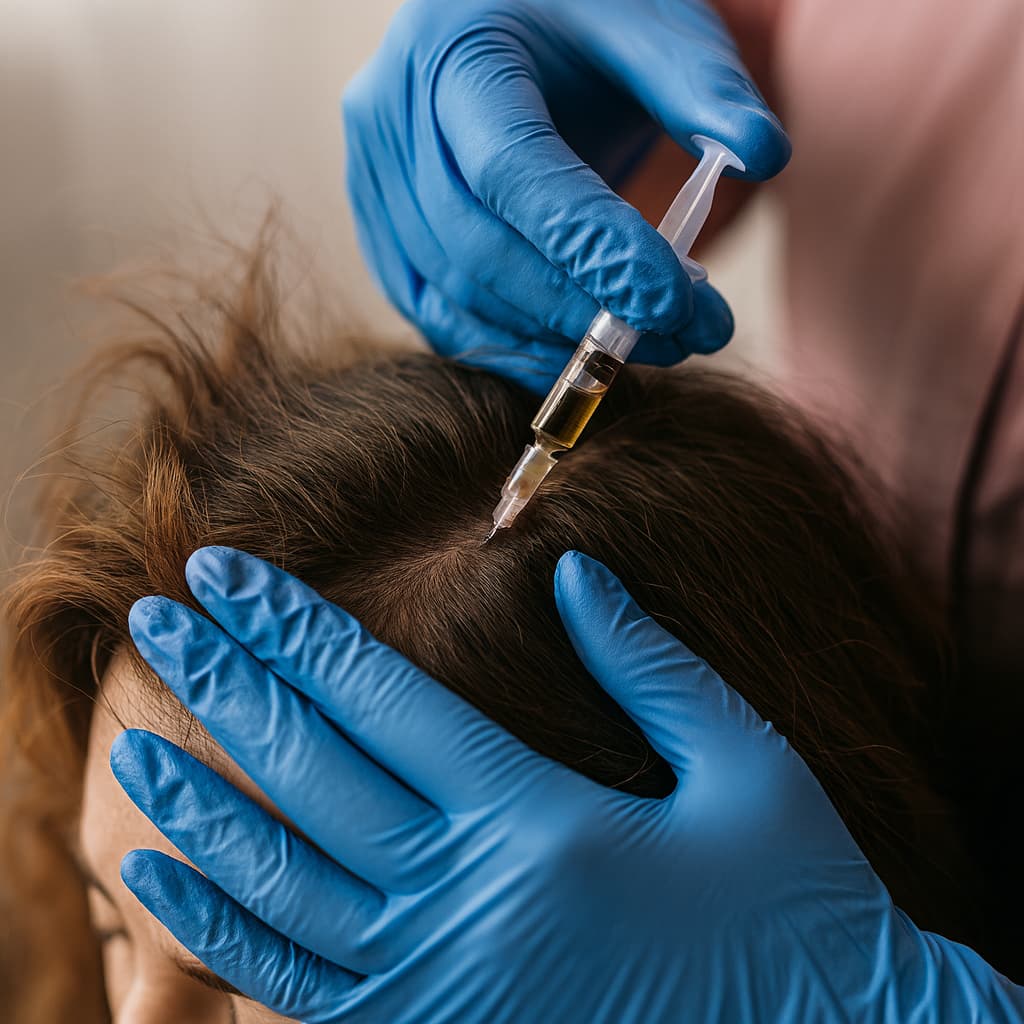
So, what is a stem cell hair transplant? This new treatment uses the body’s intrinsic ability to heal itself at its core. It entails taking a tiny piece of the patient’s own tissue, usually from places with strong hair follicles, which contains powerful stem cells. In a lab, these cells are then treated and replicated before being carefully put back into the parts of the scalp that are balding or thinning. What is the goal? To wake up dormant follicles and help fresh, healthy hair grow.
A consultation and a tiny tissue biopsy usually start the process. After the biopsy is done, which is generally taken from the back of the head, it is transported to a specific lab. Here, the important stem cells are separated, grown, and readied. When they are ready, they are put back into the places that need hair growth. The scientific premise is that stem cells can regenerate in amazing ways. They can change into many types of cells, including ones necessary for strong hair follicle growth and development.

The Clear Benefits of Hair Transplants Using Stem Cells
Stem cell hair transplants are interesting for more than just their scientific uniqueness. For a lot of people, the practical benefits make these treatments a very appealing alternative to traditional ones:
- Not very invasive: Stem cell techniques usually only need a tiny biopsy, less disruptive to the scalp than standard strip surgery (FUT) or even substantial Follicular Unit Extraction (FUE).
- Less Scarring: Because the technique is so simple, the danger of linear scarring common with older procedures is greatly reduced, resulting in a more attractive outcome.
- Faster Recovery: Patients usually have less time off work and may return to their normal activities faster than with more intrusive operations.
- Natural results: The idea is to help your natural hair grow in a way that blends in with your current hair, giving you a real and invisible look.
- More Hair Density: There is much good information about how well stem cell hair transplants work. For example, a well-known Italian study found that hair density increased by 29% 23 weeks after the last treatment (Source: National Centre for Biotechnology Information (NCBI)).
Things to think about and limitations
It’s thrilling to think of stem cell hair transplants, but looking at them from all sides is important. There are several key things to think about when it comes to any new medical treatment:
- High Costs: Getting a stem cell hair transplant is a big financial commitment. In Australia, prices can be anywhere from $25,000 to $40,000, depending on the facility, how much therapy is needed, and what technology is employed.
- Regulatory Status: The Therapeutic Goods Administration (TGA) is responsible for ensuring that stem cell therapies are safe in Australia. If the cells are taken from a patient who a registered medical or dental professional is treating, then autologous stem cell operations may not be subject to TGA regulation.
- Processing and administration occur at a hospital under the practitioner’s supervision.
- People don’t see ads for the therapy directly.
Suppose any of these prerequisites aren’t satisfied, including giving the therapy outside of a hospital or advertising it to the public. In that case, the process falls under TGA regulation, which means it has to meet safety, quality, and effectiveness standards.
- Not much Data for the Long Term: This is a very new topic, therefore, researchers are still looking at long-term safety and effectiveness evidence. We need further long-term research to properly understand the long-term effects and any adverse effects that may not immediately appear.
- Possible Side Effects: Most people can handle it, but others may have transient swelling, redness, and itching at the injection sites. As with any medical operation, more serious problems are rare but can happen.
Stem Cell Hair Transplants vs. Traditional Hair Transplants
Let’s compare these two methods side by side to see how they are different:
| Feature | Stem Cell Hair Transplants | Traditional Hair Transplants (FUE/FUT) |
| Procedure | Small biopsy, lab processing, injections | Surgical extraction of grafts (FUT strip, FUE individual follicles) |
| Invasiveness | Minimally invasive | More invasive (FUT is most invasive) |
| Scarring | Minimal to none | Potential for linear scar (FUT) or dot scars (FUE) |
| Recovery | Typically faster, with less downtime | Longer downtime, more discomfort post-procedure |
| Hair Density Goal | Stimulate existing follicles, new growth, and increased density | Relocate existing follicles, increase density in the target area |
| Natural Appearance | Aims for seamless integration and a natural feel | Achieved through skilled graft placement |
| Regulatory Status | Generally not fully approved, often experimental | Well-established, widely approved procedures |
| Cost | Generally higher | Varies widely, can be lower or comparable |
Things to Think About When It Comes to Cost
Knowing how much money you’ll need to spend is an important decision component.
- Stem Cell Transplants: As was said before, they can cost between $25,000 and $40,000. The clinic’s reputation, the number of stem cells needed, the size of the region to be treated, and the type of technology used all have a role in the pricing.
- Transplants the old-fashioned way: In Australia, the price of standard FUE or FUT operations can vary widely, usually between $8,000 and $25,000 or more. This depends on how many grafts are needed and how skilled the surgeon is.
When you think about the value offer, the initial cost isn’t the only thing to consider. Think about how stem cell hair restoration might lead to less scarring, a speedier recovery, and a more natural, even outcome.
Emerging Alternatives: Stem Cell-Based Hair Growth Serums
With the growing popularity of stem cell science in cosmetics and dermatology, innovative non-surgical hair growth treatments such as Calecim Professional’s Stem Cell Hair Growth Serum are gaining popularity. It uses PTT-6®, a stem cell-derived blend that activates dormant follicles and reduces inflammation, offering a topical, non-invasive alternative to hair transplant surgery and bringing stem cell technology into everyday hair care.
FAQs
What is a hair transplant using stem cells?
To do a stem cell hair transplant, you take a small sample of your body’s stem cells, process them to make more, and then inject them into the scalp to wake up and create hair follicles.
What is the price of a hair transplant using stem cells?
In Australia, the surgery usually costs between $25,000 and $40,000, depending on the facility, the therapy needed, and the technology employed.
What are the risks of having stem cell hair transplants?
Side effects are usually modest and go away quickly. They might include swelling, redness, and itching at the injection sites. More serious problems are not common.
In conclusion
There is little doubt that the field of hair restoration is changing, and stem cell hair transplants are a big step forward. They get around a lot of the problems with traditional techniques by delivering a less intrusive option that promises less scarring, a faster recovery, and natural hair growth that may be thicker.
But it’s important to remember that this area is continually growing. If you’re thinking about getting a stem cell hair transplant, it’s very important to talk to qualified doctors who can figure out if it’s right for you, go over the latest research, explain the risks and benefits, and help you find the best way to restore your hair.


