
From Prime Property to Auction Rooms: What Defines Mayfair Luxury Today
Mayfair has never been short of expensive things, but the way people spend on luxury is becoming more considered. A buyer might move from a property viewing to an art preview, book a serious dinner and then manage the rest of their entertainment digitally. Even online leisure now comes with its own comparison culture. A site such as ndbonus.uk, for example, explains no-deposit casino promotions by looking beyond the headline offer to the conditions attached to it. That same habit of checking what sits behind the price is increasingly useful in Mayfair too. A famous postcode, a six-figure estimate or a Michelin star tells you something, but rarely everything.
Property Is Still the Biggest Luxury Decision

Mayfair property remains a different kind of purchase from most London real estate. Buyers are paying for location, architectural character, privacy and a limited supply of homes in streets that cannot simply be reproduced elsewhere.
The market is not moving in a straight line, however. Knight Frank recorded a 2.7% fall in Mayfair sales values over the three months to March 2026, while rents were broadly flat at -0.1%. By summer, activity across prime central London was improving, with transactions during the three months to July running 3% ahead of the same period a year earlier.
That matters because a softer price index does not suddenly make Mayfair inexpensive. It means buyers have more reason to compare properties carefully and negotiate rather than assume that every address will automatically rise in value.
There is also a physical limit to what can be changed. Parts of Mayfair fall within a designated conservation area, where alterations, demolition and some extensions face tighter controls. Westminster City Council explains these restrictions in its official conservation-area guidance. For someone buying a Georgian townhouse with renovation plans, that information may be just as important as the asking price.
Fine Dining Is About Access as Much as Food
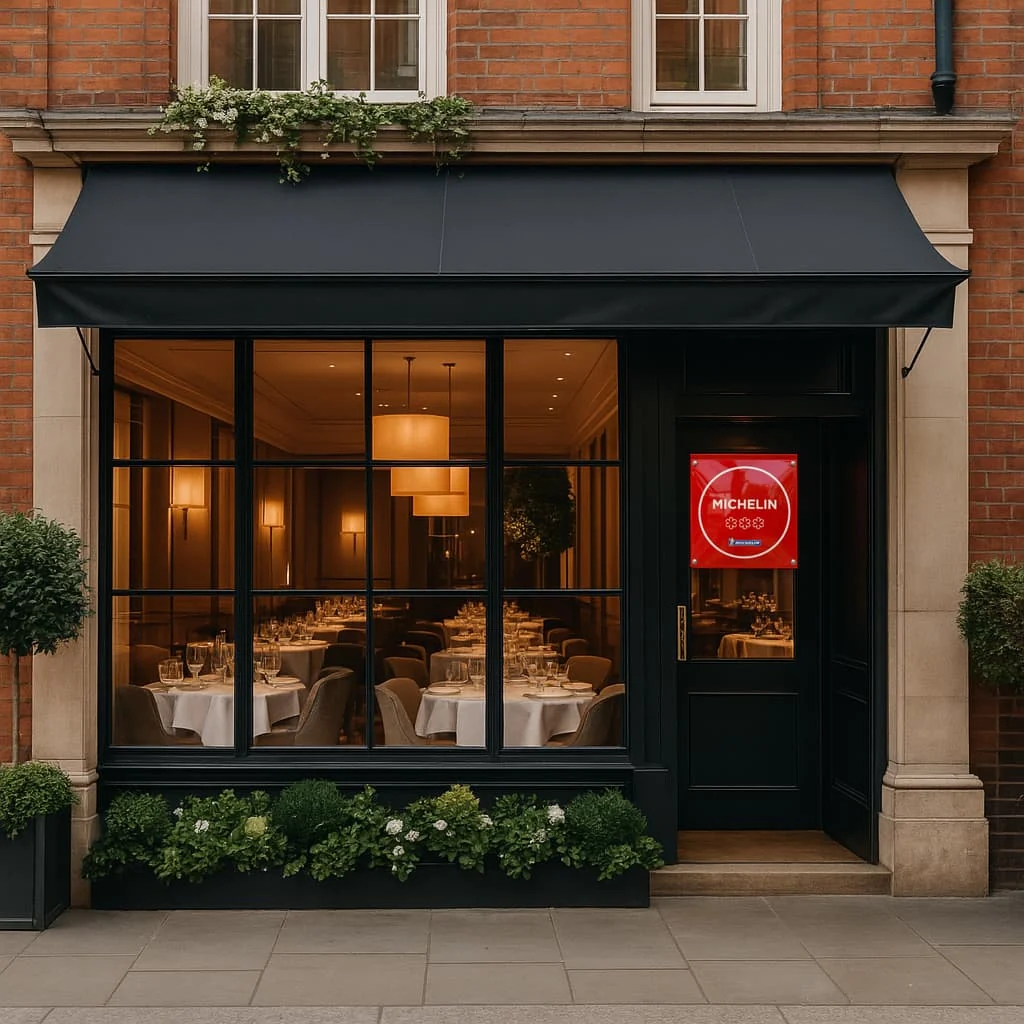
A Mayfair dinner can now be part restaurant booking, part occasion and part hospitality experience.
The Michelin Guide continues to list some of London’s most highly rated dining rooms in and around the district, including Alain Ducasse at The Dorchester, Hélène Darroze at The Connaught and Ormer Mayfair.
The interesting change is that luxury diners are increasingly paying attention to more than the tasting-menu price. They consider wine pairing, private dining, service, chef reputation and whether a restaurant offers something that cannot easily be recreated elsewhere.
That creates a fairly simple hierarchy:
- Food quality still comes first.
- Service matters more as prices rise.
- Privacy and atmosphere can justify part of the premium.
- Availability has value when tables are difficult to secure.
- Consistency is often more important than novelty for repeat customers.
A restaurant can therefore feel expensive at £200 per person and excellent value at a higher price if the entire evening works. Luxury is not simply the highest bill.
Auction Houses Show How Wide the Mayfair Market Really Is
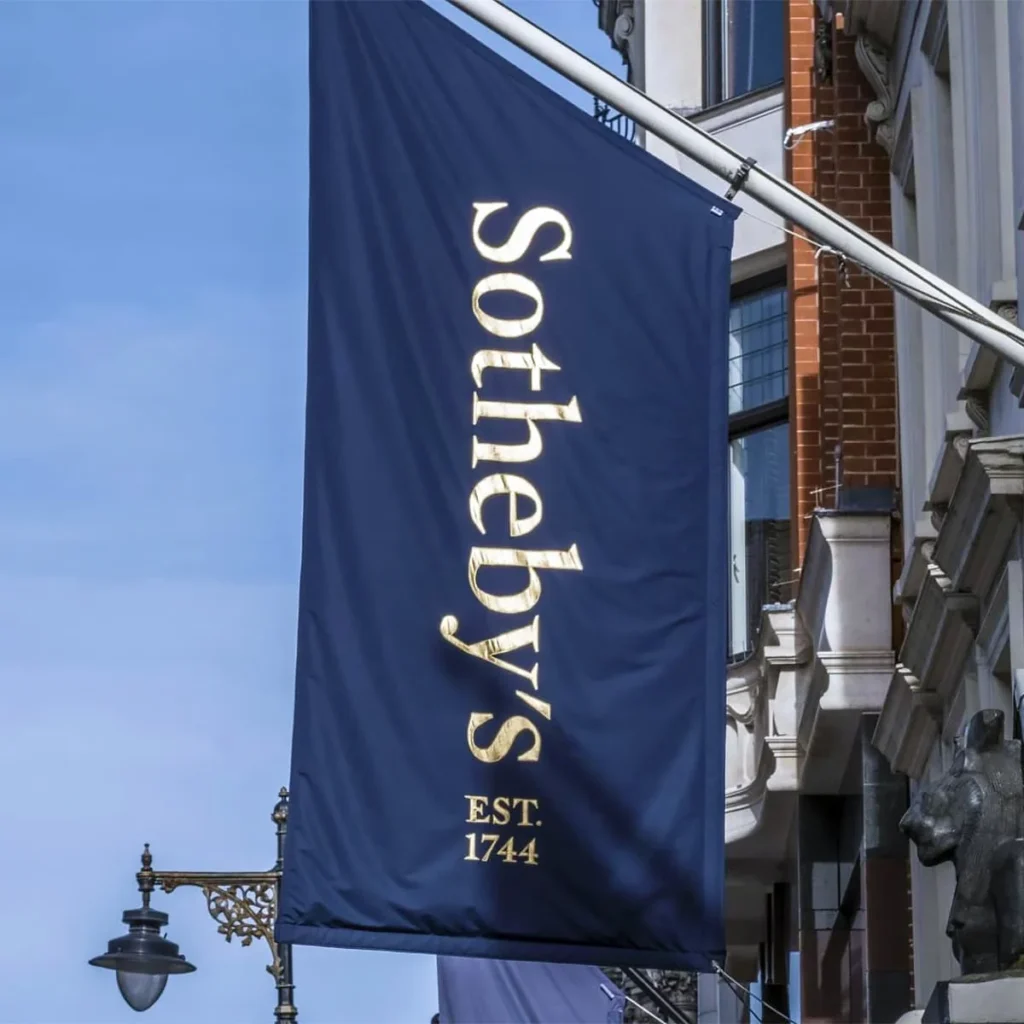
The auction rooms are perhaps the clearest example of how varied Mayfair spending can become.
Sotheby’s operates from New Bond Street, while Phillips holds sales at 30 Berkeley Square. Bonhams also has its main New Bond Street presence. Together with the surrounding galleries and dealers, they make a relatively small part of London one of the world’s densest markets for art, jewellery, design and collectibles.
Recent auction estimates show the range.
| Mayfair luxury category | Example from the 2026 market | Indicative value |
|---|---|---|
| Collectible design | Claude Lalanne Pieds lotus | £7,000–£9,000 |
| Design furniture | Jean Prouvé cabinet | £80,000–£120,000 |
| Sculpture/design | François-Xavier Lalanne Mouton de Pierre | £180,000–£250,000 |
| Contemporary art | Yayoi Kusama Splendour of Stars Changing Into Blue | £300,000–£400,000 |
| Major contemporary work | Kusama INFINITY-NETS (MAE) | £800,000–£1.2 million |
Those were pre-sale estimates from Phillips auctions in London during 2026, not guaranteed selling prices.
The figures make an important point. “Buying art in Mayfair” can mean spending less than the price of a new car, or bidding more than £1 million on a single work.
The Hammer Price Is Not the Final Price
New auction buyers often focus on the estimate and then the hammer price. Neither necessarily represents the complete cost.
Depending on the sale, a successful bidder may also need to consider buyer’s premium, applicable taxes, transport, insurance, storage and potentially conservation work.
Before bidding, a sensible buyer checks:
- the pre-sale estimate;
- provenance and condition;
- buyer’s premium;
- tax treatment;
- collection or shipping costs;
- insurance requirements.
This is where experienced buyers differ from people bidding purely because they like an object. They calculate the complete acquisition cost before the auction begins.
Luxury Retail Has Shifted Towards Things That Last
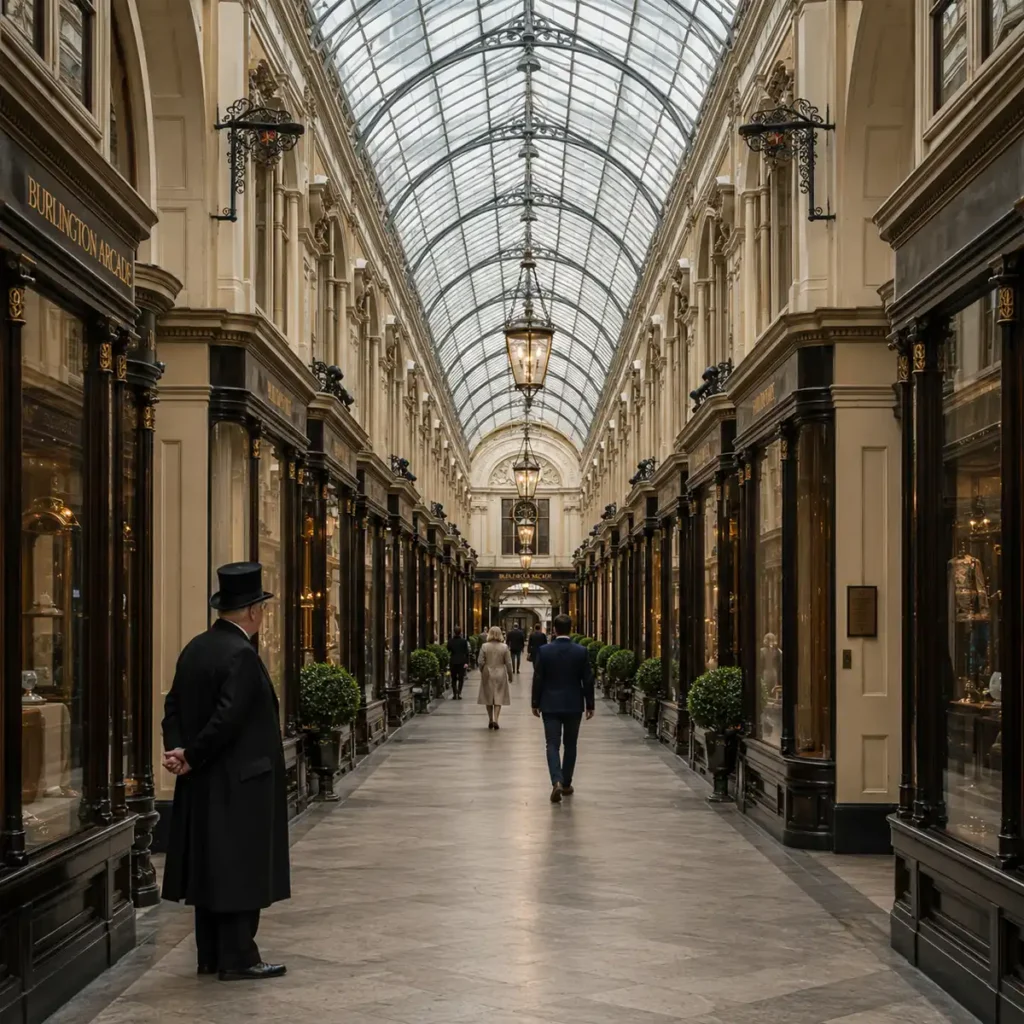
Bond Street, Mount Street, Burlington Arcade and Savile Row remain central to Mayfair’s shopping identity. The district combines global fashion houses with specialist jewellers, watch dealers and bespoke tailoring. London’s official visitor guide describes Bond Street, Mount Street and Burlington Arcade among the area’s key luxury-shopping destinations.
But the interesting end of the market is increasingly about permanence.
A bespoke suit, mechanical watch, signed piece of jewellery or collectible object gives the buyer something more individual than a recognisable logo. That does not necessarily make it an investment, and buyers should be cautious about treating luxury goods as guaranteed stores of value. It does explain why provenance, craftsmanship and scarcity have become such common parts of the sales conversation.
Mayfair Luxury Works Best When the Numbers Make Sense
There is a temptation to describe Mayfair entirely through superlatives: the most expensive streets, rarest watches, biggest auction results and hardest restaurant reservations.
The reality is more interesting.
Prime property values can fall while transaction activity improves. A £10,000 design object can attract a serious collector while another bidder competes for an £800,000 painting. A Michelin-starred dinner can be expensive but still feel worthwhile because of the service and setting.
That is probably the best way to understand Mayfair in 2026. Wealth is visible here, but informed spending matters more than simply choosing the largest number.
Whether the decision involves a townhouse, an auction lot, a restaurant booking or a piece of jewellery, the useful question is the same: what exactly are you paying for?
Mayfair remains one of the few places where there are enough exceptional answers to keep that question interesting.


