
Learning how to trade has never been more accessible, yet it has also never been more important to approach the markets with the right knowledge and mindset. The proliferation of online platforms has opened the financial markets to millions of new participants, but with that accessibility comes a real risk: too many people begin trading without understanding what they are doing. This guide sets out the essential principles every beginner should grasp before placing their first trade.
Understand what you are trading
The first step is deceptively simple: know your market. Trading can involve shares, commodities such as gold and oil, foreign exchange, indices or cryptocurrencies, and each of these behaves differently. Shares are influenced by company earnings and economic conditions; commodities by supply, demand and geopolitics; currencies by interest rates and central bank policy. Before committing any capital, a beginner should focus on understanding at least one of these markets thoroughly rather than spreading attention too thinly across all of them.
Equally important is understanding the instruments used to trade. Many beginners start with leveraged products without fully grasping how leverage magnifies both gains and losses. Taking the time to learn the mechanics of whatever instrument you choose is a non-negotiable first step.
Start with a plan
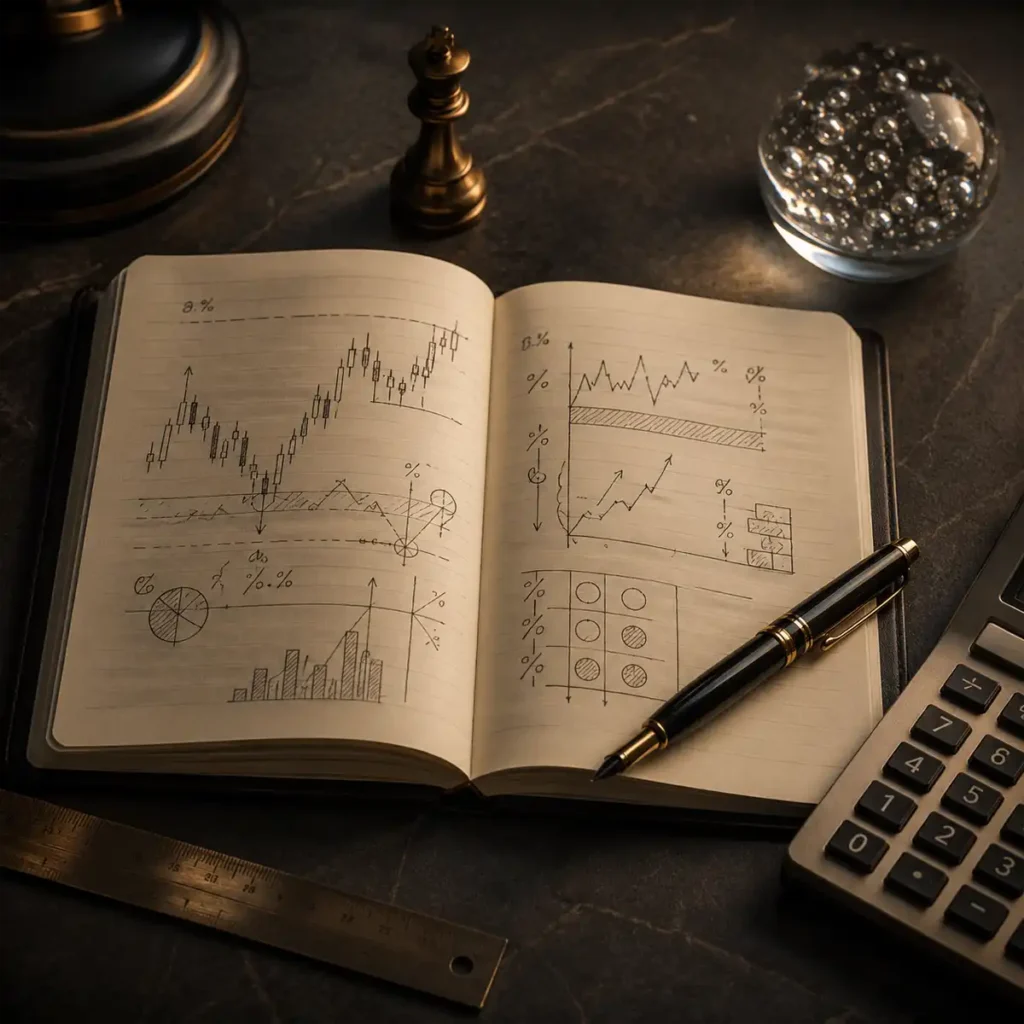
Perhaps the single most common mistake among beginners is trading without a plan. Successful trading is not about acting on hunches or chasing tips; it is about following a clearly defined strategy. A good trading plan sets out what you will trade, how much capital you are willing to risk on each position, the conditions under which you will enter and exit a trade, and the maximum loss you are prepared to accept.
Anyone researching how to trade will quickly find that discipline is repeatedly cited as the defining characteristic of successful traders. A plan removes emotion from decision-making, helping to prevent the impulsive choices that so often lead to losses. Sticking to that plan, even when the temptation to deviate is strong, is what separates a considered approach from reckless gambling.
Master risk management
If there is one concept that matters above all others, it is risk management. No trader, however experienced, wins every time. What distinguishes those who survive in the markets is their ability to limit losses. This means never risking more than a small percentage of your capital on a single trade, using stop-loss orders to cap potential losses, and avoiding the temptation to increase positions in an attempt to recover money already lost.
Diversification also plays a role, as does an honest understanding of your own financial situation. The golden rule is simple but frequently ignored: never trade with money you cannot afford to lose. The markets will always offer new opportunities, but only those who preserve their capital are able to take advantage of them.
Control your emotions
Trading is as much a psychological challenge as a financial one. Fear and greed are the two emotions that derail more beginners than any technical mistake. Greed encourages traders to hold winning positions too long or to take on excessive risk, while fear can prompt panic selling at the worst possible moment. Learning to recognise and manage these emotional impulses is an essential, if often underestimated, part of learning how to trade.
Many experienced traders recommend keeping a trading journal, recording not only the trades themselves but also the reasoning and emotions behind them. Over time, this builds self-awareness and helps to identify recurring mistakes.
Never stop learning
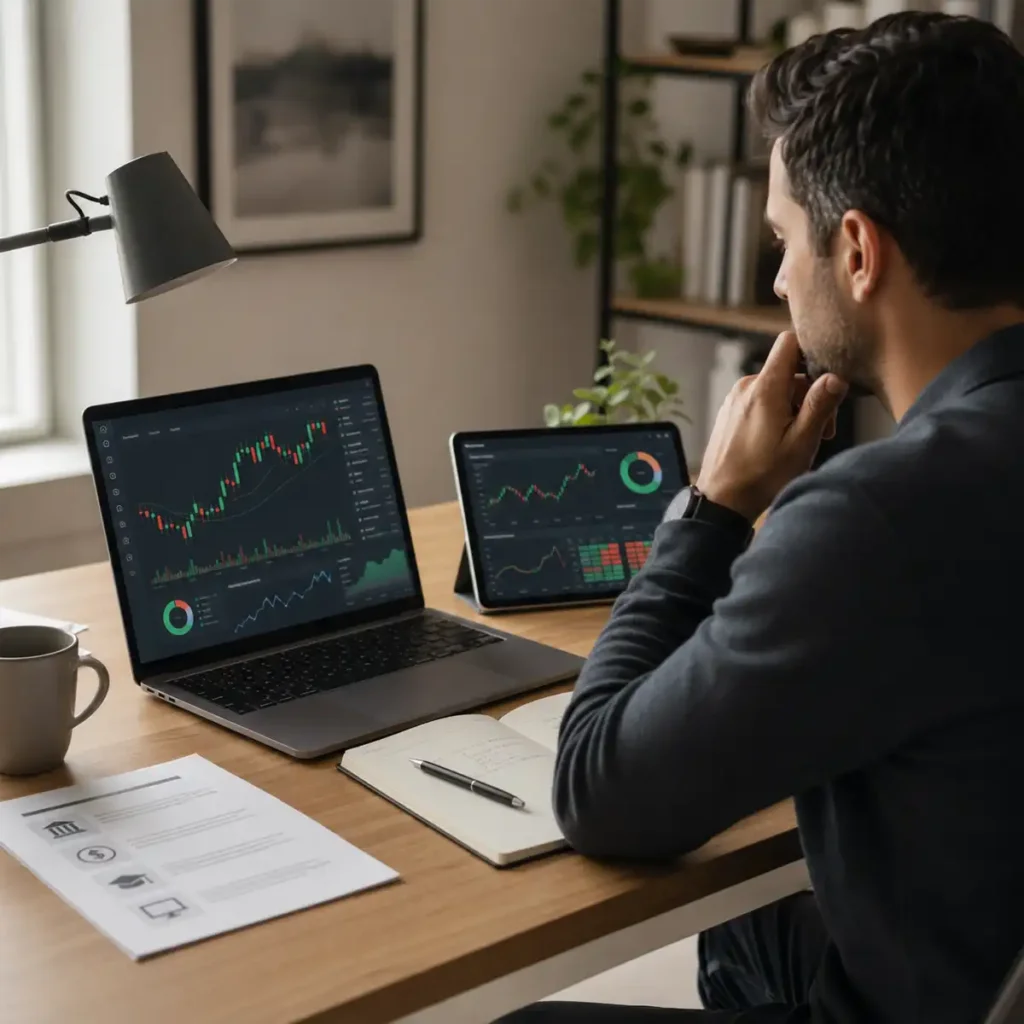
The markets are constantly evolving, shaped by economic data, geopolitical events and shifting investor sentiment. The most successful traders are those who treat learning as a continuous process rather than a one-off effort. Following reliable news sources, studying market analysis and reviewing one’s own performance are all part of the ongoing education that trading demands.
Beginners would also do well to start cautiously, perhaps using a demo account to practise without risking real money, before gradually committing capital as their confidence and understanding grow. There are no shortcuts: the path to competent trading is paved with study, discipline and patience.
A marathon, not a sprint
Ultimately, learning how to trade is best understood as a marathon rather than a sprint. The promise of quick riches that draws so many people to the markets is precisely what leads so many to lose money. A measured, informed and disciplined approach offers no guarantees, but it gives a far better chance of long-term success than impulsive speculation ever could. For anyone serious about trading in 2026, knowledge and discipline remain the most valuable tools of all.
The importance of choosing the right platform
Another consideration for beginners is the choice of trading platform. In the United Kingdom, it is essential to use a provider regulated by the Financial Conduct Authority, which imposes standards designed to protect retail clients. A regulated platform offers important safeguards, from the segregation of client funds to clear risk warnings, and beginners should treat regulation as a non-negotiable requirement rather than an afterthought.
Beyond regulation, factors such as fees, the range of markets available, the quality of educational resources and the usability of the platform all matter. A good platform for a beginner is one that combines robust protections with clear information and tools that support learning rather than encouraging reckless activity.
Avoiding the most common pitfalls
Beginners tend to fall into a familiar set of traps. Overtrading, driven by the excitement of being active in the markets, often leads to mounting costs and losses. Chasing losses, in an attempt to win back money already lost, frequently makes matters worse. And following tips from social media or unverified sources, without understanding the reasoning behind them, is a recipe for trouble. Recognising these pitfalls in advance is one of the best ways to avoid them.
Ultimately, the beginners who succeed are those who treat trading as a skill to be developed patiently, not a lottery to be won quickly. By combining education, discipline, sound risk management and the right tools, newcomers give themselves the best possible foundation for navigating the markets responsibly.


