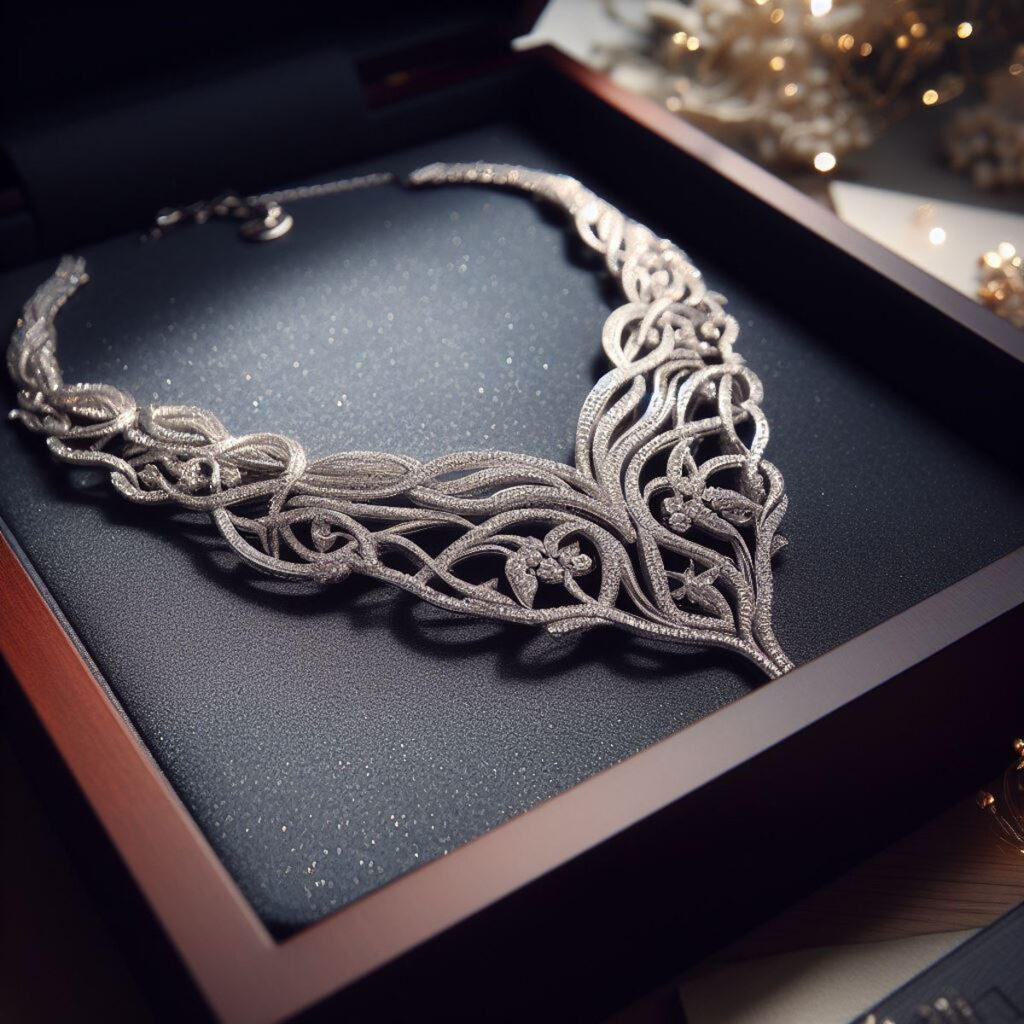
Mayfair has long been the address of choice for those who equate luxury with individuality. Just as Savile Row tailors construct suits around a client’s silhouette and marque carmakers deliver hand-fitted vehicles to their owner’s preferences, fine jewellery has traditionally offered bespoke options. For decades, these options meant customised settings, hand-engraved initials or subtle design flourishes. Yet in 2025, that level of personalisation no longer feels sufficient for the most discerning buyers. True distinction lies in deeper layers, where the gemstone itself carries the identity, history and authenticity of the person who wears it.
The appetite for jewellery that narrates a story beyond aesthetics has surged. High-net-worth individuals in London want more than a beautiful stone set in platinum. They are looking for verifiable provenance, narrative depth and an assurance that what they own cannot be replicated. This evolution of bespoke represents a turning point: a move away from surface-level decoration towards the innate DNA of the gemstone itself.
The fingerprint within understanding a gem’s intrinsic identity
Every gemstone contains a private landscape. These tiny internal features, known as inclusions, have long been studied to verify authenticity. Still, in recent years, they have been reframed as objects of fascination in their own right. No two inclusion patterns are the same, much like a fingerprint. Specialists in photomicrography capture these crystalline structures in exquisite detail, turning what were once considered flaws into evidence of uniqueness.
Renowned gemologists frequently highlight inclusion types that carry specific provenance markers. For instance, horsetail inclusions are synonymous with demantoid garnets of Russian origin, while three-phase inclusions reveal the Colombian pedigree of certain emeralds. By documenting these patterns, laboratories create a scientific identity card for each stone. A client commissioning bespoke jewellery in London today may take as much pride in these natural identifiers as in the finished design.
Fun fact : The world’s most famous Colombian emeralds often reveal their birthplace through inclusions that trap gas, liquid and tiny crystals simultaneously, forming natural “time capsules” of geological history.
In 2025, leading laboratories, including Gübelin, SSEF, and GIA, will have refined systems that make these unique fingerprints part of formal certification. For buyers, this means a ring or pendant can be traced not only to a mine or region but to an internal pattern that no other gem possesses.
From mine to Mayfair, the power of provenance in 2025
Ethical sourcing remains at the forefront of jewellery conversations. However, the conversation has moved beyond broad guarantees into the specifics of exact provenance. The Kimberley Process, designed to combat conflict diamonds, is now seen as a baseline rather than a gold standard. Today, blockchain-based platforms such as De Beers’ Tracr and Gübelin’s Provenance Proof deliver unbroken digital records of a stone’s journey from mine to market.
These technologies give Mayfair clients confidence in both ethics and investment value. Each step, from extraction to cutting and setting, is logged on a decentralised ledger, making misrepresentation nearly impossible. Complementary techniques, such as isotopic analysis and laser inscription, can pinpoint the origin of a sapphire to a particular Sri Lankan valley or identify the age of a diamond deposit.
For buyers of investment-grade gemstones, this provenance is not simply reassurance. It elevates the piece to an heirloom, something that can be sold at auction decades later with a watertight narrative of authenticity. Auction houses like Sotheby’s and Christie’s increasingly highlight this provenance in their catalogues, and stones with transparent origin regularly achieve higher prices than their undocumented peers.


The artisans touch cutting for character, not just carats
Beyond science, artistry defines the most progressive expressions of bespoke jewellery. Master lapidarists are reevaluating their approach to inclusions. Where earlier generations cut to maximise clarity and size, today’s innovators cut to showcase the individuality within. Rather than eliminating a cloud or feather inclusion, they might angle a facet to illuminate it, transforming an imperfection into a distinctive design feature.
This philosophy, visible in the work of leading houses and independent cutters alike, reframes character as the highest form of value. A Mayfair client commissioning a custom engagement ring may request a diamond whose minor internal features are arranged like constellations, with a cut that intentionally enhances their sparkle. The result is not only rare but unrepeatable.
For jewellers like Smith Green, the role is curatorial as well as creative. Sourcing from trusted mines, consulting laboratories for detailed reports, and working closely with cutters, the jeweller orchestrates a process that produces a jewel with both precision and poetry. This is not simply a purchase but a collaborative project, one that mirrors the collector’s own story.
Mayfair client case studies what personalisation looks like today
Consider a London financier seeking a sapphire engagement ring. She requests a stone sourced from the same Sri Lankan region her family once lived in. Through blockchain traceability, the jeweller identifies a stone from that exact region, and laboratory analysis verifies its authenticity. Its inclusions are photographed and shared with the client as part of the narrative. The ring becomes not only a symbol of love but a genealogical connection.
Another client, a collector of coloured gemstones, seeks a ruby with an inclusion pattern so distinctive that it resembles a work of abstract art. A lapidarist cuts the stone to frame this internal design, and Smith Green commissions a setting that highlights the ruby’s natural painting. The finished jewel is a collaboration between nature, science and human craft.
These examples demonstrate that high jewellery personalisation now surpasses surface detail. It is rooted in the gem’s natural DNA, elevated by advanced technology and completed by human artistry.
Conclusion bespoke 2.0 and the future of true luxury
In Mayfair today, to commission bespoke jewellery, London is to embark on a journey that goes far beyond design sketches or engraving initials. The future of personalisation lies in the intrinsic qualities of the gemstone itself. Its provenance, verified by blockchain and laboratory science, secures both ethics and value. Its inclusions, once hidden, become celebrated fingerprints of individuality. Its cut transforms features once considered flaws into markers of identity.
This is Bespoke 2.0: the art of wearing a gemstone whose story is as unique as the wearer. For collectors and connoisseurs, it represents the pinnacle of luxury in 2025, a blend of authenticity, legacy and innovation. As the proverb goes, “A jewel’s beauty is not in its polish, but in its story.”
Smith Green Jewellers invites those ready to experience this next chapter of personalisation to explore its collection and consult with its specialists. The perfect stone is waiting, carrying a story only you can tell.