Two engagement rings have a round centre diamond and small diamonds running along the band. One seems framed by two bright lines; the other has a finer, more textured surface. Before comparing the centre stones, look at what holds the smaller diamonds in place.
The distinction is often channel setting versus pavé. Both can add sparkle to the shoulders, the sections of band beside the centre setting, but they give the metal a different role. Recognising the construction makes “I like this one” easier to explain.
Find the walls, then the beads
A channel setting holds a row of stones between two opposing metal walls. Those walls run along the row, creating a defined border. In pavé, small stones sit close together, typically secured by tiny beads or claws of metal. GIA’s guide to ring settings explains both methods.
Lily Arkwright’s lab diamond jewellery range provides a useful comparison. The 18ct white-gold versions of Iris and Macy both have round lab-grown diamond centres in four-claw settings. Iris is described as having petite channel-set shoulders, while Macy has micro pavé shoulders.
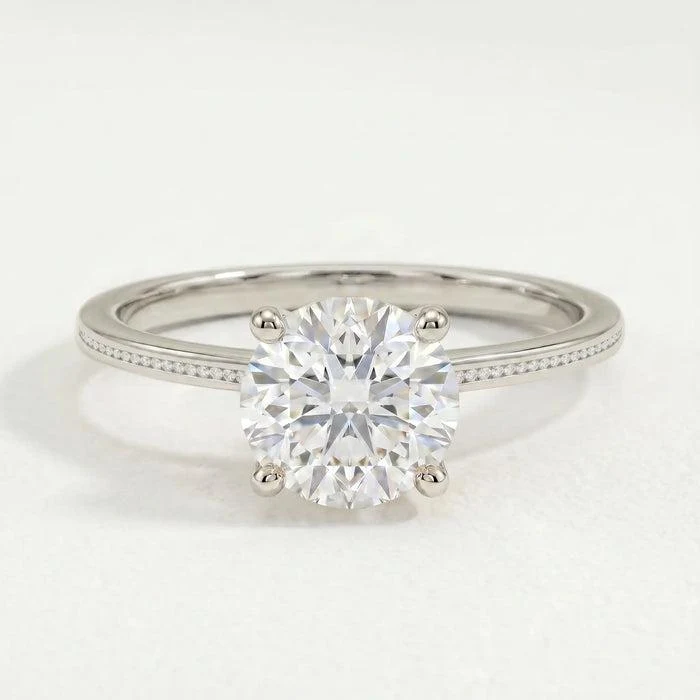
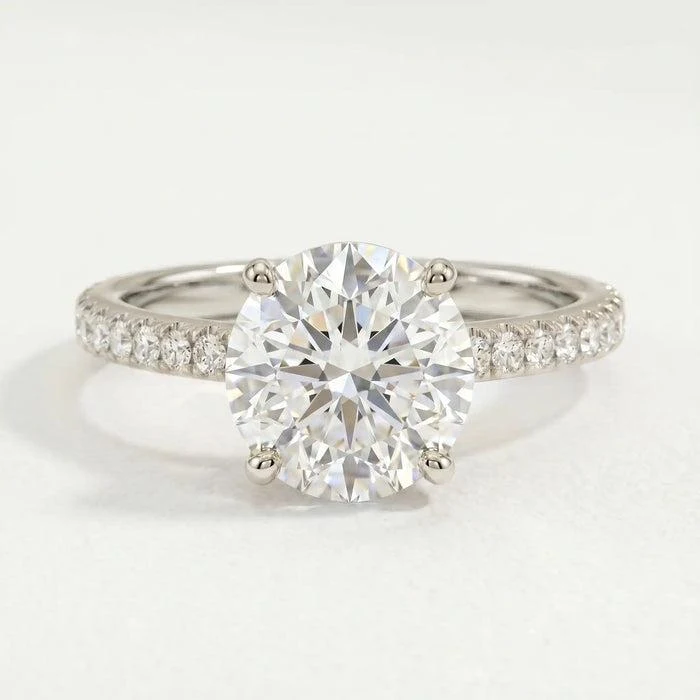
Iris (left) and Macy (right), in 18ct white gold. Images from Lily Arkwright’s product listings, not shown at a matched scale. Compare the shoulder metalwork rather than the apparent centre-stone size.
On Iris, follow the continuous metal edges beside the shoulder diamonds. On Macy, look for the small supports between individual stones. The distinction concerns how the diamonds are held and framed, rather than simply how many appear along the band.
Micro pavé uses particularly small stones and fine metal supports. The label alone gives no exact stone measurement, so ask about the dimensions used in the design.
A border alone does not prove that stones are channel-set. Bead-set designs can also have polished metal edges. If the description and photograph leave you unsure, ask whether the stones are held by the channel walls or by individual beads or claws. That is more informative than relying on a style name.
Notice where the diamond row ends

Look at the last shoulder diamond before the band becomes plain. In a channel-set design, the metal walls may continue beyond that stone before merging into the band. With pavé, notice where the final beads stop and the polished surface resumes.
The stone shapes matter too. Round diamonds leave spaces between their curved outlines. Square or rectangular stones can create a more closely tiled effect. A channel setting therefore need not look like an uninterrupted strip of diamond; notice both the stones and the intervals between them.
Keep the scale comparable
Band width can change this impression as much as the setting method. A broad pavé band and a narrow channel-set band tell you little about which technique you prefer. Begin with similar widths, the same metal colour and centre stones of comparable dimensions.
Iris and Macy are both listed with a standard 1.65mm band width. Confirm where that width is measured: the diamond-set shoulders may differ from the plain section beneath the finger. A shared advertised width does not establish matching shoulder dimensions, profile depth or centre-stone size.
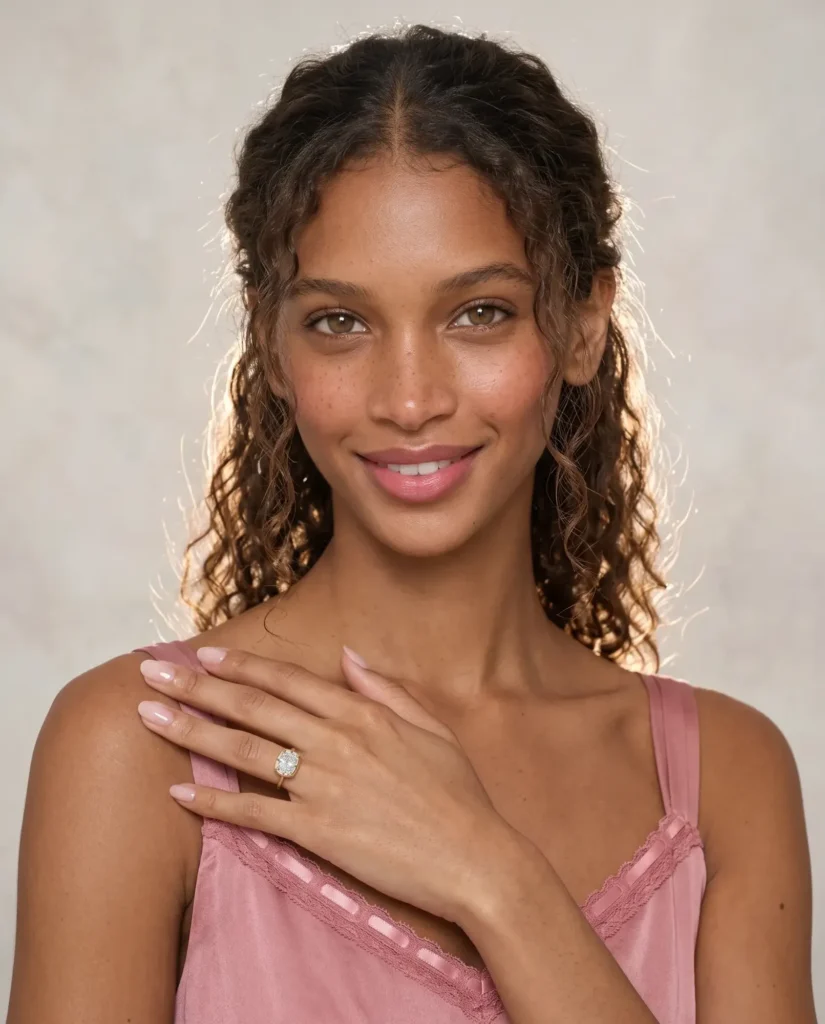
Use a close-up to inspect supports and spacing, then a whole-hand view to judge how noticeable they are during wear. A polished edge can be prominent in one view and subtle in the other.
Follow the finish around the curve
For a channel setting, follow the walls around the curve of each shoulder. Notice whether their outline and finish are consistent, and how the stones sit within the row. Ask the jeweller to explain any variation that catches your attention.
For pavé, compare the shape and spacing of the beads, the visible gaps between stones and the finish around the last diamond. GIA’s discussion of designing with small diamonds explains why consistent stone sizes matter when uniformity is intended, and why metal supports must be properly finished. A graduated arrangement can be deliberate too; look for a clear pattern rather than assuming every stone must match.
These observations help you describe the finish you enjoy. They do not establish whether the stones are secure. Leave that assessment to the jeweller rather than pressing or testing the diamonds.
Choose the detail you want to live with
Channel walls offer protection to the shoulder stones and can reduce catching compared with exposed claw-set accents. That protection concerns the stones within the channel; a raised centre setting still has its own edges and supports. Pavé should not automatically be assumed to catch on clothing either: the finish of its small supports matters.
Both styles deserve a conversation about future work. GIA notes that channel-set bands can be difficult to resize, especially when stones extend far around the ring, and that resizing pavé can disturb its small stones. Ask what is possible for the particular design and finger size, rather than treating a plain section underneath as a guarantee.
The National Association of Jewellers flags loose stones and worn or damaged claws for attention. Ask the jeweller what needs inspecting on the particular channel or pavé design.
If gemstone origin matters to you, confirm whether the shoulder diamonds are natural or laboratory-grown. Their specifications are separate from those of the centre stone.
Then return to the design. Perhaps you like a strong metal frame around each shoulder, or the fine texture between individual diamonds. Being able to name that preference helps you choose a ring for the detail you actually enjoy, rather than simply asking for a band with more sparkle.