
Leaving London by sea used to be the standard way to go abroad. In the early twentieth century, the ocean liner was simply how Mayfair’s residents travelled, and a departure from the Thames was as much a social occasion as the voyage itself. Air travel changed that. It made the world smaller, faster and, arguably, a little less elegant.
Lately, though, something has shifted. Among the people who dine on Mount Street and shop on Bond Street, there’s a growing appetite for holidays that don’t start in an airport queue. Many are looking east along the river and discovering that cruises from Tilbury put the Norwegian fjords, the Baltic capitals and the Iberian coast within reach without a single security tray. It’s a return to an older idea of travel, and it suits the Mayfair temperament rather well.

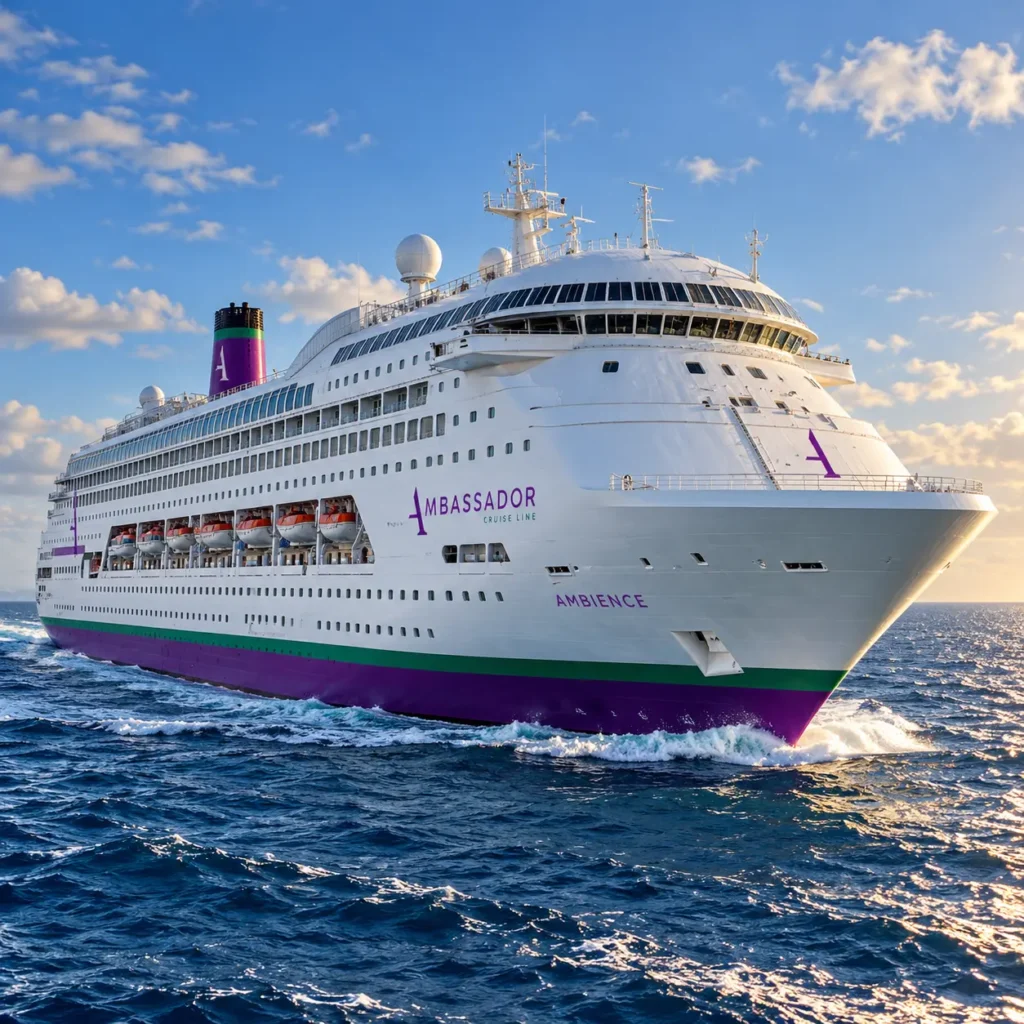
The appeal of the unhurried departure
Luxury, in Mayfair terms, has always been about time as much as money. The best tailors on Savile Row won’t rush a suit. The finest restaurants around Berkeley Square don’t hurry you from the table. So it makes sense that the same mindset is filtering into how people travel.
Flying from Heathrow or Gatwick involves a very particular kind of stress: the early start, the scramble through security, the wait in a crowded lounge and the landing in a city that still feels a world away from where the holiday actually begins. Sailing from the Thames removes most of that. You arrive, your luggage is taken from you, and within a few hours you’re watching the Essex and Kent shorelines slide past with a glass of something cold in hand.
Luggage allowances are far more generous than any airline’s, too. For anyone who likes to dress properly for dinner, that alone is a small revolution. Evening wear, a second pair of good shoes, the jacket you’d never risk in the hold: it all comes along.
A port with more history than you’d expect
Tilbury doesn’t have the glamour of Southampton in the popular imagination, but it has a surprisingly rich past. The riverside passenger terminal, now the London International Cruise Terminal, opened in 1930 and is a Grade II* listed building. For decades it welcomed liners from across the world, and in 1948 it was where HMT Empire Windrush docked, carrying passengers from the Caribbean who’d go on to reshape British life.
A short walk away sits Tilbury Fort, one of the finest surviving examples of seventeenth century military engineering in England, now looked after by English Heritage. And it was near here, in 1588, that Elizabeth I addressed her troops as the Spanish Armada threatened. For anyone with an interest in London’s story, it’s a fitting place to begin a journey.
Getting there from W1
One of the understated pleasures of leaving from Tilbury is how close it is. Trains run from Fenchurch Street to Tilbury Town in well under an hour. Many Mayfair residents will, naturally, prefer a car. Depending on traffic, a driver can have you from Park Lane to the terminal in around an hour, which compares very favourably with the trek out to most airports.
There’s something rather civilised about finishing a late breakfast at home, being collected at a reasonable hour and stepping aboard by early afternoon.
Where the river leads
The itineraries that leave the Thames tend to fall into a few broad categories. Northern Europe is the natural favourite: Norway’s fjords, Iceland and the capitals of the Baltic, with Copenhagen and Stockholm offering the kind of design, dining and understated Scandinavian luxury that Mayfair residents tend to appreciate. Longer voyages head south, calling at Lisbon or Cádiz, or out to the Canary Islands for winter sun.
Shorter sailings are growing in popularity too. A few nights taking in Amsterdam, Bruges and the French coast makes a surprisingly restorative break, and it’s the sort of thing that fits neatly between the season’s commitments.
Planning with a Mayfair eye
A few things are worth considering before you book.
Cabin choice matters more than you might think. A balcony changes the experience entirely, especially on a Norwegian itinerary where the scenery is the whole point. Suites often come with extra space, priority boarding and, on some ships, a dedicated concierge.
Think about timing, too. The summer months are ideal for the fjords and the Baltic, when the evenings stretch on and the light is extraordinary. Spring and autumn sailings are quieter and can feel more intimate.
And pack as you’d pack for a stay at one of Mayfair’s grand hotels. Formal evenings still exist on many voyages, and there’s a pleasure in dressing for dinner that’s hard to find elsewhere these days.
An old idea, beautifully revived
It’s tempting to think of sea travel as nostalgia, but that’s not quite right. It’s more that people who can go anywhere are starting to think harder about how they go. The journey itself, the sense of departure, the view of the city falling away behind you: these are things air travel took away, and a surprising number of discerning Londoners are quietly taking them back.
Mayfair has always understood that the finest things aren’t rushed. It turns out that holds true for leaving London, too.