
Mayfair empties at predictable points in the year, and the pattern never varies. In the third week of June the streets around Berkeley Square thin out by mid-morning, restaurant covers move to the evening, and the tailors on Savile Row take a run of appointments that has nothing to do with anybody’s office.
Two fixtures do this, and only two. The Mayfair sporting season is shaped almost entirely by Cheltenham in March and Royal Ascot in June, and a visitor booking around either one is competing with a district that booked eight weeks earlier. The bespoke tailors in our directory take morning dress work from April onwards for exactly that reason.
The part that surprises people is what is missing. Mayfair, in W1, within the City of Westminster, has almost no high street bookmakers at all, and the reason is not the one most visitors assume.
The two weeks that move the district
The Cheltenham Festival ran from Tuesday 10 to Friday 13 March 2026, and Royal Ascot from Tuesday 16 to Saturday 20 June 2026. Those nine days are the spine of the Mayfair sporting season and move hotel occupancy, restaurant bookings and tailoring appointments more than any other fixtures in the British calendar.
Both weeks behave the same way. Rates across the district climb, tables that are normally available at short notice disappear, and the hotels shift staff towards early breakfast and late dinner because the middle of the day empties out. Eight to twelve weeks of notice is realistic rather than cautious, and our guide to five-star hotels in Mayfair matched to guest type is the sensible place to begin.
Getting there is easier than the planning suggests. Ascot runs from Waterloo, two stops on the Jubilee line from Green Park. Cheltenham Spa runs from Paddington, one stop west of Bond Street on the Elizabeth line.
Savile Row in May, and the reason for it
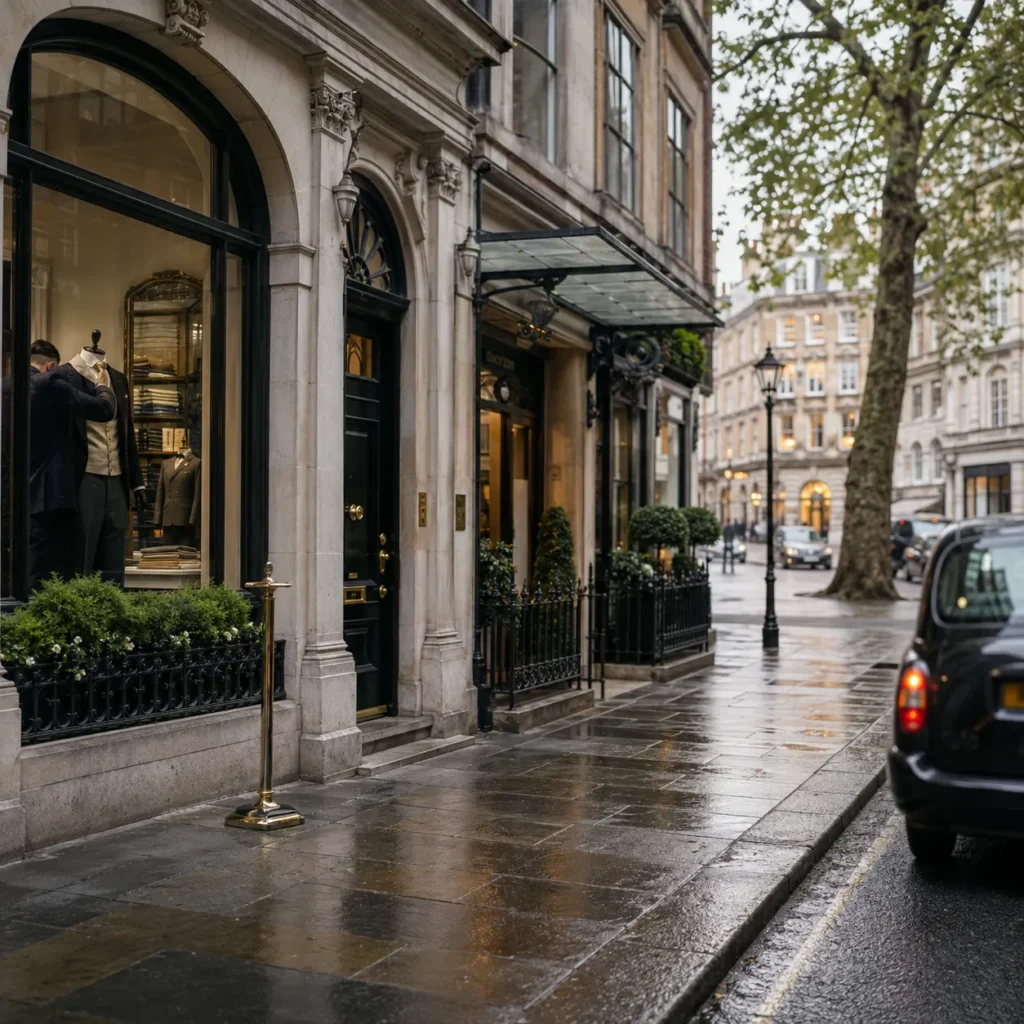
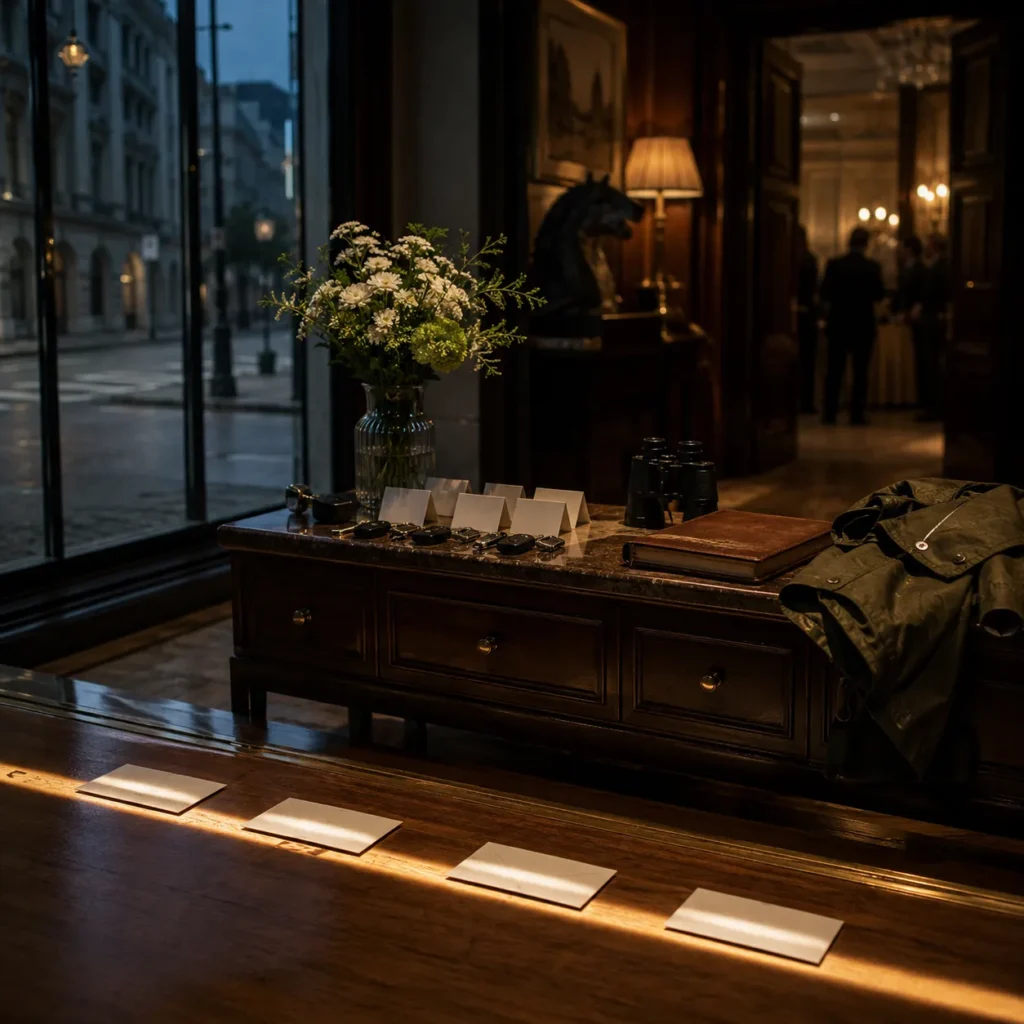
Walk Savile Row on a weekday in May, about 8 minutes on foot from Green Park station, and the fitting rooms are running morning dress. Grey and black coats, waistcoats being marked, a top hat on a stand at the back of the room. The Mayfair sporting season announces itself in the fitting rooms several weeks before it reaches a racecourse, and this is the single most reliable seasonal tell in the district.
The Royal Enclosure at Ascot maintains a written dress code, and morning dress with a waistcoat and a top hat is the requirement for men admitted to it. The obligation is lighter elsewhere on the course, but Mayfair treats the whole week as a dress occasion regardless of which enclosure anybody is actually in.
The trade that supports this sits within a few streets, which is the practical advantage of the district. Alongside the tailors, our directory covers menswear shops and ladies fashion across Mayfair, and hire is widely available for anyone attending once rather than annually. A first commission will not be ready in three weeks. Hire will.
Why there are no betting shops in Mayfair
Visitors read the absence of bookmakers as a statement about the district’s manners. It is not. It is a rent calculation, and a fairly brutal one.
Ground floor retail rents in this part of W1 are among the highest in Europe, and a licensed betting office does not generate the turnover per square foot to support them. The Gambling Commission counted 5,669 betting shops across Great Britain in the quarter to December 2025. Almost none of them could pay Mayfair rates.
The activity did not leave the district when the shops failed to arrive. It moved into private rooms, hotel suites and telephones, which is roughly where it had been before betting shops were legalised in 1961 anyway. The result is a district that follows sport intensely while displaying almost no visible evidence of doing so, which is consistent with how Mayfair handles most things. The Mayfair sporting season is watched from inside buildings, not from a pavement.
How the betting itself is regulated
Sports betting in Britain sits under the Gambling Commission, and every domestically licensed operator has been required to participate in GamStop since 31 March 2020. Registering with GamStop blocks access across all licensed operators for the period chosen, and that block cannot be lifted early by the person who set it.
Outside that perimeter sits a separate market. Directories listing betting sites not on GamStop cover operators licensed in other jurisdictions, which are not part of the domestic scheme and are therefore not bound by it. That distinction matters considerably more than the marketing around it suggests.
If you have used GamStop deliberately, the entire value of the scheme depends on not routing around it. The domestic framework has also tightened in the other direction. A statutory levy on licensed operators came into force on 6 April 2025, charged at between 0.1% and 1.1% of revenue, with the highest rate falling on remote licensees. Support is available through BeGambleAware.
Which fixtures move Mayfair and which only fill a room
Wimbledon in early July, the Boat Race in spring and the autumn rugby internationals all register in the district. None of them shifts hotel occupancy the way Ascot does, and the distinction is not the size of the audience. The Mayfair sporting season has a clear hierarchy, and it is not the one a television schedule would suggest.
It is whether the fixture carries a dress requirement and a hospitality structure. Where it does, Mayfair fills, because the fixture generates a reason to be in the district before and after the event rather than only during it. Where it does not, the district watches it much like everywhere else, from the members clubs and a handful of Mayfair pubs that take bookings for the bigger afternoons.
Polo occupies the space between the two. The Guards Polo Club at Windsor and Cowdray Park in West Sussex carry the summer fixtures, with the Gold Cup final at Cowdray closing the British season in July. It draws a Mayfair crowd without filling Mayfair hotels, largely because the grounds are a day trip rather than a week away.
That makes polo the most accessible part of the Mayfair sporting season for anyone who has left planning late. A ticket in June is a very different proposition from a hotel room in June.
The sponsorship explains the relationship better than the sport does. The watch and jewellery houses on Bond Street have backed racing and polo for decades, which is why the fixture calendar and the retail calendar in this district move together rather than merely coinciding.
Planning a fixture week properly
Book accommodation before anything else, because the rooms go first and everything else can be rearranged around them. Confirm whether the hotel runs a car to the course, since several do for Ascot and it removes the worst hour of the day.
Check whether the dress code extends to the hotel restaurants, because on race days a number of them apply it from midday. If you are commissioning rather than hiring, start in April at the latest, because a first commission will not be finished inside three weeks and a hired coat that fits properly beats a rushed one that does not. Then set a figure for the day and leave it there.
The decision that actually determines how a fixture week goes is made in the winter, not the spring. Hotel inventory in this district is finite and the fixture dates are published years ahead, so the people who have a good Ascot are the ones who booked it in January.
If you are building a year around the Mayfair sporting season, the working sequence is Cheltenham in March, polo from May, Ascot in June, Wimbledon in July, then an August when a good deal of the district is somewhere else entirely. Book the June week first. Everything after it is easier to arrange, and the district itself operates on exactly that assumption.


