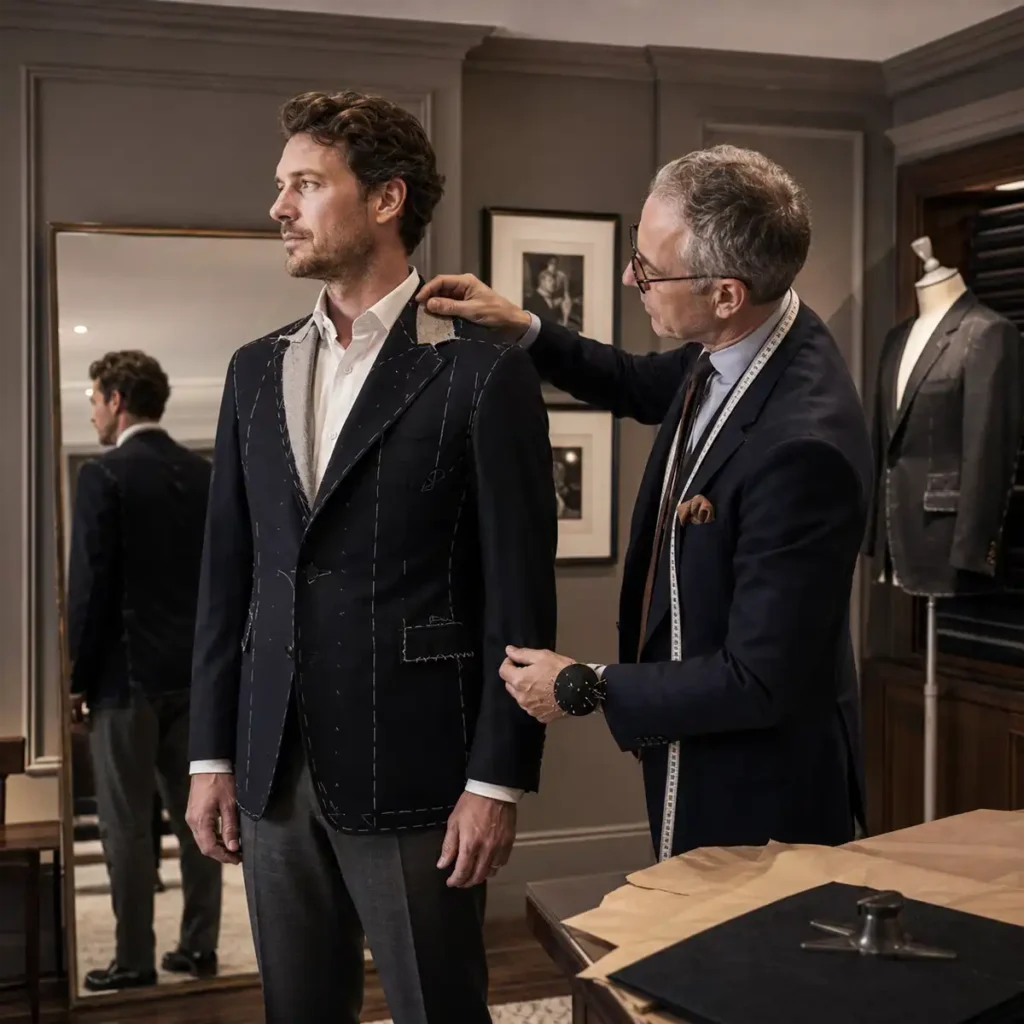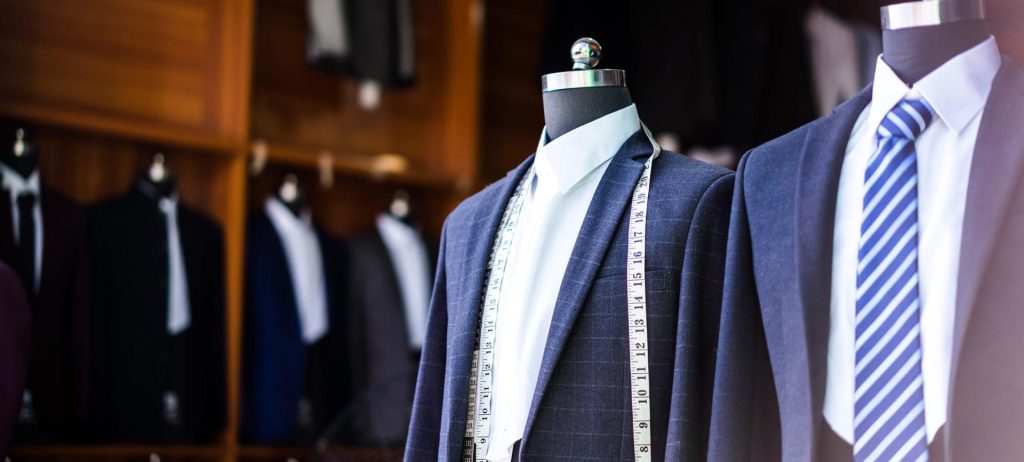
Mayfair’s Savile Row bespoke tailoring has always been the ultimate slow luxury, but in 2026, it is also becoming the most convincing expression of sustainability in London W1. The main benefit for visitors and locals is simple: you can commission a suit that wears better with age, carries a transparent story, and stays serviceable for decades. A short walk from Green Park station, the Row now treats longevity, repair, and responsible cloth as part of the fitting, not an optional extra.
Step off Piccadilly and into the City of Westminster’s most precise craft corridor, and the clues are immediate. There is less theatre around trends, more care around fibres, provenance, and aftercare. The sharpest houses still talk about cut and drape first. The difference is that conversations now extend to the mill, the farm, and what happens to the suit 10 years from now. [INTERNAL LINK: Mayfair luxury shopping streets | Bond Street and Mayfair shopping]
Where To Commission Sustainable Bespoke Tailoring On Savile Row
The best place to start is with houses that treat sustainability as part of the craft standard, not a marketing layer. In Mayfair, the best bespoke tailors in Savile Row for eco-conscious clients are those that prioritise repair, offer cloth transparency, and keep production close to the cutting room, often within W1.
Begin with Anderson and Sheppard at 32 Old Burlington Street, London W1S 3AS, just off Savile Row, where the house is explicit about longevity and restoration as part of the client relationship. Nearby, Huntsman at 11 Savile Row, London W1S 3PE, remains a benchmark for disciplined structure and long-term wear, with a service model built around maintenance and alterations over time. For heritage with deep archive credibility, Henry Poole and Co at 15 Savile Row, London W1S 3PJ is a foundational name, and its historical continuity is part of why collectors trust the provenance of older commissions.
The practical move is to book an initial consultation that discusses not only silhouette and shoulder line, but also cloth weight, seasonal versatility, and repair planning. A house that talks you through finishing, seam allowances, and future alterations is usually the one that takes sustainability seriously, because those details determine whether a garment lives for 3 years or 30.
How Regenerative Bespoke Makes A Suit Last A Lifetime
Regenerative bespoke in Mayfair means a suit is designed for repeat wear, periodic repair, and future alteration without losing its integrity. Savile Row does this by building garments with handwork, generous seam allowances, and a relationship-led service model, so a commission stays relevant even as a client’s body, career, or taste shifts.
A bespoke suit is not made to be “done” after a season. The first fitting establishes the architecture, the subsequent fittings refine balance and posture, and the finishing focuses on durability at stress points, including armholes, seat, and trouser knees. When that foundation is correct, maintenance becomes a routine, not a rescue.
The most convincing sustainability story on Savile Row is also the oldest one. A garment can be re-pressed, re-lined, or subtly re-cut. A shoulder can be softened, a waist suppressed, a trouser line brought up to match a change in silhouette. In 2025, this long-life approach also began to broaden in tone and audience, with more houses speaking to clients who want tailoring as a modern wardrobe system rather than a one-off ceremonial purchase.
A practical test during a consultation is to ask what a house can do in 5 years. If the answer includes a plan for reshaping and re-finishing, not only a plan for selling you another suit, you are in the right place for sustainable luxury in Mayfair.
What Traceability Looks Like From Cloth To Cutting Room
Traceability on Savile Row means you can understand where cloth comes from, how it was finished, and why it performs the way it does. In 2026, this is increasingly supported by digital records, mill documentation, and emerging product passport standards, but the core proof still starts with the cloth itself and the house’s record-keeping.
The first layer is traditional and tactile. A cutter shows you bunches, explains the twist and the handle, and talks about performance in London’s real weather, including commuter heat, Mayfair dining rooms, and transatlantic flights. The second layer is documentary. Mills and merchants provide increasingly detailed fibre and finishing information, and clients are starting to keep that with invoices, fitting notes, and alteration history.
The third layer is the future-facing one, and it is relevant even if you never use the phrase at a fitting. The EU’s move toward Digital Product Passport frameworks is pushing fashion and textiles towards clearer, standardised data about materials and supply chains, and luxury is typically an early adopter because clients value risk reduction. For a Mayfair visitor commissioning a suit, the benefit is not novelty. The benefit is that provenance becomes harder to lose and easier to hand over with the garment, especially when estates, insurers, and international moves are involved.
In practice, Savile Row’s best houses already behave as a passport system. They keep patterns, records, and cloth references with the care of archivists. A digital layer simply makes that easier to carry through time.
Why Material Choice Is Now Part Of Quiet Luxury
Eco-conscious tailoring on Savile Row is not about swapping wool for gimmicks. Material choice in Mayfair is about picking fibres that wear well, press cleanly, and age with character, while reducing waste and avoiding short-lived novelty. The most modern cloth decisions still respect the Row’s obsession with drape and recovery.
British and European wools remain the baseline for a reason. They breathe, they recover shape, and they tolerate heavy rotation. The sustainability gain often comes from avoiding excess commissions and choosing a cloth that does double duty across settings. A mid-weight wool in a sober finish can move from a morning meeting near Berkeley Square to a late table in St James’s without looking strained.
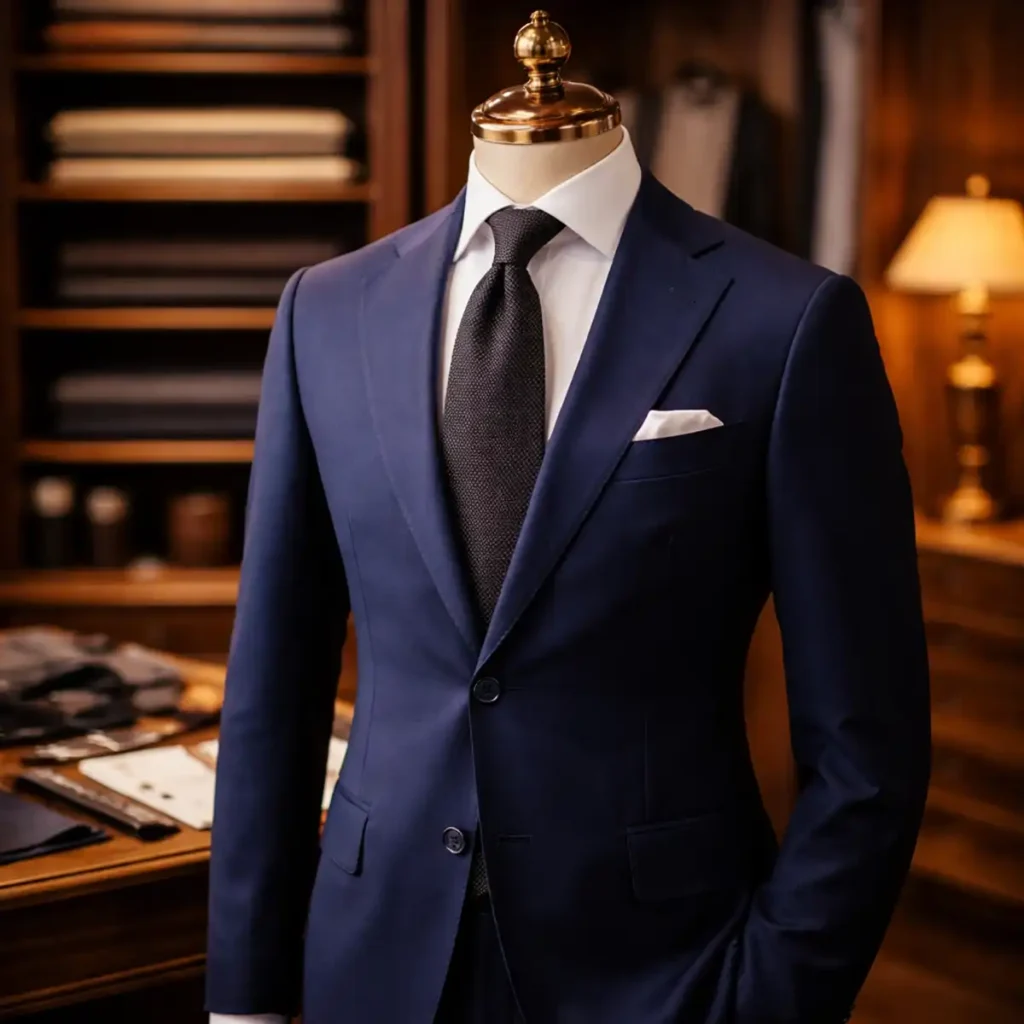
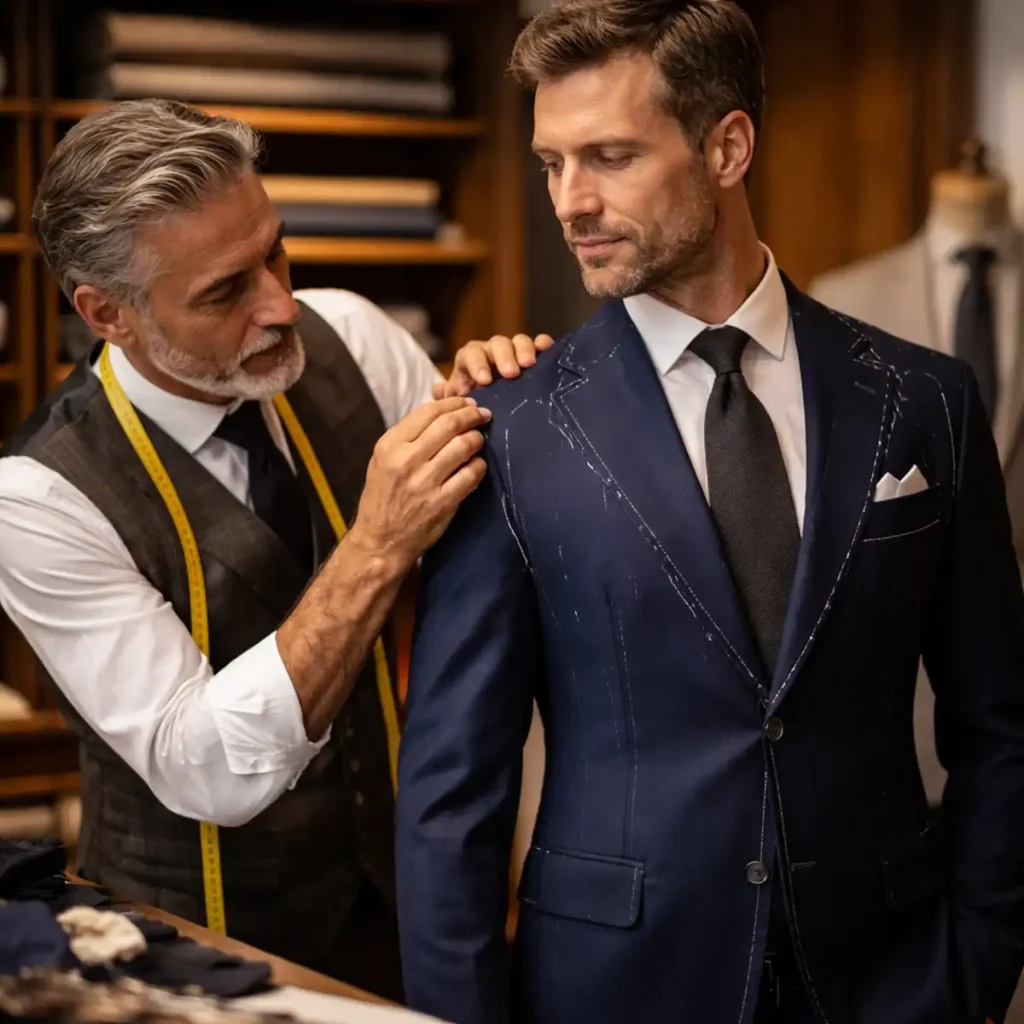
Innovation shows up more quietly, often through waste reduction rather than headline fibres. Anderson and Sheppard’s Off-Cut Tweed is a rare example of a named initiative that speaks to what tailors actually see daily: cutting room remnants that are too good to waste. When off-cuts become new cloth, the sustainability claim is not abstract. It is visible in the texture and the story of the weave.
In 2025, the wider tailoring conversation also started to tilt towards technology that reduces returns and remakes in made-to-measure and custom clothing, including more advanced sizing and body data approaches. Savile Row remains fundamentally hand-led, but the direction of travel is clear: less waste, fewer errors, better longevity.
How Savile Row Keeps Production Local In London W1
Local production is one of Savile Row’s underrated environmental advantages. The cutting, fitting, and much of the making is anchored in Mayfair, often close to the front room where you are measured. That reduces transport, compresses timelines, and keeps accountability tight because the maker is not an anonymous stage in another country.
A client sees this during fittings. You walk into a space that feels like a private ritual, then you notice the evidence of a working workshop. Pressing equipment, hanging garments, chalk marks, and patterns are stored like architectural drawings. A bespoke consultation is not retail browsing. A bespoke consultation is a commissioning process, and the proximity between cutter, coat-maker, and client is part of why the end result fits and lasts.
Local also means responsive. If a shoulder needs refinement, it is not shipped away into a black box. It is adjusted within a system where standards are enforced by reputation and repeat relationships. In Mayfair, reputation travels fast, and that is why craftsmanship behaves like a currency.
For travellers, this locality has a practical perk. A schedule built around 2 to 3 fittings can still work with a London itinerary because the Row sits near Bond Street, Burlington Arcade, and the Royal Academy, so you can fold culture and dining into the gaps without leaving the neighbourhood.
Fun fact: In 1865, Henry Poole created the first dinner suit for the future Edward VII.
What To Expect When Booking A Sustainable Bespoke Suit
A sustainable Savile Row commission begins with clarity, not moral theatre. Expect a first conversation about lifestyle, frequency of wear, and what the suit needs to do in Mayfair and beyond. Expect a discussion of cloth performance, repairability, and how alterations will be handled over the years, not only on the day you collect it.
The process typically begins with measurements and a style briefing, then moves into cloth selection. A responsible cutter will steer you away from cloth that looks dramatic but will not survive your real calendar. The next step is pattern drafting, followed by a basted fitting where structure and balance are set. Subsequent fittings refine line, comfort, and expression, including sleeve pitch and trouser hang.
Appointment-only access is common, particularly for senior cutters and peak seasons around autumn travel and winter events. If you are visiting, it is sensible to schedule the first fitting early in a trip and leave flexibility for a follow-up, especially if you want a coat or a full suit rather than trousers alone.
The sustainability angle becomes practical at the end. Ask about storage, pressing, and re-finishing intervals. Ask what can be repaired, what can be replaced, and what the house recommends after heavy wear. A suit that is easy to maintain is usually the suit that stays in your rotation for years.
How To Pair Savile Row With The Best Of Mayfair In 1 Day
A Savile Row fitting sits naturally inside a Mayfair day that feels indulgent but efficient. Start the morning with a fitting on Savile Row, then walk towards Mount Street for coffee and a slower browse through Mayfair designer boutiques, where quiet luxury is often expressed through fabric, not logos. The neighbourhood’s geography makes it easy to keep the day cohesive and discreet.
After a fitting, culture is the most elegant palate cleanser. Burlington Arcade is close enough for a short, unhurried loop, and the Royal Academy area offers a sense of London’s older rhythms without leaving the West End. If you prefer a softer reset, Berkeley Square’s green calm can make the next appointment feel less compressed.
By late afternoon, the mood shifts naturally into dining. Mayfair’s restaurants reward restraint and timing, and a fitting day is a good excuse to choose somewhere that understands privacy and service cadence.
For visitors planning a stay, anchoring yourself near Park Lane or around Grosvenor Square keeps you within easy walking distance of the Row while maintaining that Mayfair rhythm of close distances and high standards.