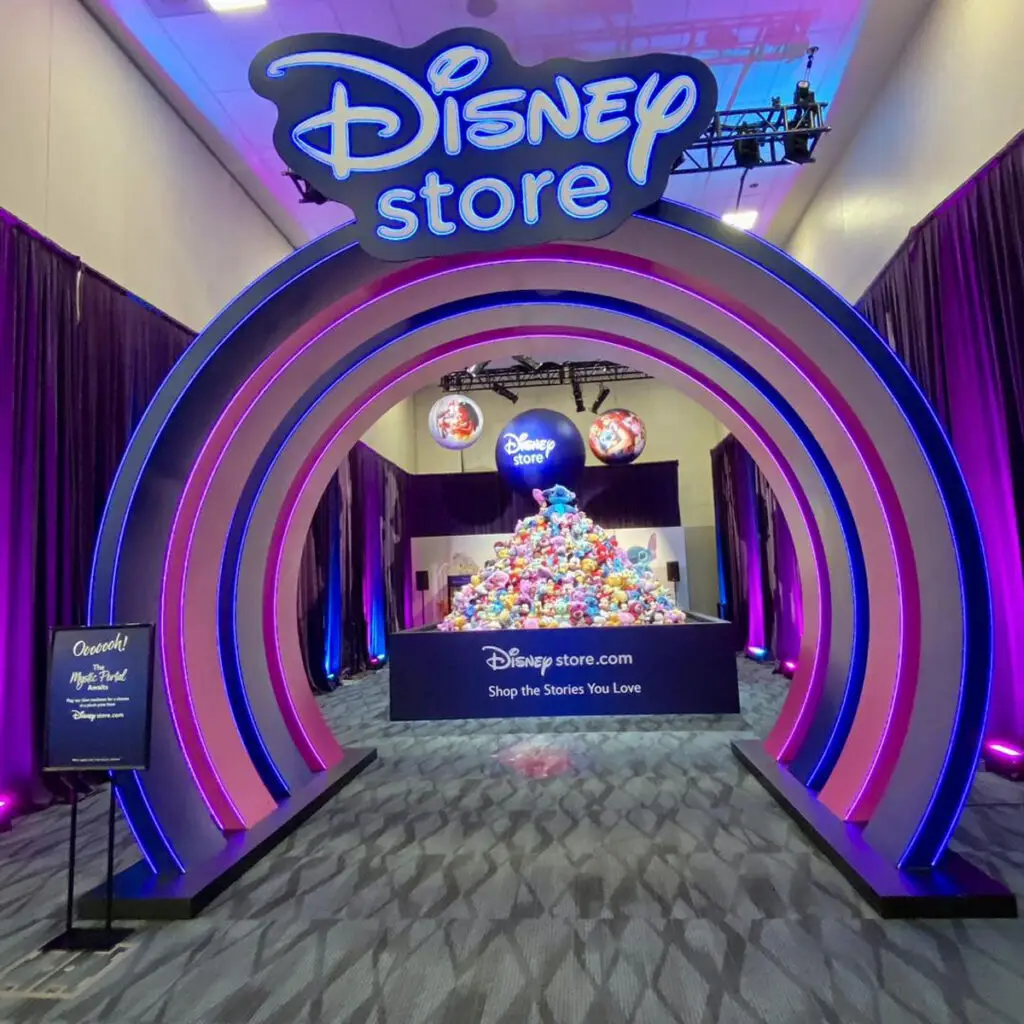
For anyone who has ever wept at the final scenes of The Lion King, queued excitedly for a Star Wars premiere, or passed a Mickey Mouse keyring from parent to child, the power of Disney is undeniable. It is not just a company. It is a keeper of memories, a creator of worlds, and an instigator of intergenerational joy. Nowhere in Britain is that emotional resonance more vividly expressed than at the Disney Store on Oxford Street.
Step inside, and you are no longer just a shopper. You are a guest in the House of Mouse, surrounded by a curated explosion of colour, character, and franchise nostalgia. While most high street stores are focused on moving stock, this flagship Disney location aims to cast a spell. There is music in the air, magic in the details, and a deliberate effort to make retail feel theatrical. Oxford Street, a place long synonymous with commercial energy, becomes something softer here – a stage for enchantment and imagination.
Yet this is not a museum of corporate branding. It is a living, changing space that blends commercial savvy with emotional connection. And in a post-pandemic world that has seen retail stumble, adapt, and reimagine itself, the continued survival of this store is no small feat. Amid closures and digital pivots, the Oxford Street Disney Store remains one of the very few physical outposts in the UK still standing. That alone is telling.
Why Oxford Street Matters to Disney
There are few addresses in European retail with the gravitational pull of Oxford Street. It sees footfall that most shopping destinations can only dream of – up to half a million people daily, with millions more across a typical month. That kind of exposure makes it prime territory for global brands, and Disney knows it.
The store is located at 350–352 Oxford Street, just moments from Bond Street station. This isn’t just central London – it’s commercial theatre. And for Disney, the setting is vital. It is not just about tourists or sales volume. It is about prestige. A flagship store on Europe’s most famous retail strip confers status, reminding visitors of Disney’s place not just in children’s bedrooms but in the global brand pantheon.
Oxford Street itself has evolved dramatically over the years. Once a quiet residential stretch, it exploded into life during the 19th century, becoming a glittering corridor of department stores. Even with the dominance of online shopping, it still commands relevance. For Disney, its presence here is more than strategic. It is symbolic.
A Store with Historic Weight
The Oxford Street store is believed to be one of Disney’s earliest international retail ventures. The first overseas Disney Store opened in November 1990 in London, a milestone that marked the company’s shift towards physical retail on a global scale. While the precise location of that first store has never been confirmed with complete certainty, all indications suggest that the Oxford Street branch was at the heart of that initial expansion.
Over time, it has become a fixed point for fans, a beacon for families visiting London, and a dependable presence in the city’s shifting retail landscape. That longevity matters. Few brand stores survive three decades in such a high-stakes location. Fewer still remain relevant. Disney has managed both.
The physical layout supports that staying power. With three floors of themed merchandise and immersive design, it is far more than a shop. Themed zones cater to different ages, fandoms, and seasonal releases. Visitors can pass seamlessly from classic princess motifs to the darker palettes of Marvel and the intricate branding of Star Wars. This zoning is deliberate. It mirrors the diversity of Disney’s intellectual empire and ensures broad appeal.
What the Store Represents Post-2021
Perhaps the clearest indication of the store’s importance came in 2021, when Disney closed all of its UK and Republic of Ireland retail locations – with just two exceptions. The Oxford Street flagship remained open. So too did its Dublin counterpart. Every other location was shuttered as part of a move to refocus on digital sales and reduce overheads.
To survive a culling of that scale says everything about the Oxford Street store’s value. It is not just a profit centre. It is an experiential outpost, a brand flagship in the purest sense – a place where engagement, visibility, and loyalty matter more than quarterly figures.
And that is precisely what makes it work. Disney has always excelled at storytelling. Here, the story continues in physical space. From the opening ceremony, where a child unlocks the store doors each day with a ceremonial key, to seasonal events and character encounters, everything is designed to turn visitors into participants.
Magic Beyond the Merchandise
For families visiting London, the daily opening ceremony is one of the highlights. The first guest is chosen to open the store with a giant key, after which they receive a souvenir miniature key to take home. It is a simple tradition, but a potent one – part ritual, part marketing, part memory-making.
This ritual is joined by a calendar of events. In recent years, themed days such as May the 4th (Star Wars Day) have included Jedi academies and visits from costumed stormtroopers. Meanwhile, campaigns like the Summer of Stitch have brought scavenger hunts, exclusive plush toys, and mood-based challenges tied to the Lilo & Stitch universe.
These moments are central to the store’s success. They transform a visit into a shared experience, something far more memorable than a click on a website. They also drive footfall. In a world where repeat visits are rare, these events give customers a reason to return.
Fun Fact: The “D350” section on the upper floor is named after the store’s street number and functions as a dedicated zone for Marvel and Star Wars fans – a clever example of Disney’s ability to cater to more mature collectors and older demographics within its traditionally child-centred environment.
The Merchandise: Nostalgia and Commercial Range
Beyond the showmanship, this is still a retail space. But one that understands its audience. The product mix covers everything from plush toys and costumes to high-end collectibles, homeware, and limited-edition releases. Collectibles, in particular, remain a strong driver – not just for children, but for the many adult fans Disney now counts among its core demographic.
Every corner of the Disney empire is represented. There are the enduring staples – Mickey and Minnie, the Disney Princesses, and Toy Story – but also newer or revived properties. Pixar favourites, Star Wars characters, and the vast Marvel universe all have a presence. Special campaigns often bring unique ranges into store, such as anniversary collections for beloved characters.
And then there are the seasonal and holiday tie-ins. Disney excels at creating urgency and exclusivity, releasing themed products that are only available for short periods or in-store only. This not only fuels the collector’s impulse but also underlines the value of visiting the physical shop.
However, it is not without criticism. Not all visitors are impressed by the pricing, and some find the merchandise less distinctive than expected. Descriptions like “generic”, “expensive”, and “not what I expected” can be found in online reviews. Others take issue with the newer aesthetic of certain items, likening it to the more abstract, modern art-inspired designs found in newer Disney parks. These comments underscore a larger truth: brand loyalty does not always guarantee satisfaction.
Even so, the store’s ability to draw in returning guests, many of whom now bring their children to a place they once visited themselves, speaks to a resilience that most retailers would envy.
A Store Among Giants
Oxford Street is not short on retail landmarks. From the grandeur of Selfridges to the enduring utility of John Lewis, this strip offers a commercial ecosystem where high fashion, fast fashion, and flagship innovation co-exist in a single, sprawling narrative. Within that landscape, the Disney Store occupies a curious but powerful niche.
It does not compete with luxury retailers on price or prestige. Nor does it emulate the ultra-efficient turnover models of high street fashion chains. Instead, it plays a different game – experience-driven branding with mass emotional appeal. And it works. On a street where virtually every storefront is vying for footfall and relevance, Disney manages to hold attention in ways others cannot.
This is partly due to location. The store sits on the western half of Oxford Street, edging closer to Bond Street and the high-end elegance of Mayfair. It is near enough to the upmarket district to share foot traffic, yet rooted firmly in the family-oriented world of character merchandise and affordable wonder. This subtle placement means the Disney Store becomes a crossover point – a commercial meeting place for tourists, families, collectors, and casual shoppers alike.

The Mayfair Connection
Venture a few streets south from the Disney Store and the scenery shifts. Glassy shopfronts give way to heritage façades. Cartoon magic yields to couture. This is Mayfair, a district that needs no introduction to those familiar with London’s retail elite.
Here, streets like Bond Street, Mount Street and Savile Row serve as showcases for the world’s most prestigious fashion houses, jewellers, and bespoke tailors. While the Disney Store offers whimsical keychains and themed backpacks, Bond Street tempts with Cartier watches and Tom Ford suits. The contrast is stark, yet strangely harmonious.
Families who begin their shopping journey at the Disney Store often find themselves wandering through Mayfair, soaking in the spectacle of a very different kind of retail theatre. There is something powerful about this juxtaposition – a reminder that London’s commercial identity is built on diversity of experience, not uniformity of taste.
Notably, Mayfair’s refined attractions include:
- Burlington Arcade, known for its antique charm and high-end offerings in jewellery, timepieces, and bespoke accessories.
- Mount Street, a discreet enclave for serious fashion enthusiasts, housing labels like Balenciaga and Loewe.
- Savile Row, legendary for its tailoring, where craftsmanship trumps trend and a single suit may take weeks to complete.
While a child leaves the Disney Store clutching a Stitch plush, their parent might later be browsing a bespoke jacket or vintage Rolex two blocks away. This blend of high-end and high whimsy is part of what gives central London its global appeal.
Creating a Destination Experience
A central strength of the Oxford Street Disney Store is that it functions as a destination in its own right. This is not a place you stumble into on the way to somewhere else. It is often the reason for the trip.
For families travelling from across the UK, the store can be a highlight of a day in the capital. School holidays frequently bring queues at opening time, with eager children (and not a few adults) hoping to unlock the store doors and take home the ceremonial key. For international tourists, the Oxford Street location is often listed among “must-see” London attractions, mentioned in the same breath as Hamleys and the London Eye.
Other nearby destinations help amplify this effect. Within walking distance are:
- Selfridges, offering everything from fine jewellery to artisan doughnuts.
- Hamleys, a seven-storey wonderland of toys on Regent Street.
- Liberty, an Art Nouveau masterpiece filled with fabrics, fragrances, and niche fashion.
- John Lewis, a reliable stalwart of British retail with panoramic views from its rooftop café.
What links all of these is accessibility and contrast. Visitors can move between luxury and play, indulgence and whimsy, high-stakes fashion and low-stakes fun – all within a single afternoon. This makes Oxford Street and its surroundings one of the richest urban shopping environments in the world.
The Evolving Face of Retail
The continued relevance of the Disney Store also says something broader about the future of the high street. Reports show that 88% of the UK population visited a retail destination in the second half of 2024, with high streets leading on frequency. In an age where online shopping is often assumed to dominate, physical stores are demonstrating not just survival, but evolution.
Younger shoppers, particularly those under 35, are driving this shift. They are not just buying products. They are buying experiences. This aligns perfectly with Disney’s strategy, which focuses not just on selling merchandise, but on offering a sensory, memorable, emotional event.
This is reinforced by wider trends. Social media-driven commerce encourages people to seek out environments worth photographing. Experiential design, interactive zones, themed displays, and pop-up events all cater to a generation that shops with both wallet and camera.
Older demographics, meanwhile, are returning to high street shops in search of trust, service, and routine. They are less likely to gamble on unknown online sellers, and more inclined to shop where quality and consistency are assured.
Disney, with its cross-generational fandom and universal iconography, manages to appeal to both.
A More Walkable Future?
Discussions around the pedestrianisation of Oxford Street have been ongoing for years. Supporters argue it could reduce pollution, improve safety, and revitalise the street’s atmosphere. Opponents worry about access, delivery logistics, and unintended consequences for businesses.
But if a more walkable Oxford Street were to become reality, few stores would benefit more than Disney. With families spending more time outdoors, without traffic noise or danger, the experience of entering a themed store would become even more compelling. It is hard to overstate how much external environment affects internal experience.
A quiet, clean, pedestrian-friendly street transforms a store visit into a journey, rather than a task. And for retailers who trade in imagination – like Disney – that journey is everything.
Practical Advice for Visitors
If you are planning a visit, it is worth being strategic. Oxford Street can be hectic, particularly during weekends and holidays. The Disney Store tends to be busiest between 11am and 4pm, with quieter periods right at opening (9am weekdays) and later in the evening.
Nearby Tube stations include Bond Street (Central, Jubilee, Elizabeth lines) and Oxford Circus (Victoria, Bakerloo, Central). Numerous buses stop within a minute’s walk of the store.
For families, accessibility is good. The store spans three floors and, while detailed accessibility features are not fully published, one would expect full compliance with UK legislation. There is also a lift.
When it comes to refreshments, nearby options range from fast and family-friendly to more relaxed and refined:
- Market Halls on Holles Street is a casual, buzzy indoor food court with child-friendly options.
- The 1864 Rooftop at John Lewis offers small plates in a quiet setting with garden booths.
- Dishoom Carnaby is a standout for those willing to queue – its kid-friendly Bombay-style menu is a winner.
- Pizza Pilgrims, Berner’s Tavern, and Flat Iron Soho all offer solid choices for families looking to refuel nearby.
Whether you are stopping for a doughnut at Krispy Kreme or sitting down to an indulgent roast at The Wigmore, options abound.
Why It Still Matters
In an era of Amazon Prime and same-day delivery, a physical shop must offer something compelling to earn its place. The Disney Store on Oxford Street does just that. It offers context. It offers connection. It reminds us that shopping can still be memorable, not just transactional.
More importantly, it reflects the power of brand storytelling in a digital world. This store is not just a relic of pre-internet commerce. It is a functioning, evolving reminder that retail, when done right, can still surprise and delight.
As trends shift and consumer habits evolve, the store’s resilience will continue to be tested. But if the last three decades have shown anything, it is that Londoners – and visitors from far beyond – still have a place in their hearts for a bit of magic on the high street.