
London’s luxury watch market hit £1.35 billion in 2024, and the city remains Europe’s major hub for high-end timepieces. Young men aged 18-34 showed particularly strong interest, consideration scores jumped from 6.0% to 8.2% between 2023 and 2024 according to YouGov data. Something unexpected happened alongside this traditional luxury market growth though, online mystery box platforms started featuring luxury watches as prizes. Creates a weird intersection between established watch collecting and gamified online shopping that nobody really saw coming.
How London Became a Watch Market Center
Bond Street and Harrods serve as flagship locations for global watch brands. Auction houses handle significant volumes of vintage and rare references, which is expected given London’s history. The Watches of Switzerland Group invested over £1.5 million expanding showrooms across Scotland, demonstrating retail confidence even though economic conditions weren’t exactly ideal. London Watch Week launched in June 2025, ran from June 17-21 across multiple venues including Bonhams on New Bond Street. They hosted a live auction featuring rare pieces like an 18k gold Rolex Datejust with estimates reaching £20,000, which sold though the final price isn’t publicly disclosed.
Pre-owned and vintage timepieces gained substantial traction, more than people expected honestly. By April 2024, quality vintage pieces maintained values significantly above pre-2020 levels. Not at pandemic peak heights where everything went crazy, but still elevated compared to historical norms. Collectors increasingly prioritized historical provenance and condition, often favoring mid-century mechanical models over contemporary designs. Dealers across London, Manchester, and Edinburgh reported stable demand even as the broader luxury market faced headwinds from inflation and economic uncertainty.
Young British men showed growing optimism about luxury goods as investments. Research from YouGov Profiles found that 40% of men aged 18-34 view luxury goods as good investments, compared to just 27% of all men. That’s a pretty significant gap. Additionally, 39% are willing to pay more for luxury brands, while 61% agree that luxury goods represent premium quality. This generational shift created new entry points into watch collecting beyond walking into a Rolex boutique and dropping £10,000, which let’s be honest most young people can’t afford anyway.

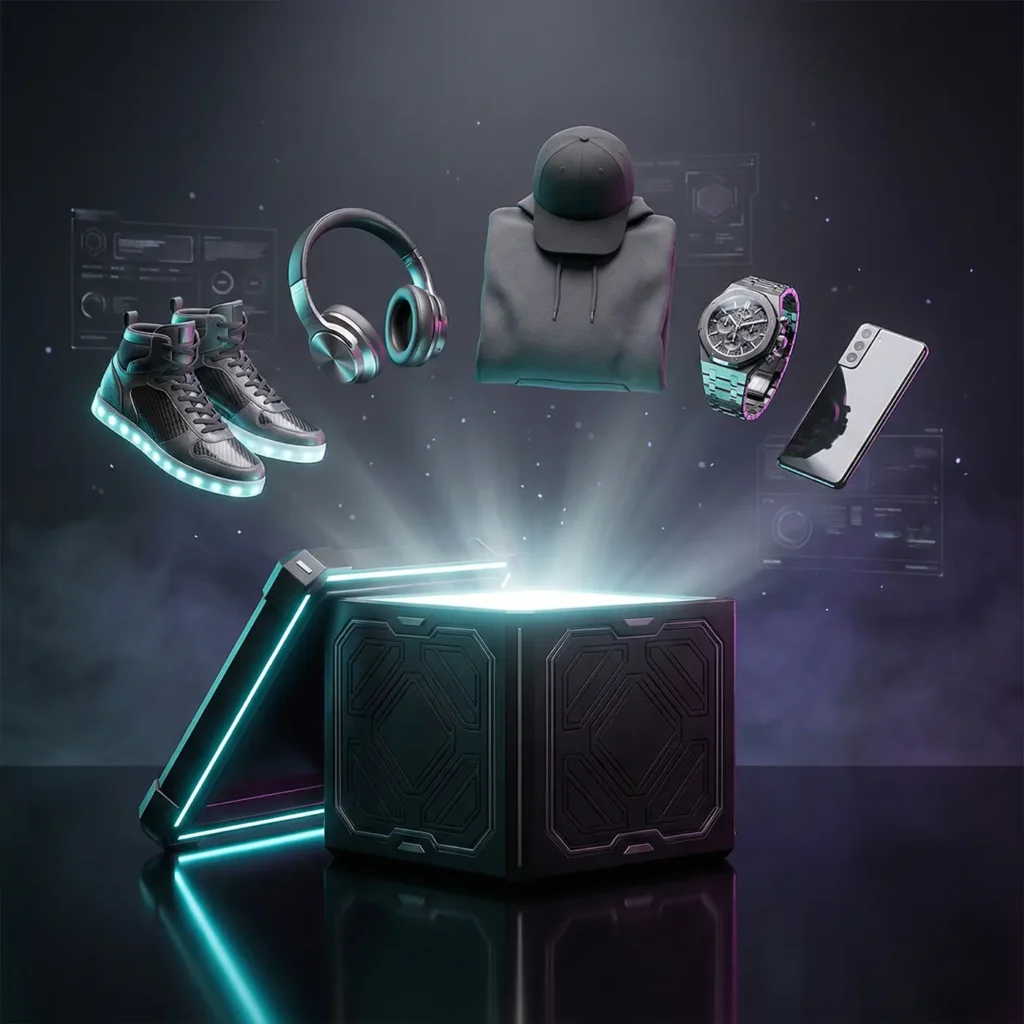
Mystery Box Platforms Enter the Luxury Space
Online mystery box platforms originally focused on streetwear, sneakers, and gaming gear. Nothing particularly luxurious. Sites like JemLit, established in April 2020, built user bases exceeding 1.38 million by offering boxes ranging from $7 to $700 containing electronics, fashion, gaming consoles. Pretty standard stuff for these platforms. But as they matured and looked for ways to attract higher-spending customers, luxury watches started appearing in premium-tier boxes. Attracted attention from collectors who previously dismissed online mystery purchases as gimmicks, though many established collectors still think the whole thing is ridiculous.
LuxDrop specifically curates mystery boxes across luxury streetwear, sneakers, watches, and high-end tech. The platform presents items with clean galleries and straightforward redemption options, feels more like curated e-commerce than typical mystery box services where you’re basically gambling. Rillabox targets the ultra-premium market with boxes themed around super-luxury items including top-tier watches, exotic collectibles, high-ticket electronics. Some boxes priced at $10,000 which seems insane but apparently people buy them.
Platforms publish full item pools upfront and use provably fair reveal systems to demonstrate legitimacy, or at least claim to. JemLit’s system uses a server seed generated by the platform, a client seed chosen by the player, and a unique nonce for each game to ensure fairness. Users can verify results afterward by checking the unhashed server seed, which provides transparency that traditional luxury retail doesn’t offer in the same way. Whether this actually matters to most users is debatable since most people don’t bother verifying anything. Some platforms, such as Hypedrop that is known to offer the best mystery boxes, have embraced this transparency approach, though many collectors still view the entire model with skepticism regardless of technical fairness mechanisms.
Why London Collectors Started Paying Attention
Traditional watch purchasing involves researching models, visiting authorized dealers, comparing prices across retailers. Potentially waiting months for popular references like certain Rolex sports models that have waiting lists stretching years in some cases. Mystery box platforms offer something different, immediate gratification through a gamified purchasing experience that feels nothing like traditional retail. Young professionals in London started experimenting with these platforms as entry points into luxury watch ownership, though established collectors remained skeptical and often vocal about how stupid they think the whole concept is.
The appeal isn’t purely about value, it’s the experience. Mystery boxes tap into the same psychological triggers that make unboxing videos popular on YouTube, where millions of people watch strangers open packages. The anticipation of not knowing what arrives creates excitement that traditional retail transactions lack completely. Some platforms report that luxury watch boxes sell out within minutes of release, demonstrating demand that surprised even the platform operators who weren’t sure anyone would actually pay these prices for random chances.
The Economics Behind Watch Mystery Boxes
Mystery box platforms operate on house edge models similar to casinos, which should tell you something right there. Testing by independent reviewers showed platforms like Rillabox delivering expected values of $18.30 on $20 spends, representing approximately 9% house edge. For luxury watch boxes priced in hundreds or thousands, the edge remains but the potential prize values create compelling propositions for participants willing to accept the odds. Whether accepting those odds is smart or not is a different question entirely.
Platforms acquire watches through various channels. Some partner with authorized dealers for current models, others source from grey market suppliers offering below-retail pricing which is common in the watch industry. Pre-owned pieces come from collectors looking to liquidate holdings quickly, maybe they need cash or just want to move inventory. This sourcing flexibility allows platforms to offer legitimate timepieces while maintaining profit margins, though authentication becomes critical for maintaining platform reputation. One fake Rolex gets through and the whole operation’s credibility is shot.
Conclusion
The UK watch market projects growth from £2.57 billion in 2024 to £4.14 billion by 2033, exhibiting a 4.86% CAGR according to market research firms. Mystery box platforms represent a tiny fraction of this market currently, probably less than 1% if you had to guess. But their appeal to younger demographics positions them at the intersection of luxury retail evolution and digital-native shopping behaviors. Whether established brands eventually embrace or combat this distribution model will shape how it develops over the next five to ten years.
Technology could enable more sophisticated implementations down the road. Blockchain verification for authenticity, augmented reality unboxing experiences, social features where users open boxes simultaneously and can watch each other’s reactions. Secondary markets where users trade unopened boxes could emerge, creating derivative gambling opportunities that regulators would struggle to categorize under existing frameworks. At some point someone’s going to figure out how to make it even more complicated.