
Imagine standing at the exit of Chancery Lane station on a Saturday morning, slightly nervous, with about £6,000 in your head and absolutely no idea which door to walk through. This is how most people arrive in Hatton Garden for the first time. They have read articles, they have looked at Instagram, they have a vague shortlist, and they feel underprepared for a 200-metre street that has been selling engagement rings since the 1830s. If this is you, the first thing to know is that visiting Hatton Garden for the first time is not the test it can feel like. It is a consultation, not an interview. By the end of this article, you will know how the area works, what to bring, what to ask, what to avoid, and exactly how to spend the day so that you leave with confidence rather than confusion.
What Hatton Garden actually is and how the street works
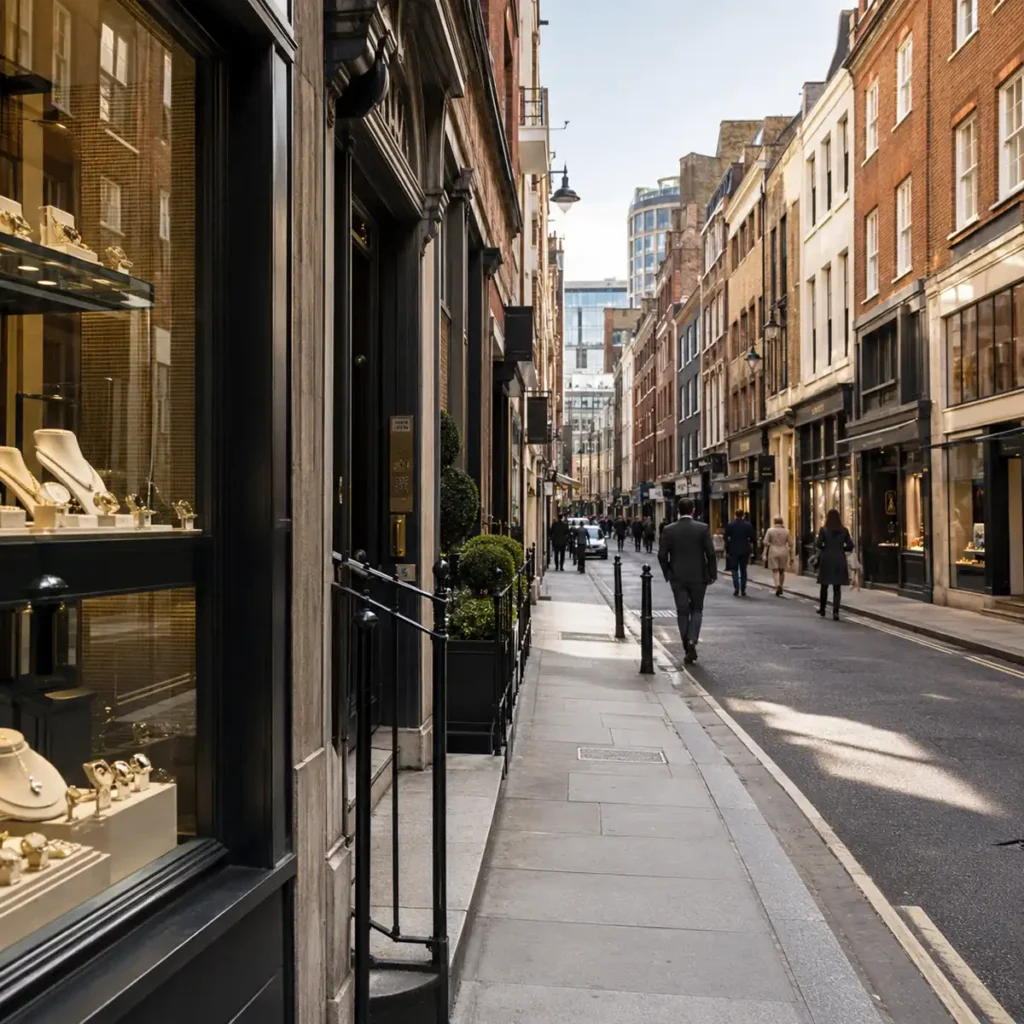
Hatton Garden is a single short street in the EC1N postcode, running roughly north to south between Holborn at the southern end and Clerkenwell Road at the northern end. The whole walkable strip is about 400 metres. There are roughly 60 jewellers along it and in the immediate side streets, ranging from very long-established family workshops to newer specialist houses, with a mix of street-level showrooms and first-floor consultation suites accessed by intercom.
The street has been the centre of London’s diamond and fine jewellery trade since the mid-19th century, and the trade is genuinely concentrated here in a way it is not anywhere else in the UK. Almost every major UK diamond supplier, certified diamond grader, bespoke goldsmith, and specialist jeweller has a Hatton Garden address or works closely with someone who does. The supply chain you would otherwise read about happens within this small area in real time.
What this means for a buyer is that the comparison shopping you would do online over weeks can be done in person over an afternoon. You can walk from one showroom to another in under two minutes. You can see the same specification of diamond from three different sellers in 90 minutes. You can feel how different consultants treat you and decide which conversation you trust.
Before you arrive, what to prepare
A small amount of preparation transforms the first visit experience and is worth doing the evening before.
Set your budget ceiling. This is the most important number you will bring. Decide the absolute maximum you are willing to spend on the ring overall, not just the centre stone. Be honest with yourself, because a good consultant will work to that number, and an unclear budget produces an unclear consultation. If you are nervous about stating a number, just state the number. No reputable jeweller will judge it.
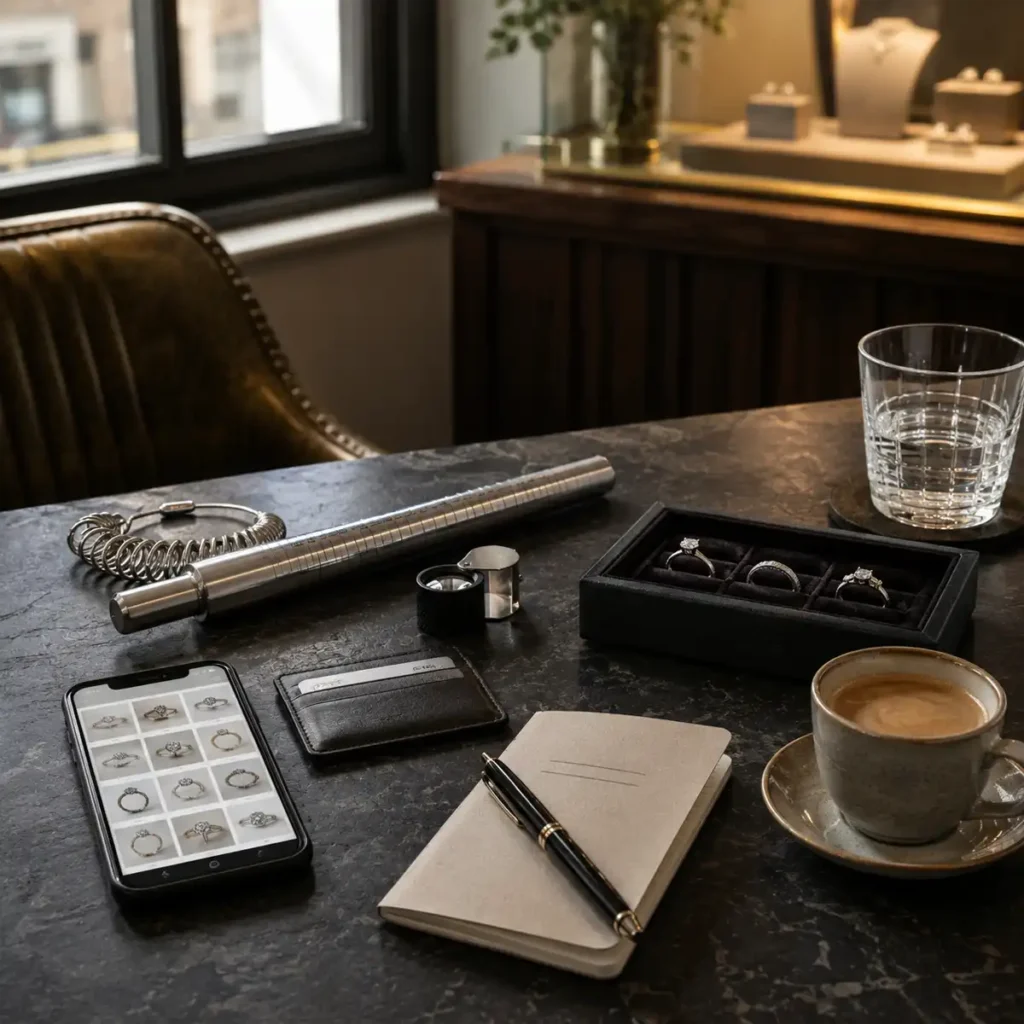
Gather reference images. Save 5 to 10 images of rings that catch your eye to a phone album. They do not need to be perfect matches for what you want. They are starting points for a conversation, and they help the consultant understand your taste in 30 seconds rather than 30 minutes.
Note any deadline. If there is a proposal date in mind, know what it is and how flexible it is. This single piece of information shapes everything else. For more on how bespoke timelines work in practice.
Find out your partner’s ring size if you can. A discreet way is to borrow a ring they wear on the relevant finger when they are out for the day, take it to any jeweller, and have it sized for free. Bring the measurement to the consultation. If you cannot get a size, do not worry. Most rings can be resized after the proposal within reasonable limits.
Decide whether you are visiting alone or with company. There is no right answer. Some buyers focus better alone. Some appreciate a second pair of eyes from a trusted friend or family member. The one combination that rarely works well is bringing the partner you are proposing to, unless the proposal is already discussed and shared decision-making is the agreed-upon approach.
On the day, what to bring and what to wear
Bring identification. Any major jeweller will need a name and contact details before a serious consultation, particularly if you are handling stones above a certain value.
Bring a way to pay a deposit if you choose to commit. Most reputable jewellers accept card payment and bank transfer. Cash for fine jewellery purchases above a low threshold is increasingly unusual and should prompt questions about why a jeweller prefers it.
Bring the reference images on your phone and any sizing information you have gathered.
Wear what you feel comfortable in. There is no dress code. Hatton Garden sees people in suits, in jeans, in workwear, in school-run clothes. The consultant has seen all of them, and they are not judging your outfit. They are listening to your priorities.
Arrive on time. A meaningful first visit is not a 20-minute appointment. Allow 60 to 90 minutes for one consultation, and if you are seeing two or three jewellers in the day, allow half a day total, including a coffee break in between.
How to walk into a showroom without feeling out of place
The single most useful sentence you can say in the first minute of a Hatton Garden consultation is “this is my first visit, I’m here to learn what’s possible.” You have just done three things in one sentence. You have set the consultant’s expectations, you have invited them to teach rather than sell, and you have removed the pressure on yourself to perform expertise you do not yet have.
A good consultant will respond by slowing down, asking what you have in mind in broad terms, and showing you sample rings to react to rather than pressuring you toward a specific stone. Watch for this. If the consultant skips the listening stage and moves straight to product, that tells you something useful about their approach.
You are allowed to ask the most basic questions. What does the certificate mean? What is the difference between platinum and 18ct gold? What does an excellent cut actually look like compared with a very good one? Any consultant who makes you feel foolish for asking these questions has just told you they are not the right consultant for your purchase.
You are allowed to leave without buying. The first visit is for orientation. Many of our happiest clients at Smith and Green made their first visit, went home to think, and came back two or three weeks later to begin the process properly. Nobody should be pressured to commit on the same day, and any showroom that pressures you should be quietly removed from your shortlist.
What good questions to ask in the first consultation
These five questions tell you more about a Hatton Garden jeweller than any other line of enquiry.
Can I see the diamond certificate before I commit, and is the laser inscription visible under magnification? A clear yes, with the consultant immediately reaching for a loupe, is the right response. Hesitation or vague answers are a warning sign.
What is included in the price, and what is extra? You want a written breakdown of stone, setting, metal, sizing, hallmarking, and any aftercare services. Surprise extras at the final invoice are a sign of poor process.
What is your aftercare and resizing policy in the first year and beyond? A reputable Hatton Garden jeweller offers complimentary cleaning, prong checking, and at least one resize in the first year. Some, including Smith and Green, extend this further.
If I want to source the stone separately from the setting, can you accommodate that? A genuine bespoke jeweller will say yes and will explain how the process works. A jeweller who refuses or steers you firmly back to their own inventory may be operating on a different model than the one you assumed.
Can you give me a written quote and an itemised timeline before I commit? The answer should be yes, with the quote arriving by email within 24 hours of the consultation. This document is the basis for your decision and your protection.
Fun fact: Hatton Garden takes its name from Sir Christopher Hatton, Lord Chancellor to Queen Elizabeth I, who acquired the estate from the Bishop of Ely in 1581, and the area was already known for skilled metalwork by the 17th century, more than 200 years before the modern jewellery trade established itself in the 1830s.
What to avoid and the warning signs that matter
Five things should prompt you to step back politely and leave.
Pressure to commit on the day with same-day discount language. A meaningful purchase decision does not need to be made under time pressure invented by the seller. If a discount disappears when you walk out, it was probably never real.
Refusal to show the certificate before you commit. The certificate is the foundation of the purchase. Any seller who delays showing it, or who has only photocopies and no originals, has just told you something important.
Cash-only or significant cash-preferred arrangements above a low threshold. This is not how reputable Hatton Garden trade operates.
Vague or evasive answers to the five questions above. You do not need to be aggressive about it. You can simply note the evasion, finish the conversation politely, and continue your visit elsewhere.
The absence of a physical showroom. There are legitimate first-floor consultation suites in Hatton Garden, and they are not a warning sign in themselves. But a seller with no fixed business address you can return to is a different proposition entirely and should be approached with much more caution.
How to use your day: the practical schedule
A good Hatton Garden first visit looks something like this.
Arrive at Chancery Lane station around 10:30 in the morning. Walk north along the street, getting a sense of the showrooms, the side streets like Greville Street and Leather Lane, and which doors feel welcoming.
Visit two or three jewellers, no more. Each consultation is 60 to 90 minutes if done properly. Three is the maximum you can absorb in a day without your impressions blurring together.
Take a coffee break between visits. There are good coffee spots on Leather Lane and around Bleeding Heart Yard. Sit down, look at your notes, and let the conversations settle. The 20-minute break between visits is when you actually process what you have seen.
Leave the area without committing if you are not ready. The walk back to Farringdon Elizabeth line or Chancery Lane is the moment to ask yourself which consultation you trust. You can always return.
To understand why Hatton Garden differs as a buying environment from a high-street chain.
Where Smith and Green sit on first visits
We see first-time visitors to Hatton Garden almost every working day. Our consultants are briefed to recognise the slight nervousness that comes with the first visit and to slow the conversation down accordingly. There is no minimum spend to book a consultation. There is no pressure to commit on the day. We will show you certificates, stones under magnification, sample rings in your finger size, and CAD renders of what your finished piece might look like, and you can leave with all of that to think about. Our showroom at 9 Hatton Garden is street-level and step-free, the consultation desks are at the back away from window distractions, and the tea is good. Bring questions. There is no such thing as a question that is too basic. The first visit is yours to use however you find most helpful.
Conclusion
Visiting Hatton Garden for the first time is a learning experience, not a test. Prepare a budget, gather reference images, find out a ring size if you can, and arrive on time. Walk into the first showroom and say it is your first visit. Ask the five questions, watch how the consultant responds, and use the coffee break between consultations to absorb what you have heard. Visit two or three jewellers, no more. Do not commit on the same day unless you arrive having already made the decision. Leave with written quotes, a clear sense of timeline, and the contact details of the consultant you most trusted. A second visit, made after a week of reflection, is where the actual decisions usually happen. Book your first appointment at a time of day when you will not be rushed, treat it as a conversation, and you will leave Hatton Garden knowing more than you imagined possible about what your engagement ring will actually be.


