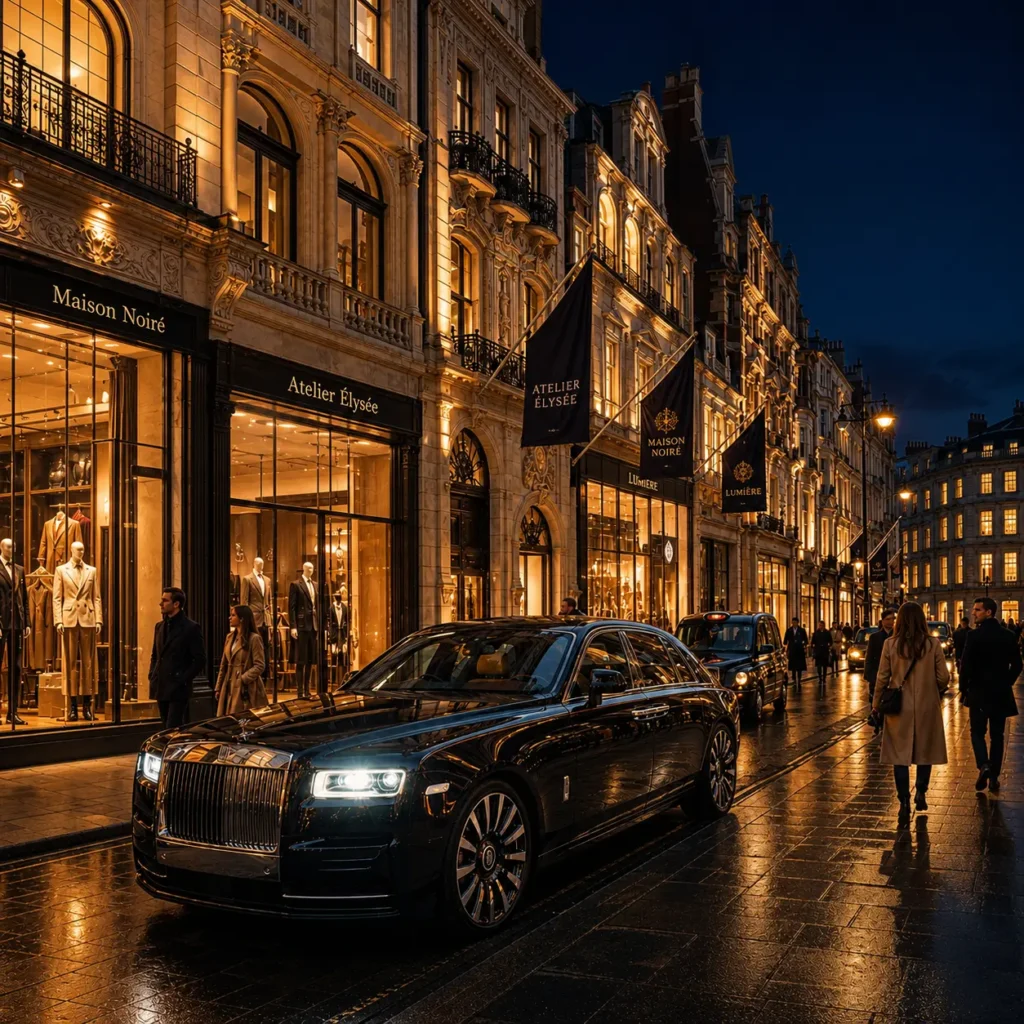
Six licensed casinos operate inside Mayfair, and the two furthest apart are a 9 minute walk from one another. Measured from Les Ambassadeurs on Hamilton Place to the Palm Beach on Berkeley Street, the entire estate sits within 600 metres. Nothing on the street tells you that.
The rooms occupy townhouses and hotel wings across Mayfair, in W1, within the City of Westminster, and most carry no frontage a passer-by would read as a gaming floor. That density is the answer to the question most visitors arrive with, which is where the Mayfair casinos actually are. Our directory lists every one of them under casinos in Mayfair.
The second question has a stranger answer. The membership requirement that defined British casino-going for four decades was abolished in 2007. Almost every Mayfair casino kept it anyway, and the reason has nothing to do with the law.
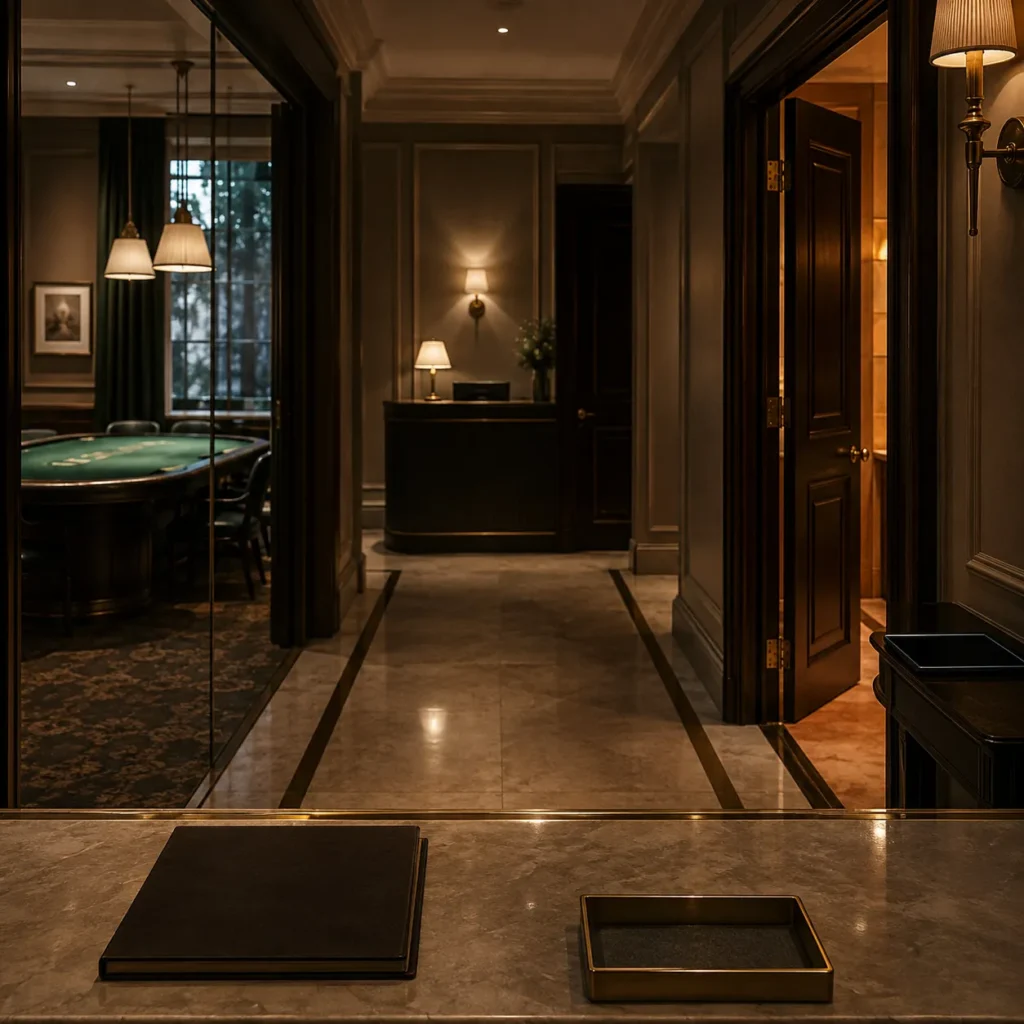
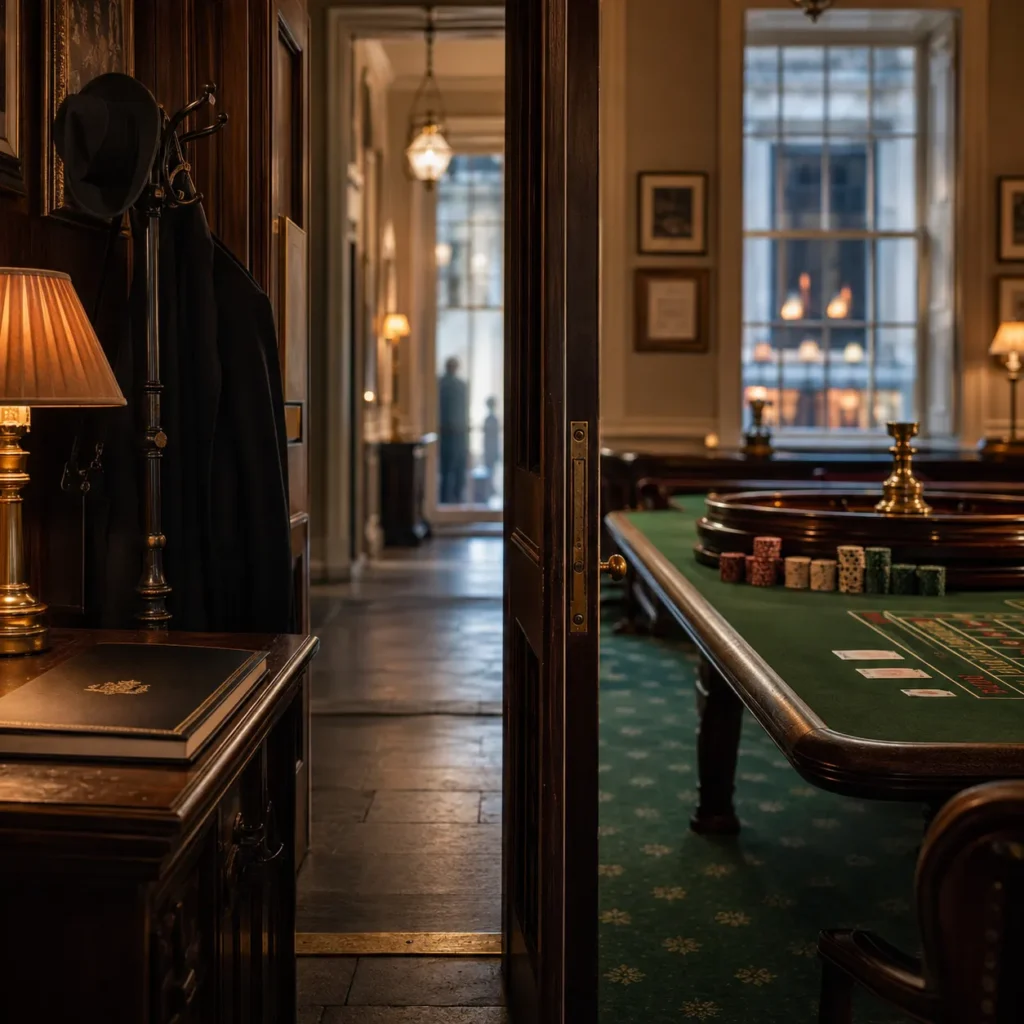
Where the six Mayfair casinos actually sit
The six licensed casinos in Mayfair are Crown London Aspinalls at 27 to 28 Curzon Street, Les Ambassadeurs at 5 Hamilton Place, the Park Lane Club at 22 Park Lane, the Metropolitan Casino at 14 Old Park Lane, the Colony Club at 24 Hertford Street and the Palm Beach Casino at 30 Berkeley Street.
The cluster runs along the southern and western edges of the district. Crown London Aspinalls is roughly 7 minutes on foot from Green Park station. Les Ambassadeurs is about 5 minutes from Hyde Park Corner. Four of the six sit on or immediately off Park Lane and Curzon Street, which is why an evening covering three houses is a walk rather than a series of car journeys.
Two further rooms are routinely counted with them and should not be. The Sportsman at 16 Old Quebec Street stands near Marble Arch. The Park Tower Casino at 101 Knightsbridge sits across the park in Knightsbridge and Belgravia. Both are licensed London rooms. Neither is a Mayfair casino, and neither belongs to the West End cluster the district is known for.
How the door actually works
Arrival is the simplest stage and the one most people get wrong. You do not need to have joined 24 hours in advance and have not needed to since 2007, so turning up unannounced is permitted at every Mayfair casino. Whether it is wise is a separate matter, and on a Friday it usually is not.
Registration follows. You hand over photo identification, the house records your details, and you are issued a card or added to the list at the desk. On a quiet Tuesday this takes a few minutes. In the third week of June, when the racing crowd is in town, it takes considerably longer.
Then the buy-in, which is where the anti money laundering obligations become visible. The scale of the questions rises with the size of the transaction rather than with the hour of the night. Source of funds enquiries at the higher end are routine and are not a judgement on the person being asked.
The final stage is the floor, where a host generally finds you rather than the reverse. In the smaller rooms that introduction is the entire product, and it is the part no amount of technology has managed to copy.
Dress, identification and what an evening costs
There is no single published Mayfair casino dress code, but the standard is consistent and it is enforced. Smart dress throughout. Jackets expected in the evening in the older rooms. Trainers and sportswear turned away at the door rather than on the floor.
Photography is prohibited in every Mayfair casino. It is the one rule applied identically everywhere, and the one most likely to end an evening early for someone who has not read it.
Carry photo identification even where membership is not required. Entry itself is generally free once you are registered. The cost sits in the table, and the honest position is that minimums move more by night than by house. A Tuesday in February and a Friday in June are not the same room, on the same table, at the same price.
Several houses run restaurants that would hold their own on the street outside, and for a meaningful share of members the dining is the actual reason for attending. On a single visit, the kitchen is a more reliable measure of a house than the floor is.
What membership means now the law no longer requires it
Mayfair casino membership is now a commercial filter rather than a legal one. The Gambling Act 2005 removed the 24 hour rule when it took effect in 2007, but the houses retained tiered membership because it lets them decide who is in the building on any given night.
In practice the tiers run from a registration at the desk with identification, which anyone can complete, up to an invited membership carrying private rooms, dining and a host who knows your name. The second tier is not advertised and is not applied for in any conventional sense.
That structure is why the district’s gaming rooms sit closer in character to its members clubs than to casinos in the American sense. They were built by people who thought of themselves as running clubs that happened to have tables, rather than casinos that happened to have members.
The floor and the account are now separate businesses
The scale has inverted, and the Gambling Commission’s own quarterly figures show it plainly. In the quarter covering October to December 2025, remote casino alone produced £1.49 billion in gross gambling yield, while every land-based sector in Great Britain combined, meaning arcades, betting shops, bingo and casinos together, produced £1.2 billion.
The supervision has diverged just as sharply. Since 28 February 2025, online operators have had to run a financial vulnerability check once a customer’s net spend passes £150 in a rolling 30 days. Maximum stakes per spin on online slots were capped at £5 from 9 April 2025, and at £2 for players aged 18 to 24 from 21 May 2025.
Comparison directories covering online casinos UK organise a market policed remotely, where those checks arrive as forms and document uploads. A Mayfair casino carries the same obligations, but discharges them through a doorman, a host and a pit boss who can see the person in front of them.
An online account sells availability, while a Mayfair casino sells a room, a table and the people sitting around it. The two are not really competitors, and the second thing has proved much harder to reproduce than anyone in 2007 expected.
The private rooms are not about status
The common assumption is that the private tables in this district exist to flatter the people using them. The actual reason is arithmetic. Stakes played away from the main floor would distort the atmosphere of a public room, and the houses separate them to protect the public room rather than the player.
The second reason is a condition of attendance. A proportion of the players using those tables will not enter a building where they can be watched, and a house either accommodates that or loses them to Monte Carlo, Macau or Singapore.
The outcome has no equivalent online and none in Nevada either. A Las Vegas high-limit salon still sits inside a building that thousands of people cross in a day. A Mayfair casino can run a private table in a townhouse holding fewer than 50 people that evening, which is the whole of the difference.
Access is by invitation or by arrangement with a host, and limits are set case by case rather than published. Asking at the desk on a first visit will not produce one.
The decision a first visit to a Mayfair casino turns on is which room, not whether to go. For a floor with movement, a mixed crowd and a wider table spread, the Park Lane addresses handle a busy evening best. For the townhouse version, a small room and a host who will remember you next time, Curzon Street and Hertford Street are the ones to telephone.
Ring ahead either way. Ask what the dress standard is that evening and whether the room you want is open, because several houses run their private tables only on certain nights. Set a figure before you arrive and treat it as fixed. Free and confidential support is available through BeGambleAware.