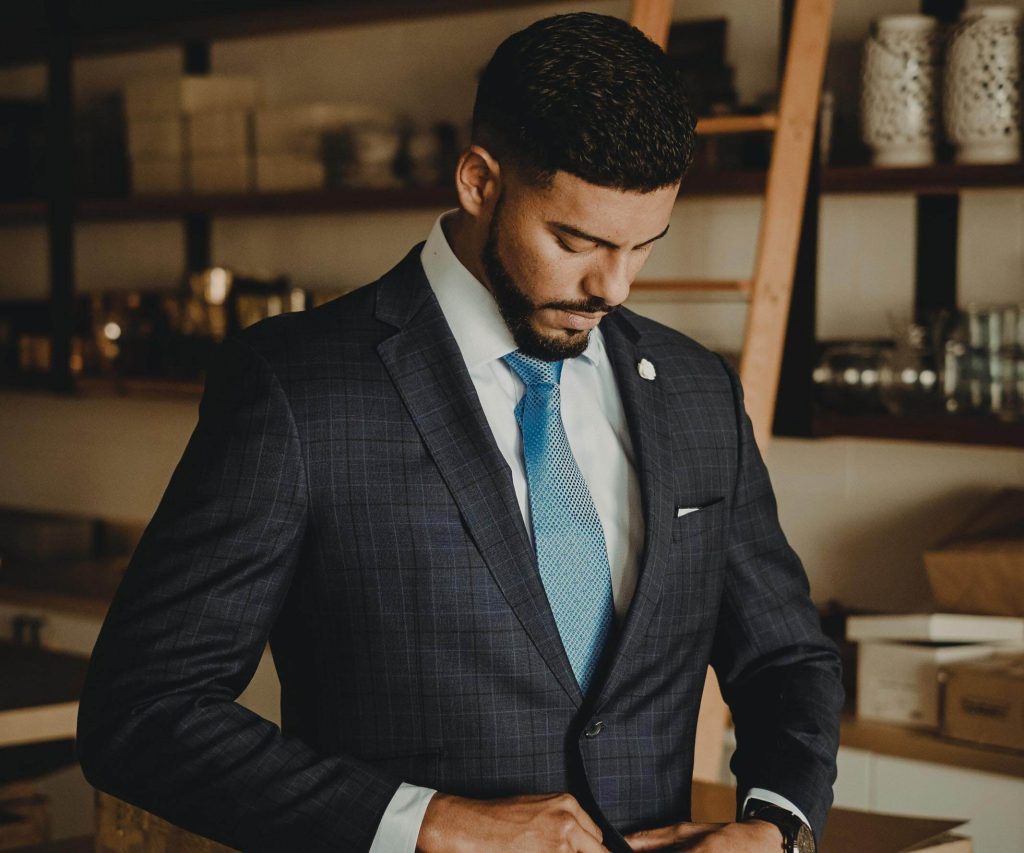
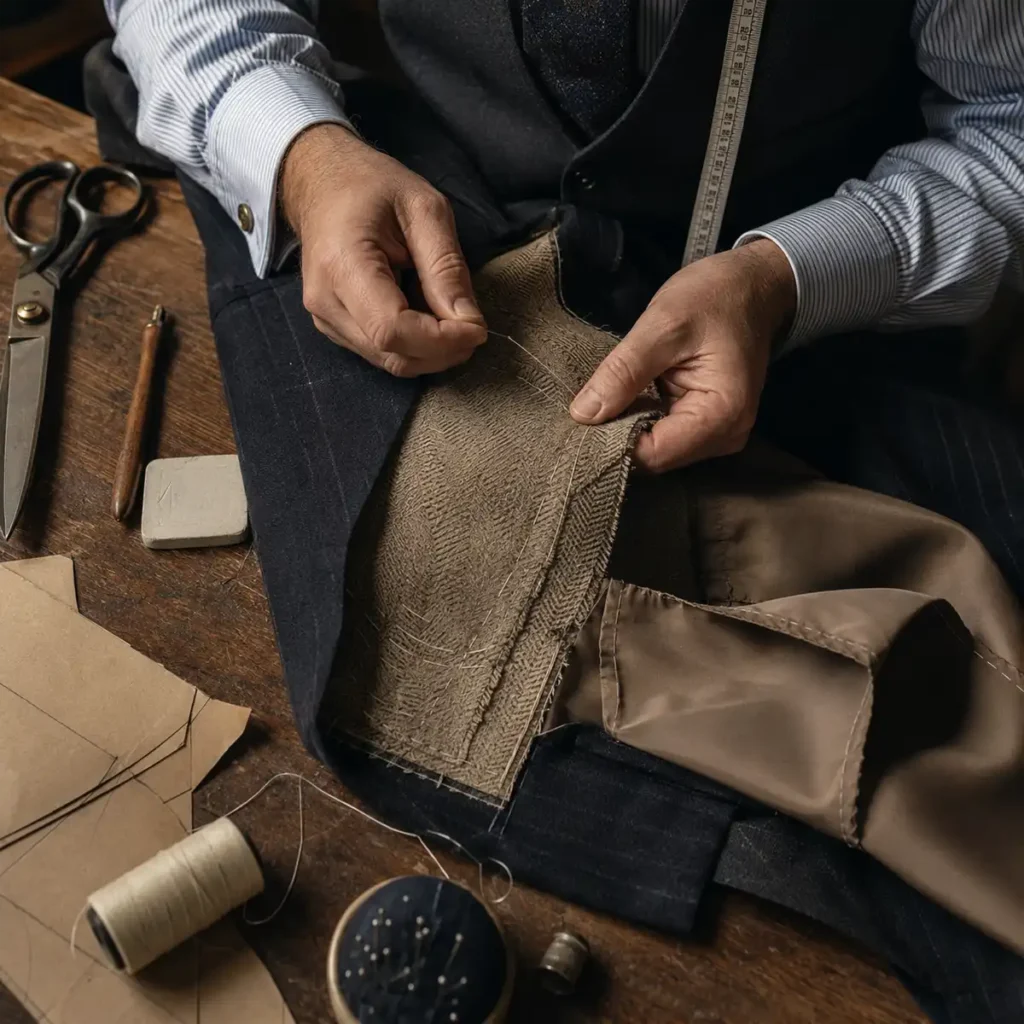
The chest canvas in a bespoke jacket is invisible. Sewn between the outer shell and the lining, it shapes the front of the garment across years of wear, accommodating the contours of the body that made it rather than imposing a standard form upon it. This distinction between a garment that is moulded to a person and one that approximates a size is what bespoke tailoring on Savile Row has always meant, and it remains the clearest explanation of why a commission here costs what it does and takes as long as it takes. A fused interlining can be pressed into shape in a factory in under a minute. A floating canvas is hand-padded by a coat-maker over several hours. The difference is not visible in a photograph. It is felt across a decade.
Savile Row runs north to south through W1S, a short walk from Bond Street station and parallel to the galleries and jewellers of Cork Street. The Savile Row Bespoke Association, which represents houses committed to full bespoke construction on the Row, has maintained a formal definition since 2004: a garment must be cut and sewn on the Row using a personal paper pattern derived from the client’s measurements to qualify. That definition matters when you are deciding which door to open.
As of spring 2025, most Savile Row houses operate between 14 and 20 weeks of forward booking, with cloth mills including Holland and Sherry and Dugdale Brothers carrying updated autumn-winter collections into the new season. First-time clients often underestimate this lead time, then find the commission they wanted in January arrives in May. Book earlier than you think you need to.
What Does Bespoke Mean on Savile Row
The term bespoke comes from the cloth being bespoken, claimed and set aside for a specific client. On the Row today, it carries a precise technical meaning. A bespoke commission produces a paper pattern unique to your body that is retained by the house for future orders. Every element of the coat, the shoulder, the chest, the sleeve pitch, the pocket height, is determined by measurements taken from your body, cross-referenced against the house’s cutting tradition, and adjusted through a minimum of two fittings before the garment is completed. Made-to-measure, by contrast, adjusts an existing block pattern. The starting point differs fundamentally.
A bespoke commission on Savile Row typically requires between 50 and 80 hours of skilled labour spread across a working period of 12 to 16 weeks. Some houses handling formal court dress or ceremonial orders extend that window further. The price reflects those hours, not the cloth alone.
How to Choose a Savile Row House
Eleven houses currently hold Savile Row Bespoke Association membership, each carrying a distinct character rooted in its history and clientele. Huntsman at 11 Savile Row is known for its single-button silhouette and equestrian heritage. Anderson and Sheppard, now operating from Old Burlington Street, cuts with a softer chest and a drape associated with its Hollywood clients of the 1930s and 1940s. Norton and Sons, founded in 1821 and among the oldest firms on the Row, produces understated English tailoring at a price positioned more accessibly than the headline houses. Gieves and Hawkes at 1 Savile Row holds a royal warrant and a history of military dress that gives its civilian work a particular authority.
The right way to choose is not by reputation alone. Most houses welcome an introductory consultation before a commission is placed, and that meeting tells you more than any written account. How does the cutter explain the process? What does the house recommend for a first commission? Does the cloth room feel like a working archive or a retail display? These signals are reliable.
The Fitting Stages Explained
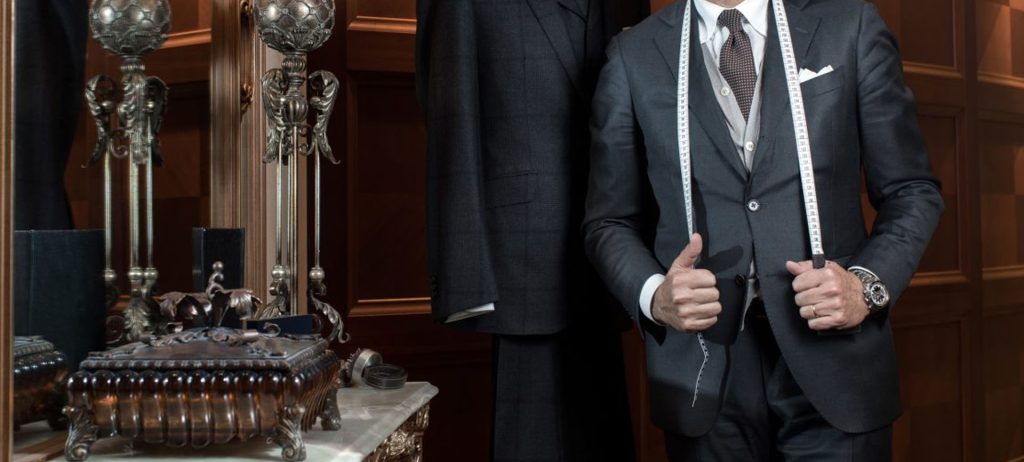
A bespoke commission proceeds through a structured sequence. The first meeting is the cutting appointment: the cutter takes between 20 and 30 measurements, notes posture, observes where the client holds tension, and makes a written account of the house’s recommendations for cloth weight and construction. At this meeting, the cloth is selected from the house’s available mill swatch books.
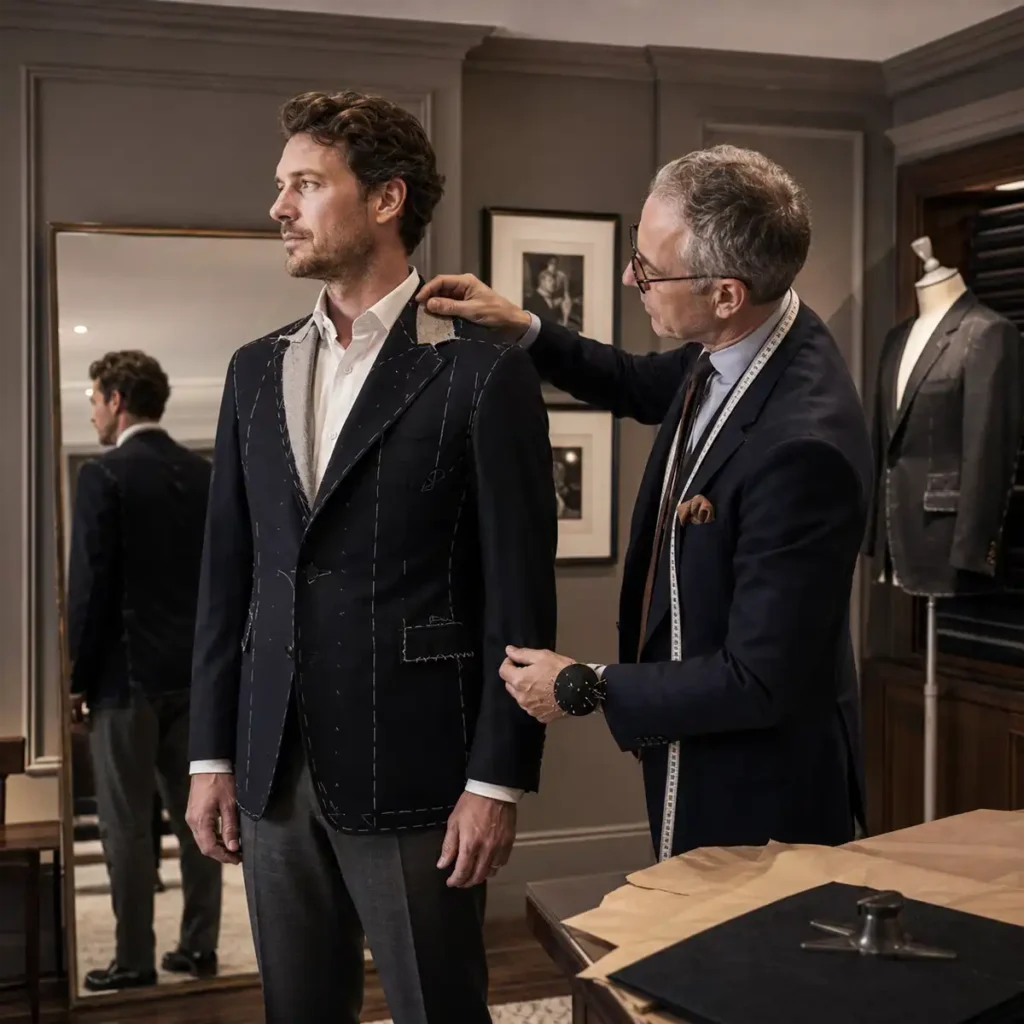
The forward fit, sometimes called the basting, arrives six to eight weeks later. The garment exists at this stage in temporary form, loosely tacked in the customer’s cloth, with chalk marks indicating proposed adjustments. The coat-maker who constructed it is typically present because the cutter’s instructions and the coat-maker’s execution are discussed in the same conversation. Shoulder height, chest canvas position, sleeve pitch, and collar roll are assessed and corrected at this stage. A client should arrive wearing the shirt and shoes they intend to wear with the finished garment.
A second fitting, sometimes called a coat progress, follows four to six weeks later. The garment is now substantially complete, with the lining in place and the pockets set. Final adjustments at this stage are typically minor. The completed garment is collected or delivered after a final pressing.
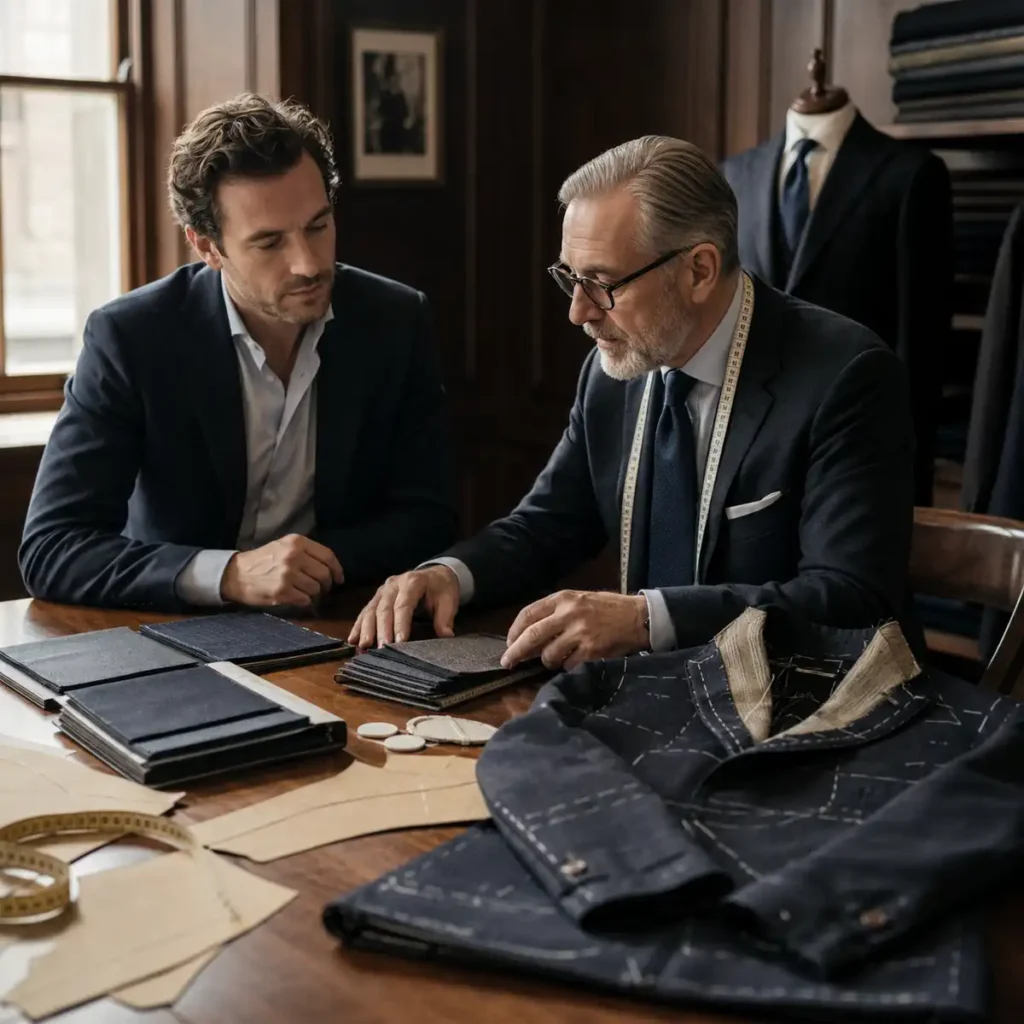
What to Discuss at the First Meeting
The briefing conversation determines the success of a commission more reliably than the fabric selection. A cutter needs to know three things before chalk touches cloth: occasion, silhouette preference, and cloth weight.
Occasion means the context in which the garment will be worn most often. A city suit worn to board meetings requires a different chest structure and lapel width than a country tweed intended for outdoor wear, and different again from formal morning dress ordered for a significant event. Be specific. If the suit will be worn primarily with tieless shirts in a creative environment, say so.
Silhouette preference is a subtler conversation. Most clients arrive wanting something well-cut without being able to say more. What the cutter needs is whether you lean toward a structured English shoulder or a softer rolled one, whether you want open or closed quarters at the front, and whether you prefer a suppressed waist or a straighter hang. References help: bring photographs if you have them.
Cloth weight matters practically. A 280-gramme cloth in a tropical finish travels with less creasing but provides less drape. A 340-gramme fresco breathes better in heated offices than a closer-woven worsted at the same weight.
What to Ask and What Pricing Looks Like
A city suit commission will cost, in the current Mayfair market, from approximately 4,500 pounds at houses positioned at the more accessible end of the range, to over 7,000 pounds at houses with the longest order books. Formal and ceremonial dress runs considerably higher. Payment is typically requested in 2 stages: a deposit at the first meeting and the balance on collection. Houses do not, as a rule, publish their prices; requesting a written estimate at the first meeting is both normal and sensible.
Ask the house explicitly whether your personal pattern will be retained. Most bespoke houses keep patterns indefinitely, which means a second commission can be produced more quickly, with fewer fittings, and to a higher level of precision because the cutter already has a starting point calibrated to your body. That retained pattern is, in one sense, the most durable product of the relationship.
Fun fact: The chest canvas technique in Savile Row bespoke tailoring traces directly to the Neapolitan tradition of unstructured construction, adapted by English cutters in the late 19th century into the firmer canvassed chest that remains the Row’s hallmark today, a lineage that crosses two national tailoring cultures and three centuries of adjustment.
Timing a Savile Row Commission Correctly
The Row absorbs its most significant orders in the first quarter of each year, when clients planning spring and summer wardrobes begin their commissions. Autumn commissions for winter-weight cloth follow a similar rhythm. If you require a completed garment for a specific event, work backwards by at least 18 weeks from the date required and contact the house before that window closes. Many houses can accommodate international clients across 2 fitting visits to London, timing each to coincide with planned travel.
Planning the Commission
Contact the house directly by telephone or email to request an introductory appointment. Most cutters confirm availability within 2 to 3 days. Come to the first meeting having thought clearly about the occasion and silhouette. Arrive wearing the footwear you intend to wear with the finished garment. If you are commissioning for a specific event with a fixed date, state that date at the first meeting. The quality of a Savile Row commission depends less on the house’s reputation than on the clarity of what you bring to that first conversation. The cutter needs information to cut well. Give it to them, and the rest follows.