Architecture and mathematics describe the same thing from positions so different that practitioners of each discipline frequently fail to communicate with the other. The Cork Street gallery system and the auction rooms of Sotheby’s on New Bond Street occupy a comparably adjacent territory. Buying fine art in Mayfair can mean acquiring a canvas at a public sale where the bidding process is transparent, and the estimate is published in advance, or purchasing privately through a dealer who holds the work outright, where the transaction is quiet, the provenance conversation is longer, and the price is a matter of agreement rather than competition. Both are available within a short walk of Bond Street station. Understanding which suits the specific acquisition begins with understanding what each one actually provides.
The provenance of a work, its ownership history from the point of creation to the present, is the single most important document in any significant art acquisition. In the current Mayfair market, the conversation around provenance has become more structurally rigorous than it was 20 years ago. The Art Loss Register, the TEFAF provenance research standards, and the 2024 revisions to guidance from the British Art Market Federation have together raised the baseline expectation for what a reputable dealer or auction house provides before a sale completes. A buyer who understands these standards is a better buyer.
The Structure of the Mayfair Art Market
Mayfair’s fine art market divides into 3 primary channels. First: public auction at Christie’s on King Street, Sotheby’s on New Bond Street, Bonhams on New Bond Street, and Phillips across its Mayfair presence. Second: private sale through dealer galleries on Cork Street, Bruton Street, Albemarle Street, and the surrounding area. Third: direct acquisition from a gallery representing a living artist. Each channel carries different price discovery mechanics, different documentation standards, and different degrees of market transparency. A buyer who understands the channel before entering it makes a materially better decision than one who arrives at the auction room having only ever bought privately, or vice versa.
Public Auctions and How to Use Them
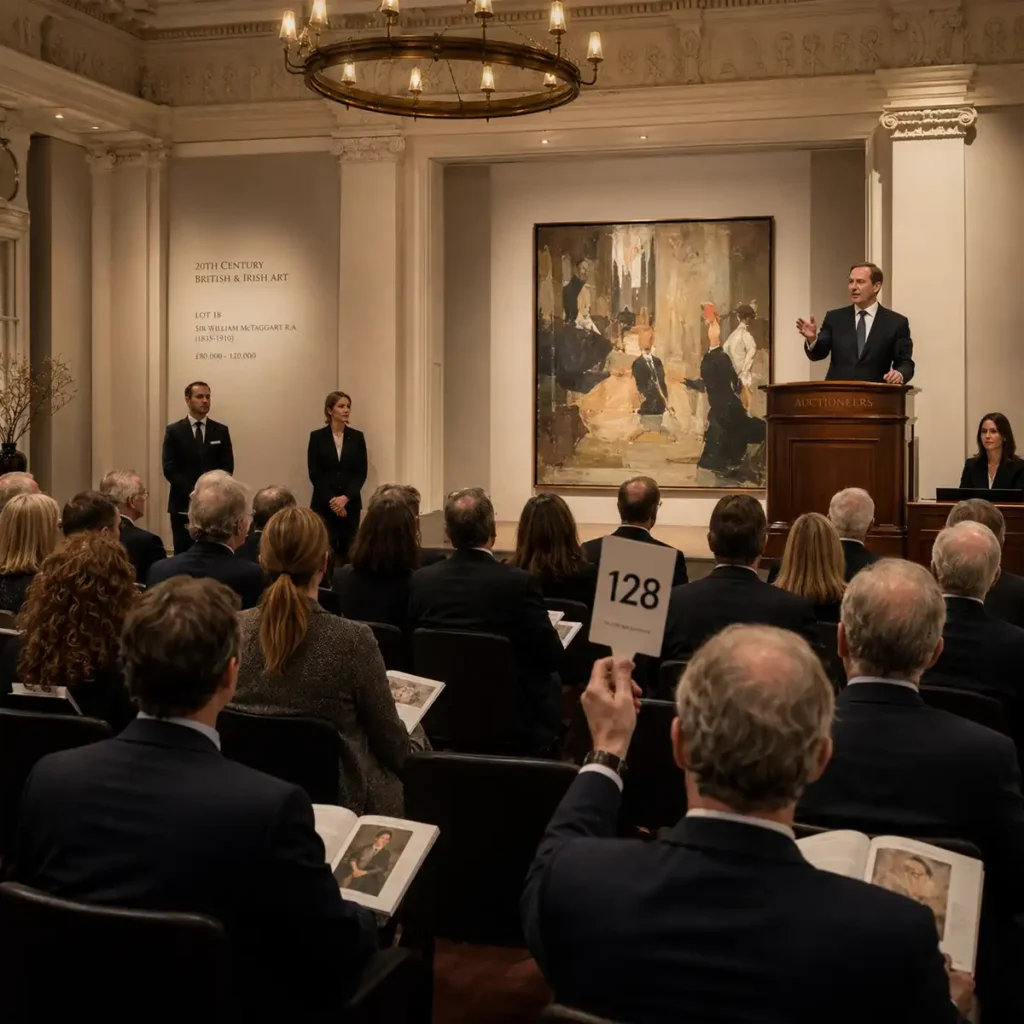
Sotheby’s has occupied its New Bond Street address since 1917. Bonhams moved its primary London operation to New Bond Street in the early 2000s. Phillips, which handles contemporary and modern work with a commercial intelligence that positions it somewhat differently from its older neighbours, maintains a Mayfair presence as part of a global operation. The public auction process follows a consistent arc: the house publishes a catalogue with a pre-sale estimate; viewings are held during the week before the sale; registered bidders participate in the room, by telephone, or through the online platform; and the hammer price is the binding price.
A buyer’s premium is added to the hammer price on completion. At the main Mayfair houses, this typically runs between 20 and 26 percent depending on the lot value and sale category. Understanding this addition before the hammer falls is elementary. A lot estimated at 50,000 pounds that hammers at 55,000 pounds costs a buyer approximately 65,000 to 68,000 pounds after premium and VAT on the premium. The full cost of participation must be calculated before the paddle goes up, not during the bidding.
Private Sales and Gallery Acquisition
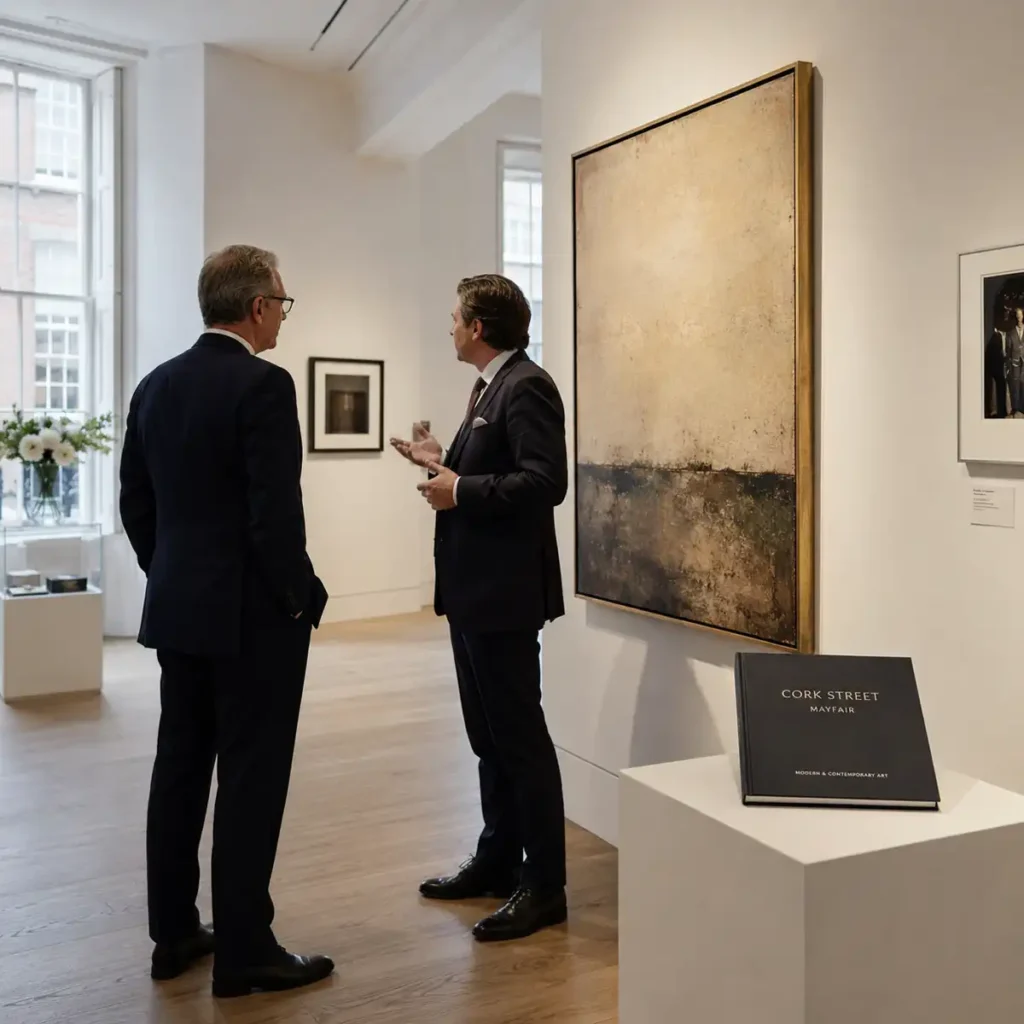
A private sale through a Mayfair dealer gallery removes the auction theatre. The price is asked rather than bid. The provenance conversation happens during the viewing rather than in a catalogue note. The condition report is available before any decision is required. Private sales through established Mayfair dealers carry the advantage of the dealer’s attribution endorsement: a gallery that stands professionally behind a work’s authenticity takes a genuine risk in doing so, which provides a quality assurance that an auction estimate cannot replicate.
The principal galleries for private sale acquisition in Mayfair include Gagosian at its King Street and Grosvenor Hill spaces, Hauser and Wirth on Savile Row, Richard Green on New Bond Street for 19th and early 20th-century British and European work, and Marlborough on Albemarle Street. Each operates a different specialisation. Describing the period, medium, and approximate budget when making first contact allows the gallery team to advise whether their current programme or stock is relevant to the enquiry.
Fun fact: The Mayor Gallery on Cork Street, which opened in 1925, was the first gallery on the street to exhibit work by both English and French painters, establishing the Cork Street model of cross-national commercial gallery practice that has defined London’s commercial art market for a century.
Due Diligence Before Any Significant Purchase
The due diligence sequence for an art acquisition in Mayfair is consistent regardless of channel. Request the full provenance documentation for the work: the ownership history from the artist or point of original sale to the present. Gaps in provenance spanning the period 1933 to 1945 require specific and careful investigation; this is not a negotiating position but a factual standard in the current market. Search the Art Loss Register, which maintains a database of confirmed stolen and looted works; a search costs a modest fee and represents a minimum standard for any purchase of substance.
Obtain a condition report from a conservator independent of the vendor. Most major Mayfair auction houses and galleries can recommend independent conservators; a report from the selling party’s appointed specialist is useful but does not replace an independent assessment. For works by living artists, contact the artist’s studio or foundation directly to confirm the work’s authenticity. For historical works, the relevant scholarly catalogue raisonne governs attribution, and a specialist in the relevant period can advise on its standing.
The Gallery Preview Circuit and Art Fair Season
Frieze Masters, held in Regent’s Park each October, draws a concentration of old master and modern dealers from across Europe and North America that represents the most significant single gathering of this market in London. The 2025 edition is positioned as the 13th year of the fair’s Mayfair adjacency, and the Cork Street gallery circuit typically organises preview openings in the preceding week. These previews are open to gallery contacts and new introductions; attending them provides access to works before the fair crowds arrive and before dealer attention is distributed. An introduction to a gallery director by telephone or email in advance of the preview week is both normal practice and welcome.
TEFAF Mayfair, the London edition of the European Fine Art Fair, holds its presentation across Mayfair locations and shares the cultural calendar with Frieze Masters, creating a concentrated art-buying season in October that few other cities match. Both fairs reward preparation: knowing the specialisation of the dealers you intend to visit before arriving at a preview produces a more productive visit than arriving without a specific brief.