
In London, driving rarely means a smooth cruise. With dense traffic, stop-and-go motion, and short commutes, your car’s components — especially the catalytic converter — face unique pressure. This underbody part might be out of sight, but neglecting it could cost you hundreds in repairs and even lead to MOT failure. Understanding how city driving affects your catalytic converter is essential for keeping your vehicle roadworthy and eco-friendly.
Why Your Catalytic Converter Matters
The catalytic converter is a critical part of your vehicle’s emission control system. Its job is to reduce harmful pollutants like carbon monoxide and nitrogen oxides, converting them into safer gases before they’re released into the atmosphere. Positioned between the engine and the tailpipe, it operates under high temperatures to function correctly.
“A properly functioning catalytic converter is essential not just for emissions, but also for engine performance and fuel efficiency,” explains Lisa Fenn, an engineer with the Institute of the Motor Industry.
When this component fails, your car may consume more fuel, emit more pollution, and struggle to pass emissions tests.
The Hidden Cost of Stop-and-Go Traffic
City driving might feel slow, but the stress it places on your engine is anything but light. The most common issues affecting catalytic converters in London include:
- Low Operating Temperatures
Catalytic converters need heat (above 400°C) to work properly. Short trips and frequent stops prevent the system from reaching and maintaining that temperature. - Carbon Build-Up
Slow speeds and engine idling lead to incomplete fuel combustion. That means more carbon deposits inside the converter, which over time can block airflow and damage its structure. - Increased Fuel Residue
Excess unburned fuel entering the exhaust system contributes to overheating and can melt the internal honeycomb of the converter.
Practical Tips for Long-Term Converter Health
1. Extend Your Drives When Possible
Taking your car for a longer drive (at least 20–30 minutes on open roads) once a week helps the catalytic converter reach and maintain its optimal operating temperature. This helps burn off carbon deposits and keeps the exhaust system clear.
2. Avoid Prolonged Idling in Traffic
Idling increases emissions and adds unnecessary fuel vapour to the exhaust system. If you’re waiting more than 60 seconds, switch off the engine when safe to do so.
● Use High-Quality Fuel and Stick to Regular Oil Changes
Premium fuels often contain additives that keep your engine cleaner. Pair this with timely oil changes to reduce the risk of contamination reaching the exhaust system.
● Address Warning Lights Immediately
A flashing check engine light often signals problems with the emissions system, such as a failing oxygen sensor or a blocked converter. Prompt diagnostics can prevent further damage.
Comparing How City vs. Motorway Driving Affects the Catalytic Converter
| Driving Condition | Average Trip Length | Operating Temperature Reached | Risk of Carbon Build-Up | Average Converter Lifespan |
| Urban (London) | 5–15 minutes | Often too low | High | 60,000–80,000 miles |
| Mixed Use | 15–30 minutes | Usually sufficient | Medium | 80,000–100,000 miles |
| Motorway | 30+ minutes | Consistently optimal | Low | 100,000–120,000 miles |
“City conditions shorten the lifespan of a catalytic converter significantly,” says automotive emissions specialist Paul Ridgway. “The stop-start nature and lower speeds don’t allow the system to stay clean and hot.”
Real-World Data on Emission Failures
According to 2024 DVSA MOT data, emissions-related failures remain a top concern for urban drivers:
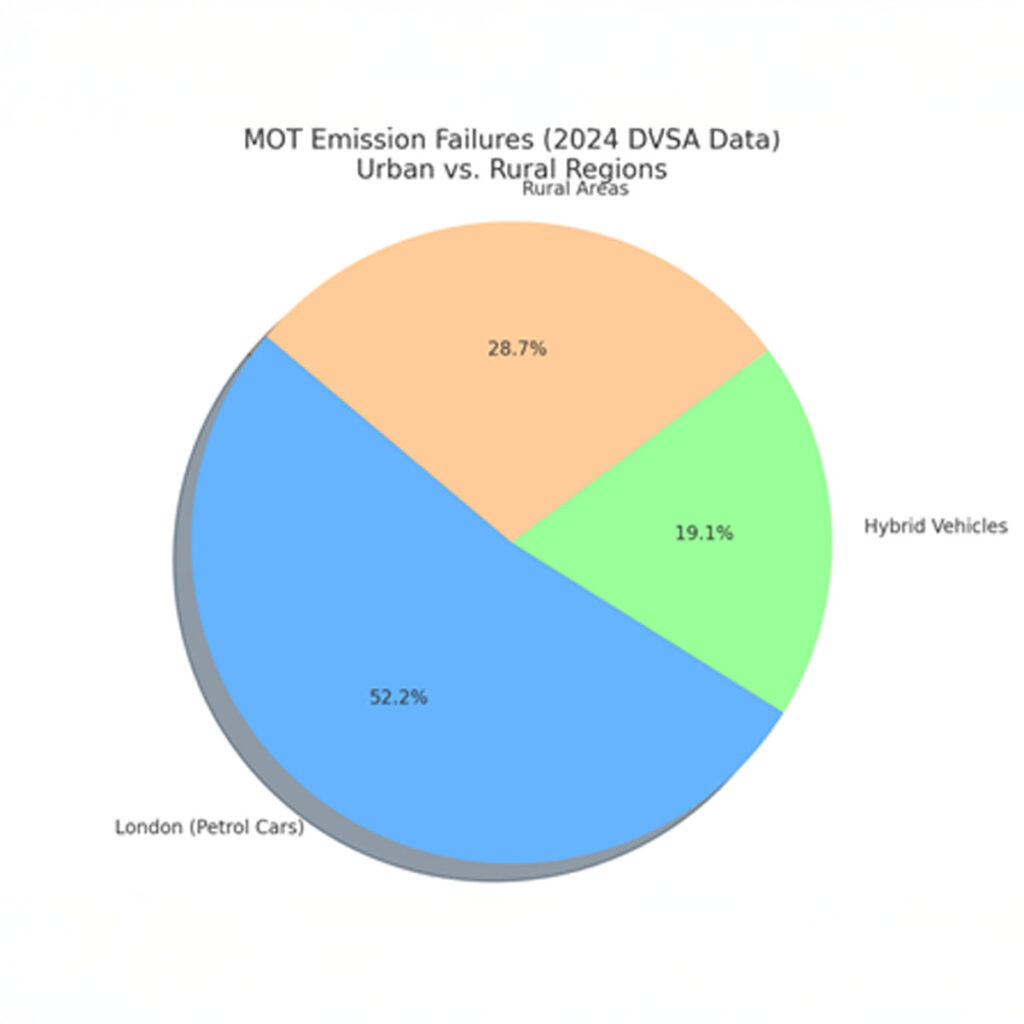
Figure: Percentage of MOT Emission Failures in Urban vs. Rural Regions
- London sees an average 8.2% failure rate for petrol cars
- Hybrid vehicles see fewer issues but are often targeted for converter theft
- Rural areas report a significantly lower average of 4.5%
Preventing Catalytic Converter Theft
London also ranks among the UK’s highest for catalytic converter theft, especially from hybrid models like the Toyota Prius. Their converters contain more valuable metals and are often easier to remove.
Simple Theft Prevention Tips:
- Park with the rear close to a wall or other obstacle
- Use a catalytic converter lock or cage
- Etch your license plate number onto the converter
- Install a tilt or motion-triggered alarm system
Replacing the Converter Wisely
Should your catalytic converter fail, choosing the right replacement is key. OEM parts offer perfect fit and quality, but aftermarket alternatives from reliable sources can be cost-effective.
Websites such as buycarparts.co.uk provide extensive information on catalytic converters suitable for use in urban areas and compliant with UK emissions standards.
Keeping your catalytic converter healthy in a city like London requires a bit of planning, but it’s manageable. Combine smart driving habits with regular maintenance, and you’ll reduce both your emissions and the risk of costly repairs.
Longer trips, less idling, good fuel, and prompt attention to dashboard warnings go a long way. And if a replacement becomes necessary, opt for reliable parts that meet UK standards.
In a city pushing for cleaner air and tighter vehicle regulations, taking care of your converter isn’t just smart — it’s essential.