What might Jane Austen make of a proposal beneath the London Eye, with a flash mob and a drone overhead capturing every moment for Instagram? The question may sound whimsical, but the answer offers more insight than one might expect. The enduring appeal of Austen’s novels lies in her ability to expose the quiet truths of human nature. Her understanding of love, character, and society remains relevant even two centuries later, and her values offer a compelling lens through which to examine engagement rituals in today’s Britain.
In Austen’s world, the proposal is not just a turning point in a novel — it is a litmus test of character. One imagines she would raise a quizzical brow at viral spectacles but reserve her deeper critique for any proposal that lacked genuine affection and mutual respect, however grand or modest. Sincerity, thoughtfulness, and a meaningful exchange of values are at the heart of every enduring Austen romance.
As British engagement customs evolve, influenced by social media, shifting gender norms, and new expectations, Austen’s voice — dry, wise, and profoundly humane — offers an ideal counterbalance. Through her lens, we can ask what truly makes a proposal significant and which of today’s trends might pass the Austen test.
The Head and the Heart: What Makes a Worthy Proposal?
In Austen’s novels, the best romantic matches are not built on convenience or passion alone. Instead, they emerge from a delicate balance of emotion and sound judgment — a theme that carries through much of her work. This balance, what she referred to as a union of “sense and sensibility,” is perhaps the single most important standard by which she would assess a modern proposal.
Elizabeth Bennet and Mr Darcy exemplify this harmony. Their journey to mutual respect and affection is hard-won and rooted in growth. Darcy’s first proposal fails, not because of its lack of sincerity, but because of his arrogance and Elizabeth’s prejudice. His second attempt, however, is marked by humility and understanding. It is not a lavish scene but a quiet, reflective one, born of character and transformation. For Austen, this is romance at its highest.
By contrast, she presents cautionary tales such as the hasty elopement of Lydia Bennet and Mr Wickham. That match, driven by impulse and irresponsibility, nearly destroys the reputation of an entire family. Austen’s message is clear. A proposal should reflect maturity, moral awareness, and the potential for shared growth.
In this light, today’s carefully staged, attention-seeking public proposals might strike her as lacking in depth. It is not that Austen would dismiss showmanship outright. She appreciated the celebration. But a proposal that exists purely for display, with no thought of the sincerity behind it, would fail her test. The real question she would ask of any couple is whether their engagement reflects a shared understanding or whether it is simply a social performance.
Love and Money: The Marriage Economy, Then and Now
It is easy to idealise the romance in Austen’s novels, but she never ignored practical considerations. In her world, marriage was often a necessity, especially for women with no independent fortune. Her heroines navigate a complex web of emotional longing and financial strategy. That tension remains a key lens through which Austen would assess today’s engagements.
In her personal life, Austen rejected a proposal from Harris Bigg-Wither, a man of wealth but limited appeal. She accepted one day and declined the next. It was an extraordinary move for a woman of her time. Her refusal underscored her belief that love must not be sacrificed for security alone.
That belief is echoed in her novels. Charlotte Lucas’s decision to marry Mr Collins in Pride and Prejudice is presented not as immoral, but as deeply pragmatic. Elizabeth Bennet respects Charlotte’s choice, though she herself could never make it. The question of marrying “prudently” versus “mercenarily” recurs often. As Elizabeth once asked, “Where does discretion end, and avarice begin?”
Today, modern couples still wrestle with money and romance. Engagements now commonly involve financial planning, joint savings, and even prenups. In this, Austen would likely see an evolution rather than a betrayal of her ideals. She believed in balancing passion with pragmatism. She would commend conversations about fiscal responsibility and future planning — provided they did not replace affection with calculation.
Fun Fact: In Austen’s time, diamonds were rare in engagement rings. When given, they often took the form of poesy rings or other tokens with engraved messages. The tradition of diamond proposals did not take hold until decades later, spurred by Victorian and Edwardian fashion.
Sincerity Over Spectacle: The Quiet Beauty of Discreet Proposals
Austen valued privacy and sincerity highly. When Mr Darcy proposed to Elizabeth for the second time, he did so during a simple walk. No audience was present, and no elaborate show was made. It was a quiet moment filled with significance because it reflected mutual growth and true understanding.
In contrast, many modern engagements have moved into public theatre. Flash mobs, social media announcements, and even drone footage have become common. One imagines Austen viewing these from a distance, not without amusement, but with concern. She might ask: Who is this for — the couple, or the crowd?
Surprisingly, public opinion in Britain today leans in Austen’s favour. Surveys indicate that nearly 90% of UK respondents prefer a private proposal to a public one. This shows a strong cultural preference for discretion and sincerity, echoing Austen’s emphasis on authenticity over appearance.
In Austen’s novels, discretion was a sign of virtue. Too much self-exposure was often met with criticism. Lydia Bennet’s impulsiveness, for example, is treated as socially dangerous. The value of restraint, of letting a relationship unfold without fanfare, was seen as both mature and noble.
This same value now underpins a growing movement of “quiet proposals” in the UK. Couples increasingly opt for heartfelt, low-key engagements — perhaps during a weekend walk, over a shared meal, or even at home. Austen would surely approve of this shift. It reflects care, consideration, and depth — the qualities she most admired.
The Austen Test: What Makes a Proposal Endure?
If Jane Austen were to offer advice on engagement, she would likely propose a simple test. It would not ask how big the gesture was or how much the ring cost. Instead, it would ask:
- Does this proposal reflect a true understanding between the couple?
- Is it sincere, heartfelt, and grounded in mutual respect?
- Is the commitment being made thoughtfully, with both affection and sense?
- Does the gesture speak to the unique bond between the individuals, rather than to social expectation?
If the answer to these questions is yes, then the proposal would pass what we might call the Austen Test. It need not be modest, but it must be meaningful. It may involve a ring, or not. It might take place in a grand setting or in a quiet corner of the garden. The key is that it reflects the character of the people involved, not the culture they feel obliged to perform for.
Austen’s ideal proposal is not about perfection. It is about sincerity. And in this respect, her wisdom continues to guide those navigating love in a modern world.
The Rise of Discreet Elegance in British Proposals
In a country known for its cultural reserve and understated charm, it is perhaps no surprise that Britain is embracing a quieter style of proposal. Whether inspired by Austen’s sensibility or a modern fatigue with performative romance, many couples are now choosing to mark their commitment in subtle, thoughtful ways.
Public surveys, as previously noted, strongly favour private engagements. But beyond preference, there is also a growing trend towards discreet UK proposals that echo the values Austen held dear. These include planning together in advance, choosing meaningful settings rather than expensive ones, and often skipping the dramatic moment altogether in favour of a mutual, reflective decision to move forward as partners.
This trend aligns with Austen’s ideal of romantic discretion. In Persuasion, Anne Elliot’s enduring affection for Captain Wentworth is quietly reignited over a series of interactions, culminating in a heartfelt letter and a renewed understanding. There is no spectacle. There is only sincerity. The romance is all the more powerful for its quietness.
Today, that same sentiment lives on in engagements that favour quiet dinners, handwritten letters, and intimate conversations over viral videos. It is a return to authenticity — a quiet romance that feels timeless, even in 2025.
Personalisation Over Pageantry: A British Storytelling Tradition
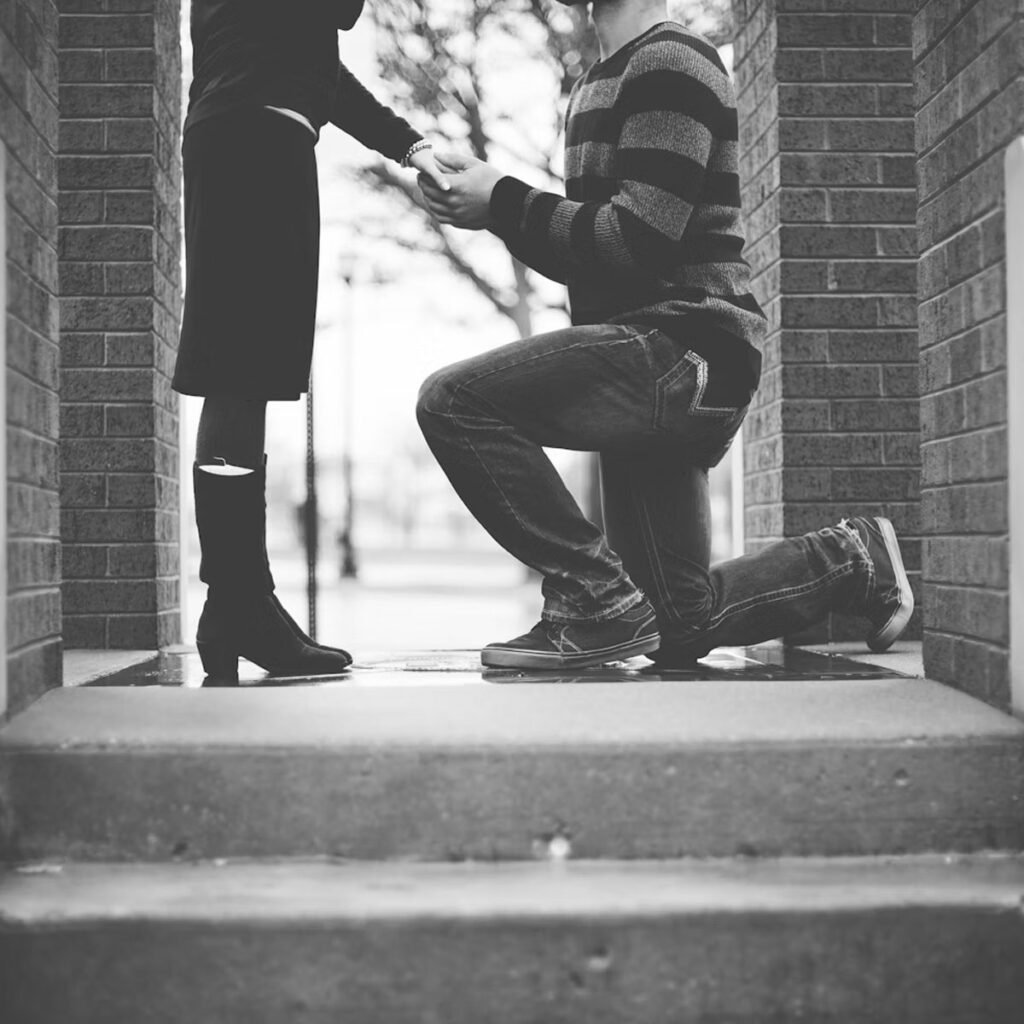
One of the most striking features of British proposals today is the rise in storytelling. Couples use the moment of engagement not only to declare intent but also to honour the story of how they got there. This often includes choosing meaningful locations, referencing shared experiences, or weaving personal traditions into the proposal itself.
Jane Austen would likely find great satisfaction in this development. Her novels are rooted in character, place, and story. Every major romantic moment is preceded by narrative groundwork. The setting of a proposal matters because it reflects not wealth or trend but emotional truth. Mr Darcy’s second proposal is not staged at Pemberley, though it could have been. It is made while walking through the countryside — a setting that reflects simplicity, clarity, and renewed trust.
Modern equivalents might be found on a beach in Cornwall, in a quiet Cotswold village, or even in a cosy pub where two lives first intersected. British couples are increasingly choosing timeless proposal stories set against backdrops that mean something personal. This emotional geography matters. It creates a bond between place and memory, which Austen herself would recognise as profoundly romantic.
Rings with Meaning: Why Platinum Is the Modern Classic
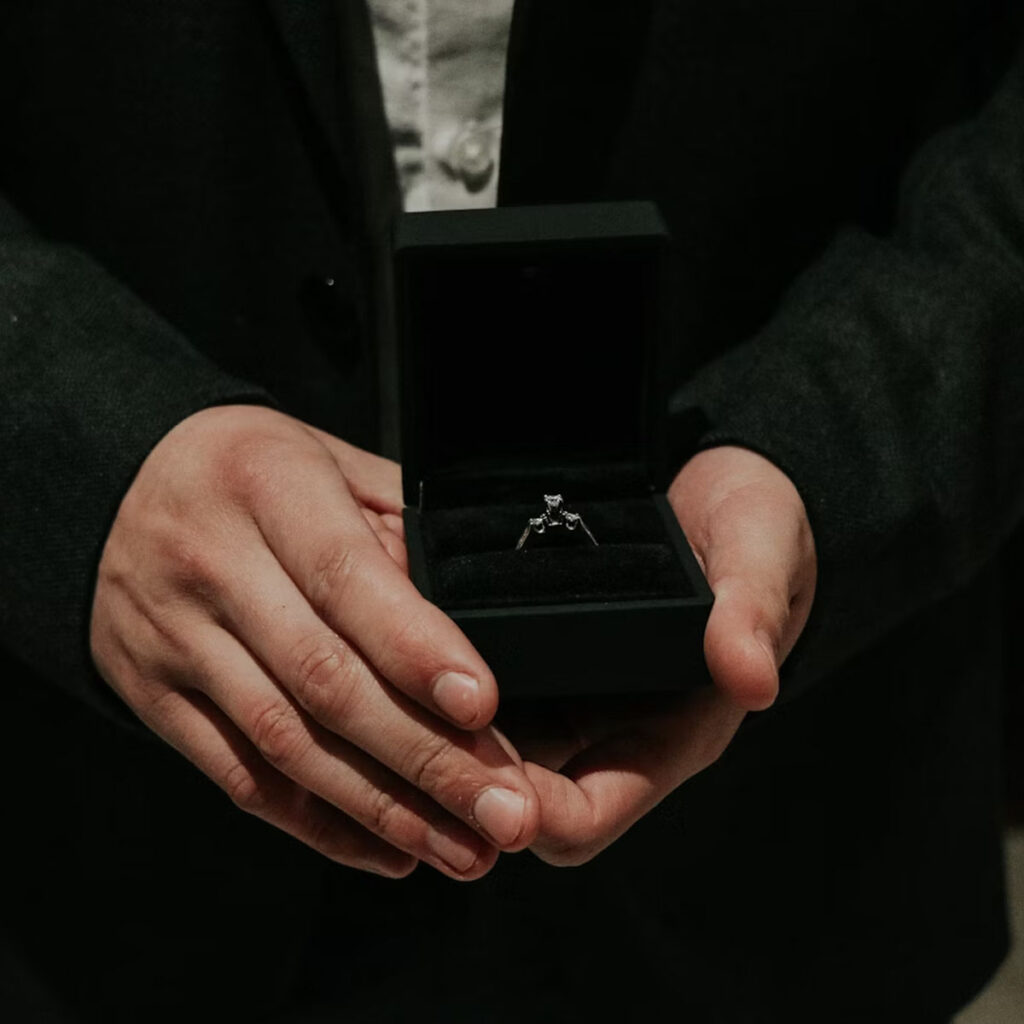
If Austen were to comment on the ring itself — now such a central feature of the modern proposal — her views would likely focus on sentiment over sparkle. She did not live in a time when diamond rings were the norm, and indeed, engagement rings were not yet a cultural expectation. However, she understood the power of a symbolic object.
In 2025, platinum engagement bands are surging in popularity across the UK, and for good reason. This precious metal is naturally white, strong, and resistant to tarnish. It represents not only elegance, but durability — qualities that mirror Austen’s own view of love.
Jewellery experts highlight platinum’s appeal for those seeking a ring that will last a lifetime. It is also favoured in designs that reflect understated luxury, sometimes referred to as “quiet wealth” or “heritage elegance”. These rings do not shout. They resonate. They are chosen by couples who value longevity and integrity over display.
One might say that platinum is the Elizabeth Bennet of metals: strong, intelligent, and shining in its own quiet way. A ring crafted in platinum speaks to a commitment built on character, and Austen, surely, would approve.
Beyond the Ring: Heirlooms, Vintage Stones, and Ethical Values
Another significant trend in modern British engagements is the focus on heirloom jewellery and sustainability. Couples are increasingly drawn to antique rings, vintage stones, and responsibly sourced materials. This reflects both a broader cultural awareness and a desire to infuse the engagement with personal or familial meaning.
The idea of wearing a ring passed down through generations echoes one of Austen’s recurring themes: continuity. Her novels are filled with references to inherited estates, treasured possessions, and the emotional weight of objects with history. A vintage ring, or even a new ring made with an antique diamond, tells a story. It carries meaning beyond its carat value.
Likewise, the rising interest in lab-grown diamonds and recycled metals reflects a modern sensibility rooted in conscience. These choices align with Austen’s own principles. She valued prudence and morality, not only in matters of love, but in broader questions of life. A couple who chooses an ethical engagement ring does so not out of trendiness but out of shared values — and that, in Austen’s world, is the very definition of compatibility.
Fun Fact: Some UK jewellers now offer “proposal rings” — temporary, simple bands that allow a partner to propose while giving the other person the freedom to choose or design their actual ring later. Austen would likely have appreciated this collaborative gesture, which prioritises both romance and individual agency.
Planning the Moment: The Austenian Proposal in 2025
To propose in a way that Jane Austen might admire is not to replicate Regency customs. It is to honour the spirit behind them. This means creating a moment that is sincere, personal, and reflective of the couple’s shared journey.
Some modern British couples do this with handwritten letters. Others recreate meaningful memories — a first date, a shared trip, a moment of laughter. Some choose to propose while walking their dog through a beloved park, or over tea on a rainy morning. What unites these moments is not their style, but their substance.
The best modern proposals, like the best Austen moments, reflect the couple’s character. They are not one-size-fits-all. They are tailored to the people involved, often imbued with quiet symbolism and thought. The ring matters, yes, but so does the walk, the letter, the location, and the language used. All these details create a mosaic of meaning.
In this sense, Austen’s values are not outdated. They are enduring. They remind us that love, at its best, is both emotional and reasonable. A proposal, then, should not only make the heart race. It should also make perfect sense.
A Modern Epilogue: What Jane Might Say Today
If Miss Austen were to stroll through Hyde Park in 2025, or overhear a couple choosing rings in Hatton Garden, she might observe the changes in fashion with interest. But she would not be swept up by spectacle. She would pause when she saw kindness. She would notice when the gestures were modest but meaningful. And she would certainly recognise the signs of genuine, thoughtful love.
Her verdict on modern engagements might sound like this:
“To declare one’s love is no small thing, and whether done in a garden, a drawing room, or a city rooftop, the sentiment must remain undistorted by display. A ring, no matter how radiant, cannot outshine the character of the one who offers it. And though society may parade its affections for all to see, I am still most inclined to admire those whose feelings, while deeply held, are humbly expressed. To love wisely, and to propose accordingly, is the surest path to a happiness that may endure.”
In that spirit, British couples today continue to redefine romance, not by abandoning tradition, but by infusing it with their own story. They blend affection with good sense. They choose symbols that reflect their values. And in doing so, they create engagements that Jane Austen herself might well have found not only respectable but truly romantic.